





 Portuguese
  English
  Spanish
  4 min of reading
  1 comment


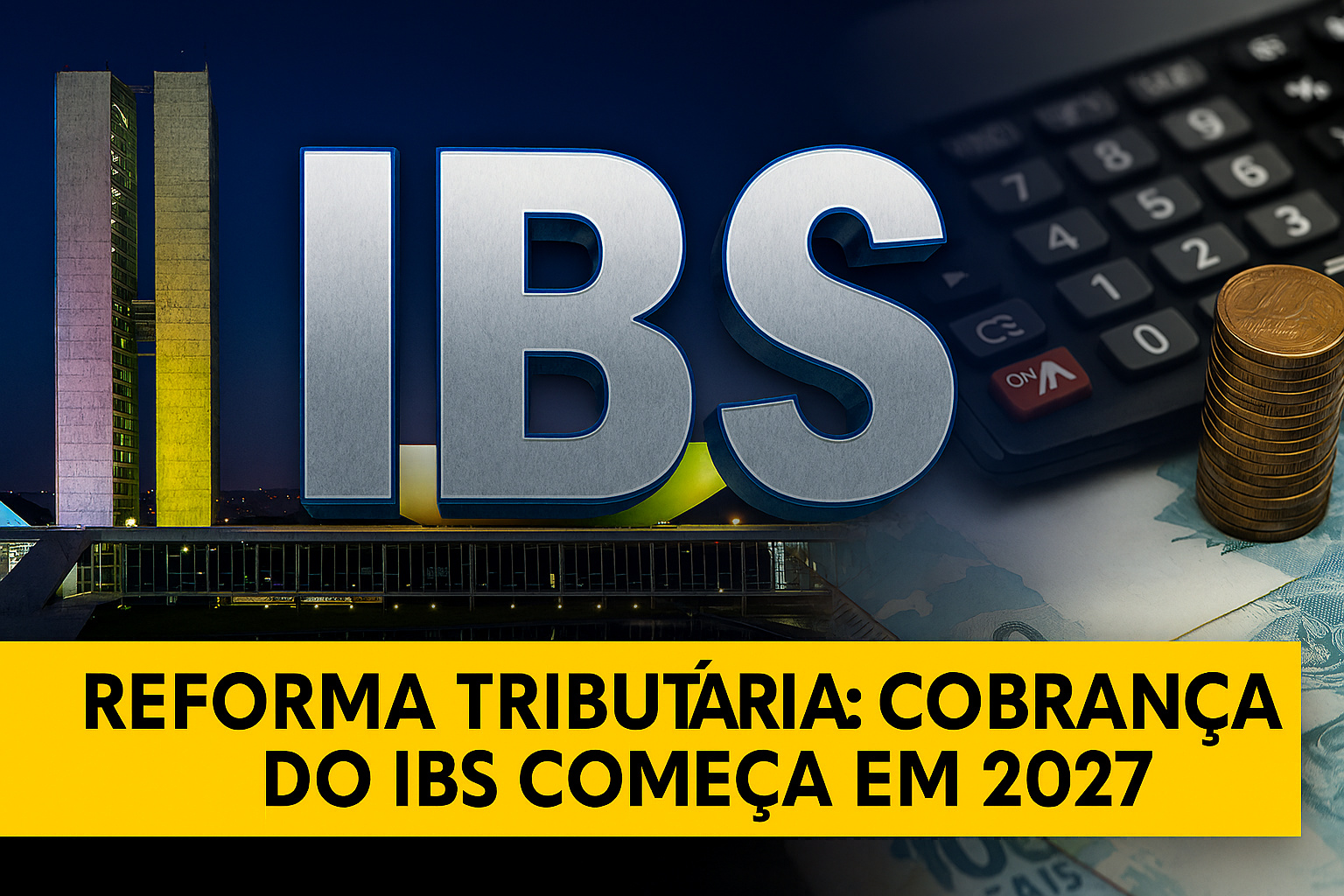


IBS Starts in 2027 and Unifies ICMS and ISS: Tax Reform Promises to Simplify Taxes, Change Consumption, and Impact Companies Across Brazil.
Brazil is about to experience one of the biggest changes in its tax history. After decades of debate, the Tax Reform has finally come to fruition and is set to transform the lives of consumers and businesses. Starting in 2027, the IBS (Tax on Goods and Services) will come into effect, a national tax that will unify the ICMS (state tax) and the ISS (municipal tax), changing the way consumption taxes are charged.
The change is considered historic by experts because it directly affects the foundation of the Brazilian economy: consumption. Today, Brazil is known for having one of the most complex tax systems in the world, with overlapping taxes, tax wars between states, and legal uncertainty. The IBS promises simplification, predictability, and efficiency — but it also brings immediate impacts on the population’s finances.
How the IBS Will Work in Practice
The IBS will be a value-added tax, meaning it will be charged throughout the production and consumption chain, but always transparently for the consumer.
-
IPTU exemption for seniors in 2026: see how to secure the benefit.

-
The institute that trained the greatest aerospace engineers in Brazil has just opened its first campus outside São Paulo after 75 years: ITA Ceará will have R$ 445 million, new courses in energy and systems, and classes are expected to start in 2027.

-
Luciano Hang, owner of Havan, goes to Juiz de Fora after the tragedy in February, brings R$ 1 million, hands out R$ 2,000 cards, and donates up to R$ 15,000 to victims in the region.

-
The Brazilian passport allows legal residence in dozens of countries without the need for a prior visa, and most Brazilians are unaware that they can apply for residency directly upon arriving in nations in South America, Africa, and even Europe.


Unlike what happens today, with cumulative charges, the IBS will follow the model adopted in countries like Canada and the European Union, where the tax paid at one stage can be compensated in the next.


Between 2027 and 2032, there will be a transition period:
- The ICMS and the ISS will continue to exist but with gradually reduced rates.
- The IBS will gradually gain participation until it becomes the only tax on goods and services in 2033.
- The management of collection will be shared by states and municipalities, through a national management committee, avoiding direct disputes between federal entities.
According to the Ministry of Finance, this transition will allow businesses and consumers to adapt to the new system without abrupt shocks.
Impacts for Consumers
For the population, the change promises more transparency. Today, few people know exactly how much they pay in ICMS or ISS embedded in products and services. With the IBS, the idea is for the tax amount to be clearly itemized on the invoice, which increases awareness of the actual tax burden.
In the short term, experts warn that some sectors may experience an increase in burden, particularly services that currently pay only ISS, which is generally lower than ICMS. This means that private schools, language courses, medical clinics, and other service providers may pass some of these costs on to consumers.
On the other hand, the industry and productive sectors should benefit, as the IBS eliminates cumulative taxation and reduces the so-called “tax war” between states. This could mean more competitiveness and lower prices in the medium term.
Impacts for Companies
For companies, the change will be radical. The ICMS is currently considered one of the most complex taxes in the world, with over 25 different state legislations. The IBS eliminates this fragmentation and creates a single national charge, centralized in the management committee.
According to projections from the National Confederation of Industry (CNI), companies’ bureaucratic costs related to tax obligations could drop by up to 70% with simplification. Today, many companies need whole teams dedicated solely to calculating state and municipal taxes.
Simplification also favors foreign investments, as multinationals have long complained about Brazil’s legal uncertainty. The World Bank has already classified Brazil as one of the countries where the most time is spent just dealing with taxes.
Federal Revenue Service and the End of “Dummy Invoices”
Another promise of the reform is the reduction of tax evasion. Since the IBS will be automatically charged in each electronic transaction, and transparently, the scope for fraud such as dummy invoices should considerably decrease.
According to data from the Ministry of Finance, Brazil loses about R$ 500 billion per year to tax evasion. The unification and technology applied to the IBS could significantly reduce this gap, strengthening public coffers without formally increasing the tax burden.
Brazil in the International Scenario
With the IBS, Brazil moves closer to models already consolidated in developed economies. The European VAT, for example, is seen as an inspiration for the reform. The expectation is that the change will improve the business environment and position Brazil at a more competitive level to attract foreign investments.
However, there are political challenges. Governors and mayors still compete for shares of the revenue and fear losing autonomy over their finances. Therefore, the management committee of the IBS will be a key piece in ensuring federal balance and avoiding new conflicts.
Tax Reform and the Future of Consumption
The implementation of the IBS in 2027 will be just the beginning of a decade of adjustments. Until 2033, the population will still coexist with the hybrid system but will already feel significant changes in the way taxes are paid.
The big promise is for a system that is fairer, more transparent, and more efficient. But the lingering question is: will the consumer really feel relief in their finances or merely see the charges more clearly?
The IBS is not just another tax. It is the backbone of the new Tax Reform, an attempt to simplify one of the most complicated systems in the world. It can bring efficiency and transparency but also risks increasing costs in some sectors.
In 2027, when it begins to be charged, Brazil will have the opportunity to show whether the change will bring competitiveness and tax justice or if it will just be another chapter of unfulfilled promises.









Rainx Drive is the Best Cloud Storage Platform