





 Portuguese
  English
  Spanish
  3 min of reading
  0 comments



Safety or Invasion? New Proposed Law Wants to Require Recording of Rides by Uber and 99 Drivers in States and Municipalities
The possibility of mandatory cameras in rideshare vehicles has caught the attention of Uber and 99 drivers in different regions of Brazil.
The change involves vehicle upgrades if legislative proposals are approved in states and municipalities, focusing on recording rides and enhancing safety during trips.
The topic has gained traction because the routine of ridesharing already deals with risky situations, and for many, recording can become a new operating standard in daily life.
-
IPTU exemption for seniors in 2026: see how to secure the benefit.

-
The institute that trained the greatest aerospace engineers in Brazil has just opened its first campus outside São Paulo after 75 years: ITA Ceará will have R$ 445 million, new courses in energy and systems, and classes are expected to start in 2027.

-
Luciano Hang, owner of Havan, goes to Juiz de Fora after the tragedy in February, brings R$ 1 million, hands out R$ 2,000 cards, and donates up to R$ 15,000 to victims in the region.

-
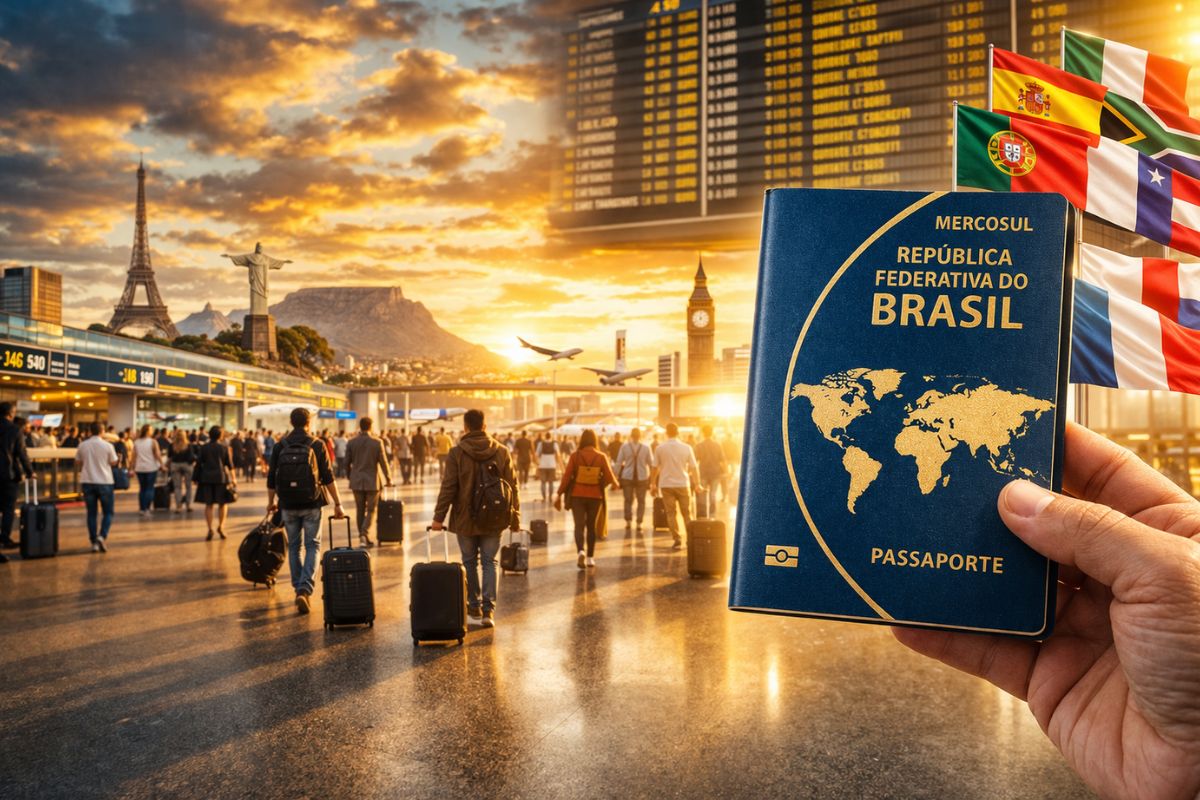
The Brazilian passport allows legal residence in dozens of countries without the need for a prior visa, and most Brazilians are unaware that they can apply for residency directly upon arriving in nations in South America, Africa, and even Europe.


What Happened and Why It Caught Attention
Legislative proposals discuss the mandatory installation of cameras for recording rides in vehicles used by rideshare drivers.
The proposal is based on the argument of safety, seeking to protect both passengers and Uber and 99 drivers inside the car.
The impact is direct: if the requirement advances, some drivers may need to invest in equipment and installation or follow locally defined rules to operate regularly.
What Changes in Practice for Uber and 99 Drivers
The main consequence is the need to keep the equipment active during trips, recording what happens in the vehicle.
In some cases, cameras may also record the external area, expanding the scope of recording beyond the back seat.
In practice, this can alter costs and routines, including how to store images and care for privacy, as recording becomes part of the service.
What Are the Rules, Deadlines, and Conditions
Rules may vary by city and state because the regulation of ridesharing is the responsibility of municipalities and the Federal District.
In Salvador, Bahia, there is a rule that makes the installation of cameras in all vehicles linked to apps mandatory, requiring them to function during rides.
In the Federal District, there is a proposal that requires storage of images for at least 30 days, with access limited to competent authorities.
Who Pays and How Reimbursement Might Work
A sensitive point is the cost. There is a scenario where, if the platform does not provide the device for free, the driver needs to bear the installation cost.
In this situation, there is a provision for requesting reimbursement afterward, which makes the issue even more relevant for those who rely on the app for income.
As each location may adopt its own criteria, the discussion also involves technical rules, deadlines for keeping recordings, and determining who bears the costs.
Other States Are Discussing Similar Proposals
Other states are discussing similar proposals, such as Minas Gerais, Paraná, Rio de Janeiro, Pernambuco, Ceará, Mato Grosso, and Alagoas, with differences in deadlines and requirements.
At the federal level, proposals remain in general safety guidelines, without imposing a single technical standard for the entire country.
This increases the chance of a fragmented scenario, where each region defines its own requirements, affecting drivers who work in more than one city.
The requirement for cameras in rideshare vehicles may advance unevenly across Brazil, with local rules and a direct impact on the routine of those driving for Uber and 99.
For the driver, the central point is to stay updated on the regulations of their own region, as the measure may imply vehicle upgrades, additional costs, and new operational obligations during rides.









Seja o primeiro a reagir!