





 Portuguese
  English
  Spanish
  6 min of reading
  0 comments


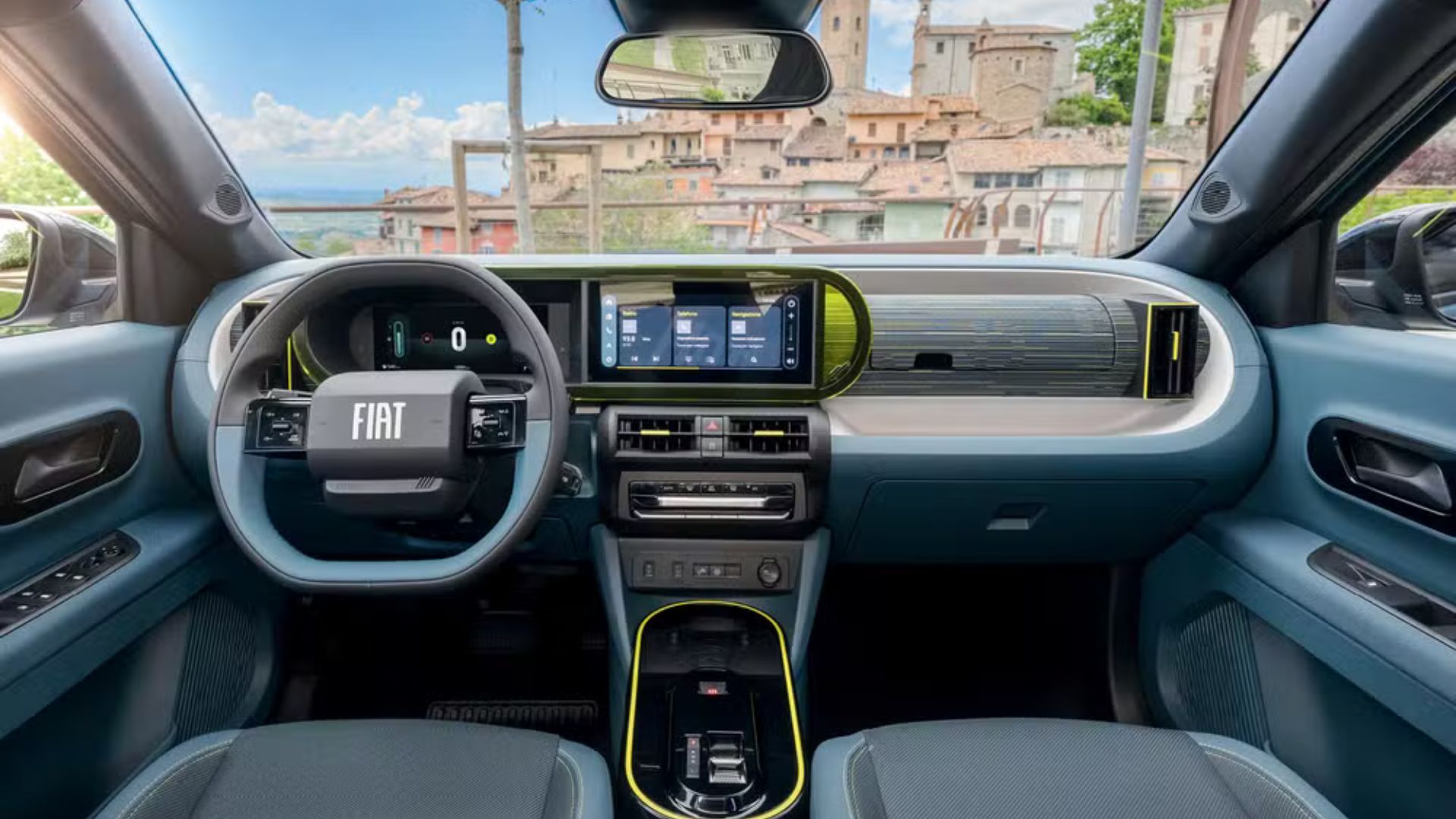
New Fiat Hatch Registered in Brazil Anticipates Unique Generation of Argo Based on Global Smart Car Platform, with Engines Already Used by Stellantis, Interior Adapted to National Market and Production Confirmed in Betim as Part of Billion-Dollar Investment in the Country.
The launch of the new generation of the Fiat Argo in Brazil advances another step and begins to take official shape.
Patents registered with the National Institute of Intellectual Property (Inpi) revealed this Tuesday (03) by the website Auto Esporte indicate what the compact hatch will look like that will arrive in the Brazilian market in 2026 and will also serve as a natural replacement for the Fiat Mobi in the brand’s lineup.
The images from the patent application reveal a design directly related to the Grande Panda sold in Europe, a model that inaugurates a new phase for Fiat in the compact segment.
-
OMODA 7 transforms the car into a global aesthetic expression by combining automotive design and fashion in London.

-
JAECOO takes the lead in global strategic markets and accelerates its trajectory to become a “global blockbuster maker” in the automotive industry.

-
OMODA redefines global aesthetics and elevates the OMODA 7 to a multicultural fashion icon, uniting design, technology, and international identity.

-
A 2024 Toyota Corolla hybrid with only 12,500 km ended up in the junkyard, and when the dismantling staff saw the car, they were shocked because they know that this model easily exceeds 300,000 km without serious mechanical issues.


However, the version intended for Brazil will have relevant changes in design and configuration to adapt to the local market.
The manufacturer intends to position the model as one of the most important launches of the brand in the country in the coming years, with production concentrated at the Betim factory in Minas Gerais.
The industrial unit has been receiving about R$ 14 billion in investments as part of Stellantis’ industrial plan.
New Fiat Argo Keeps Name in Brazil and Will Have Adapted Design

Despite the technical relationship with the European Grande Panda, the hatch will not adopt this name in the Brazilian market.
The global CEO of Fiat, Olivier François, had already anticipated that the model will be called New Argo, preserving a name already established in the manufacturer’s lineup in the country.
The choice also implies changes in visuals.
Differently from the model sold in Europe, the national car will not display the name embossed at the bottom of the doors, a design solution used in the Grande Panda that will not be applied to the Brazilian variant.
The result will be a side profile with a cleaner appearance and a more traditional design, a common strategy in adaptations made for different markets.
Another visible particularity in the registered images involves the finish of the rear window.
The new hatch will have a plastic niche similar to that used in the Citroën C3 produced in Brazil, although with changes in the type of trim used by Fiat.
The similarity is not coincidental.
Both models use the Smart Car platform, a global architecture developed by Stellantis for compact vehicles that allows component sharing among different brands within the group.
Dimensions and Trunk of the New Compact Hatch
Even with aesthetic and finish changes, the basic structure of the new Argo is expected to closely follow the dimensions of the European Grande Panda.
The model sold in Europe measures approximately 4 meters in length, 1.73 meters in width, and 1.60 meters in height, with a wheelbase of 2.54 meters.
The trunk offers capacity for up to 315 liters.
If the Brazilian configuration maintains similar proportions, there will be a small evolution compared to the current Argo.

The hatch currently available in the national market has 3.99 meters in length, 1.72 meters in width, 1.50 meters in height, and a wheelbase of 2.52 meters.
The expectation is that the new project will preserve similar dimensions to maintain competitiveness in the compact segment.
In this market, the model will compete with Volkswagen Polo, Chevrolet Onix, and Hyundai HB20.
Simplified Interior Compared to the European Grande Panda
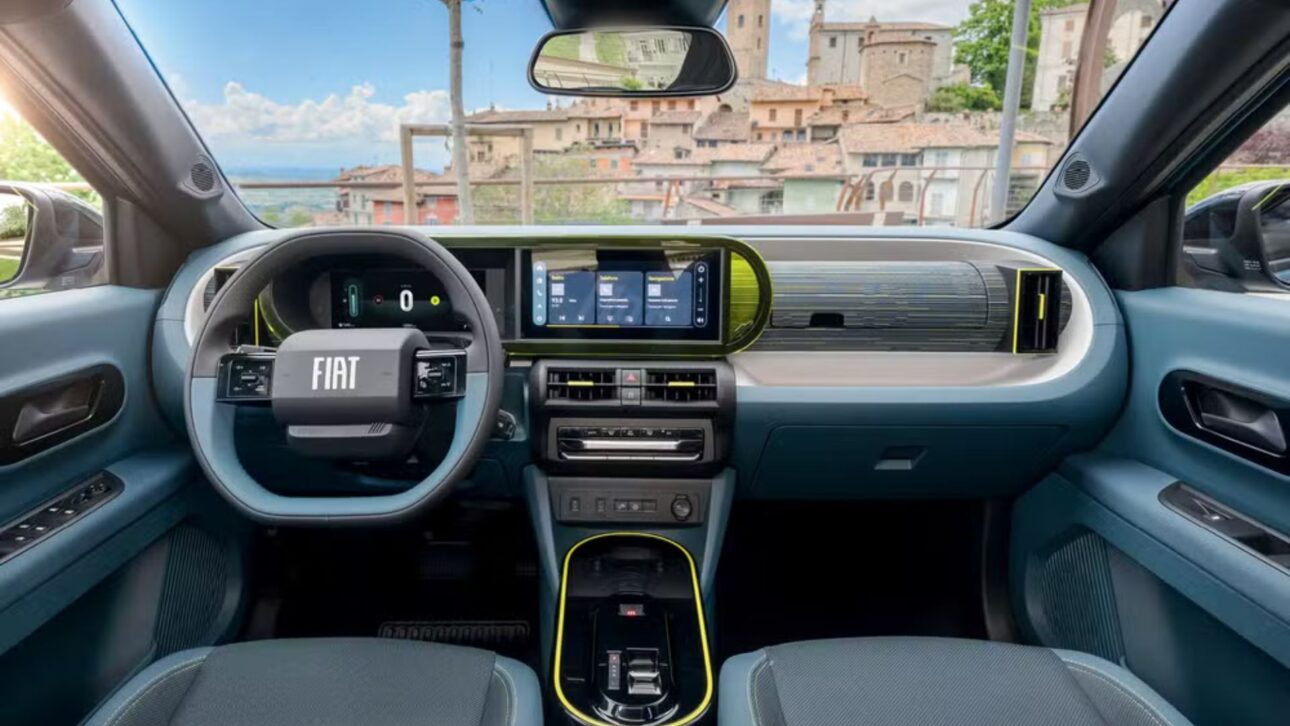
The cabin of the new Argo will also have significant differences compared to the Grande Panda sold in Europe.
Although the base of the dashboard is similar, various elements will be adapted to reduce costs and simplify the finish.
One of the changes involves the absence of the eco-friendly material used in the European Panda.
In that model, part of the dashboard uses a material called Bambox, made from natural bamboo fibers combined with recycled plastic.
In the Brazilian version, this solution will not be adopted.
The interior will use conventional plastics and more traditional finishes, a decision aligned with the competitive positioning of the car in the national market.
Another element that will disappear is the additional compartment located at the top of the dashboard, in front of the passenger.
In the Grande Panda, this space functions as an extra glove compartment with plant-based finish.
For Brazil, the design will be simpler with flatter surfaces.
The side air vents will also change shape and will have more square lines, replacing the vertical style used in the European model.
Firefly and T200 Hybrid Engines Expected for the Model
The new generation of the Argo is expected to use engines already present in other Stellantis models sold in Brazil, a strategy that reduces development costs and facilitates large-scale production.
The entry-level versions are expected to use the 1.0 Firefly naturally aspirated engine, a three-cylinder flex engine with six valves.
This engine delivers up to 75 horsepower and 10.7 kgfm of torque.
In this configuration, the transmission will be a five-speed manual.
More complete configurations are expected to receive the system known as T200 Hybrid, a mild hybrid 12-volt system already used in models like Fiat Pulse and Fastback.
This system combines the 1.0 turbo GSE three-cylinder engine with direct injection, capable of reaching up to 130 horsepower and 20.4 kgfm of torque.
The mild hybrid system includes a small electric motor that replaces the alternator and starter motor.
It adds about 4 horsepower and 1 kgfm of torque, assisting the combustion engine in certain situations.
This feature mainly helps to reduce fuel consumption and improve energy efficiency.
Launch Celebrates 50 Years of Fiat in Brazil
The arrival of the new Argo will also have a symbolic role within the brand’s strategy in the country.
Fiat is preparing a series of actions to celebrate 50 years of presence in the Brazilian market, a milestone that will be completed in July 2026.
The company commenced its industrial operations in Brazil on July 9, 1976, when it inaugurated the Betim factory.
The unit remains one of the largest automotive plants in Latin America.
Known visual elements referred to as easter eggs will appear on the bodywork and interior of the new hatch, referencing the manufacturer’s history in the country.
These details reinforce the commemorative character of the launch within the brand’s strategy.
Stellantis Strategy Aims for Leadership Among Compacts
Internally, Stellantis executives refer to the new Argo as a central piece of Fiat’s strategy in the compact car segment in Brazil.
The expectation within the group is to position the model as one of the best-selling cars in the country.
The goal involves directly competing for leadership with the Volkswagen Polo, currently one of the main rivals in the market.
The hatch will also face renewed competition in the segment.
The Chevrolet Onix has recently undergone updates and the Hyundai HB20 is expected to gain a new generation throughout 2026.
With a new platform, mild hybrid engine, and large-scale national production, the project emerges as one of the pillars of Stellantis’ billion-dollar investment in Brazil.
The official launch is scheduled for the first half of 2026, when the model is expected to start production in Betim and begin arriving at dealerships across the country.






-

-

-

-

-

28 pessoas reagiram a isso.