Portuguese
  Spanish


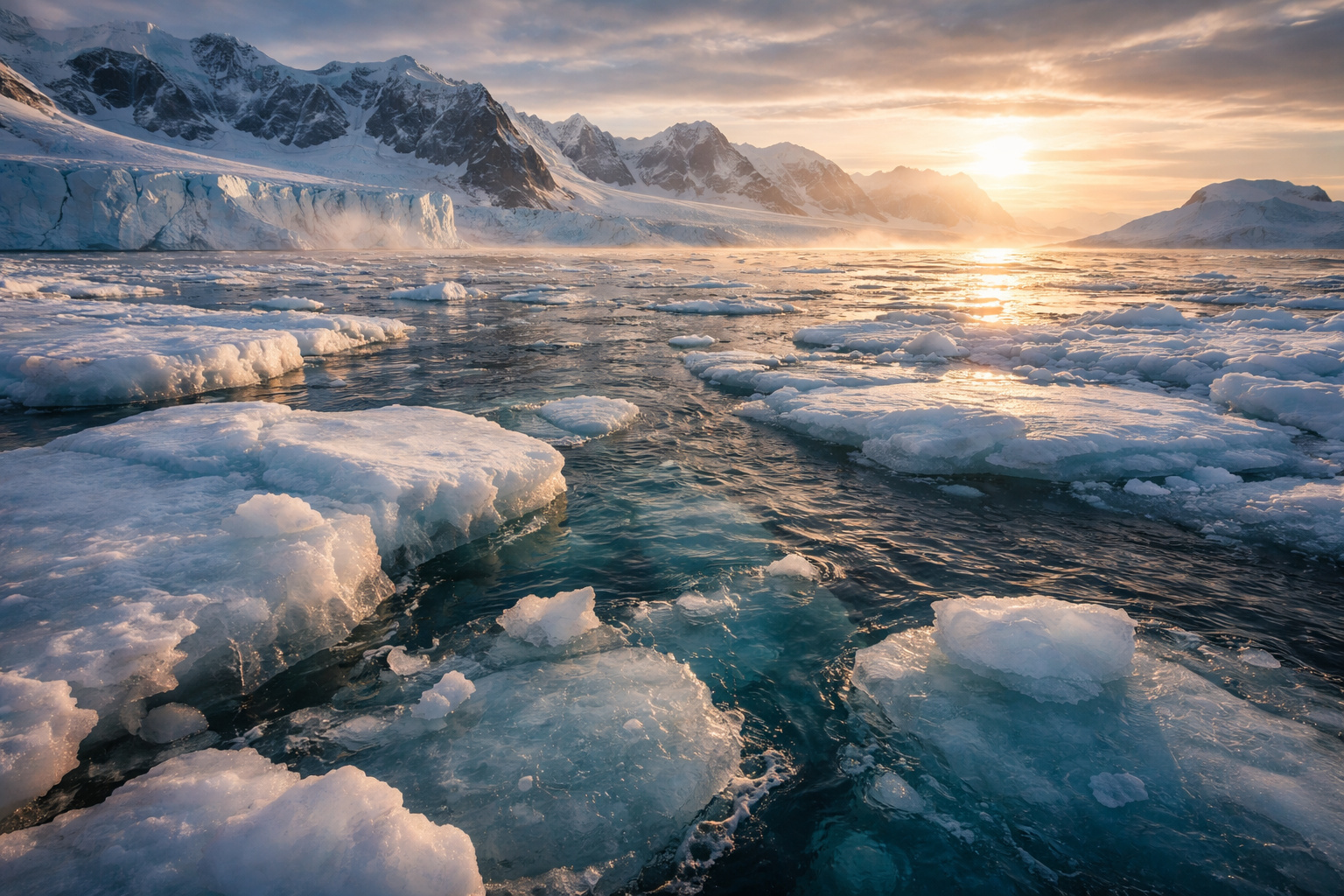

The thinning of the cold layer and the mixing of deep waters explain the rapid reduction of sea ice and change scientific understanding of the climate
A significant change in global climate behavior has caught the attention of the scientific community in recent years.
The sea ice in Antarctica, which had shown stability and even slight expansion for decades, began to register accelerated losses starting in 2015, surprising researchers and demanding new explanations for the phenomenon.
This new pattern broke a historical trend and revealed that important transformations were occurring in the oceanic system around the continent.
The intense annual oscillations observed since then reinforce that the polar environment has begun to respond differently to recent climatic conditions.
Scientific review reveals the decisive role of the ocean
The investigation of the phenomenon led scientists to deepen analyses on the role of the ocean in the behavior of sea ice.
Ice does not depend solely on the atmosphere but also on the thermal and dynamic conditions of the Southern Ocean, which broadened the focus of research.
Studies conducted between 2000 and 2023 by institutions such as the National Oceanic and Atmospheric Administration (NOAA) and the British Antarctic Survey indicated the existence of an essential layer called Winter Water.
This layer of extremely cold water acted as a natural barrier, preventing warmer waters from reaching the base of the ice.
For years, this mechanism helped maintain the stability of sea ice, even in the face of gradual climate changes.
The breakdown of natural protection and the turning point in 2015
The scenario began to change gradually with the thinning of this cold layer in various regions of the Southern Ocean.
At the same time, deep waters began to show progressive warming, creating a more vulnerable environment.
The breaking point occurred in 2015, when unusually intense storms hit the region during winter.
These conditions promoted greater agitation of the waters and facilitated mixing between layers with different temperatures.
The protection offered by Winter Water was weakened, allowing warmer waters to reach the ice and accelerate its melting.
-
Australia deploys poisoned sausages and uses traps, shooting, and fences in a battle against invasive cats that kill over 1.5 billion native animals annually, threatening more than 200 species.

-
NASA Rover Captures “Tired Face” on Mars, Highlighting Human Brain’s Tendency to See Faces in Rock Formations

-
Ancient Stone City in the Desert, Once Home to 30,000, Puzzles Scientists with Nabateans’ Water Mastery 2,000 Years Ago

-
Ancient Creature Thought Extinct Since Dinosaur Era Reappears, Baffling Scientists




Technology and animals help confirm the phenomenon
To understand this process with greater precision, researchers used data collected over nearly two decades.
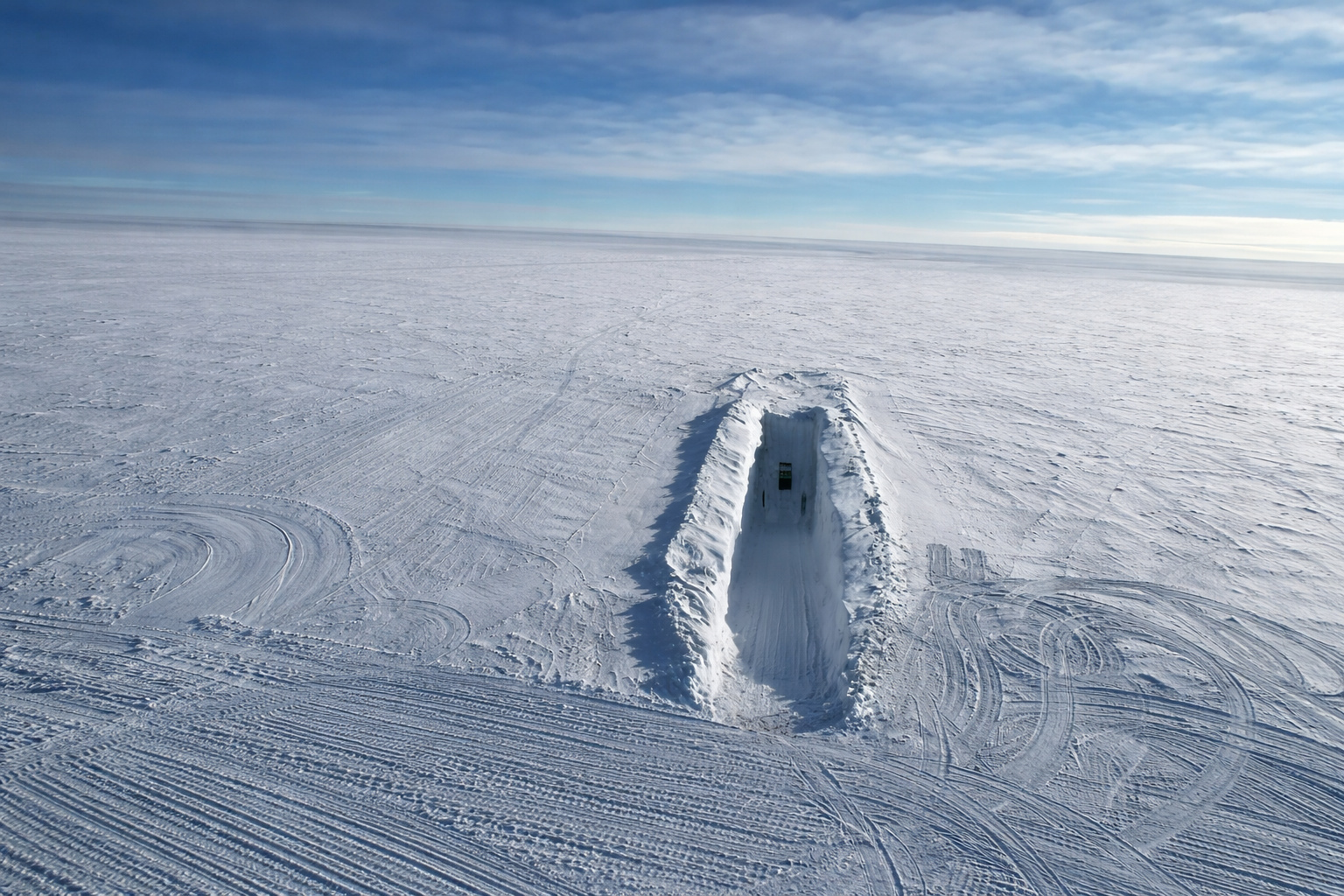
Autonomous ocean robots were employed to monitor hard-to-reach regions.
Sensors attached to elephant seals also contributed to the measurements, as these animals dive to great depths.
The information obtained revealed consistent changes in temperature and salinity of the waters.
The data confirmed that the Winter Water layer had been thinning and that, in 2015, there was mixing with warmer waters, consolidating the physical explanation of the phenomenon.
Direct impacts on climate and scientific models
The discovery brought important advances to the understanding of climate change.
The behavior of sea ice began to be interpreted with greater precision, considering the central role of the ocean.
Climate models used previously showed limitations by not accurately representing these processes.
The new approach allows for improved predictions and adjustments to simulations about the future of the region.
This advancement also reinforces the need for continuous monitoring of the Southern Ocean.
The new understanding of sea ice and the climatic future
The accelerated loss of sea ice in Antarctica was the result of a gradual process followed by a critical event.
The thinning of the cold layer prepared the system for more intense changes.
The storms of 2015 acted as a decisive factor by promoting the mixing of waters.
This set of factors explains the rapid transformation observed in recent years.
In light of this scenario, the future behavior of the Southern Ocean will be crucial to understanding how far these changes will continue to advance.