





 Portuguese
  English
  Spanish
  4 min of reading
  3 comments





New Civil Code Formalizes Socio-Affective Ties Between Stepparents and Stepparents, Allows Multiparentality at the Registry Office, and Maintains Animals as Movable Assets
The new Civil Code under discussion in the Senate proposes a redesign of family law by expressly acknowledging socio-affective relationships, such as the bonds between stepchildren and stepparents, and authorizing multiparentality directly at the registry office. At the same time, it preserves the traditional rule that animals continue to be classified as movable assets, even though the topic sparks debate.
The changes are included in a preliminary draft submitted by a panel of jurists and are currently being debated by a temporary committee of senators. Nothing is decided: the text may receive amendments and adjustments until the final vote. Nonetheless, the package signals significant shifts in parentage, successions, and property procedures.
Socio-Affective Relationships: What Changes in Practice
The new Civil Code consolidates in the legal text a reality already recognized by higher courts: parenthood can arise from affection and coexistence, not just from DNA.
-
With the arrival of Law 11.788, internships are now recognized as professional experience.

-
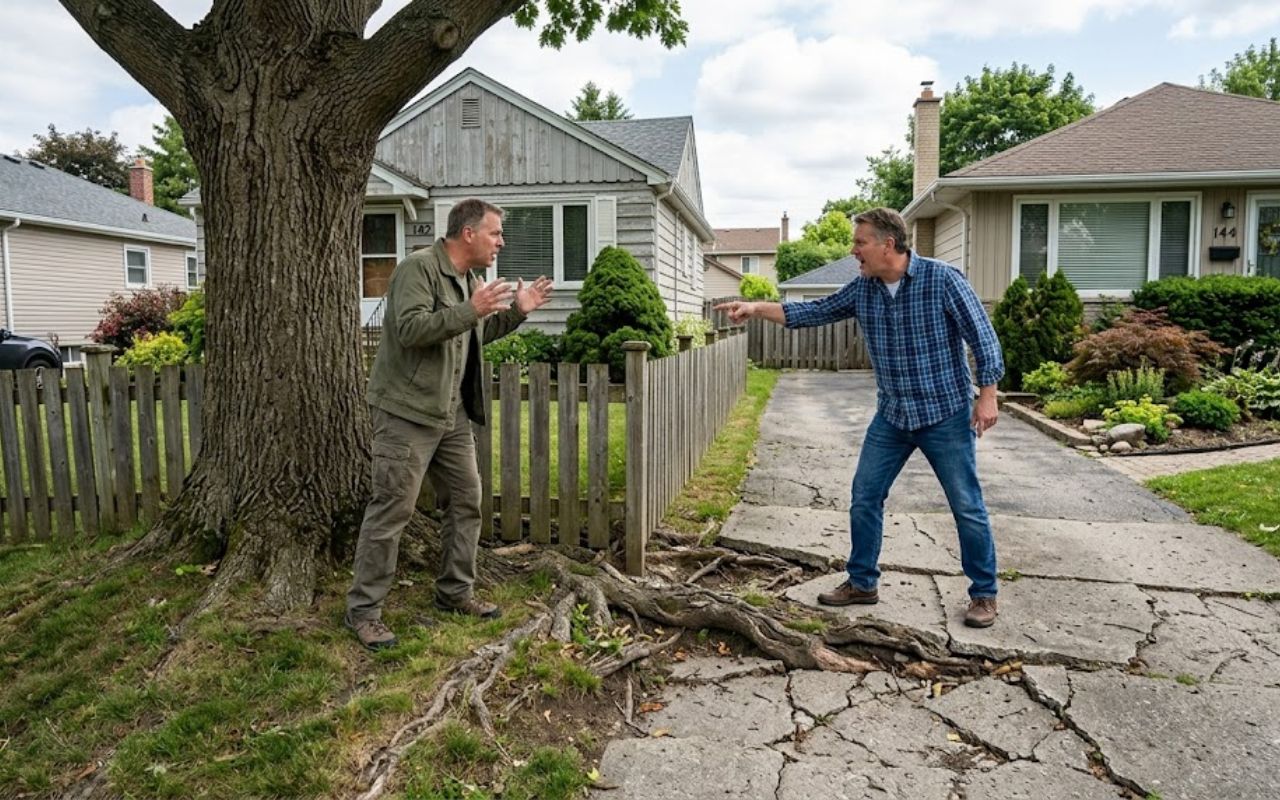
The Brazilian Civil Code states that a property owner has the right to cut the roots of a neighbor’s tree that invade their land, as long as it does not harm the tree itself. The owner must notify the neighbor before taking such action.
-
Engineer is sentenced to repay R$ 148 thousand after holding public positions in three municipalities in Rondônia with incompatible schedules, and the decision is upheld by the Court of Justice.

-
Chamber approves project that creates mandatory Life Insurance for police officers, firefighters, guards, and traffic agents.

Under the proposal, stepchildren and stepparents will be able to formalize the bond and have this relationship reflected in the civil registry, with the same legal effects applicable to parenthood.
Through the extrajudicial route, the movement reinforces CNJ Provision No. 83/2019, which already allows voluntary recognition of socio-affective parentage at the registry office for those over 12 years old.
The legal provision aims to streamline the path for reconstituted families, providing legal security at school, within health plans, and in daily decisions.
This is not about “replacing” biological parents, but about recognizing coexistence of bonds when care and presence are proven.
Multiparentality at the Registry Office: Scope and Safeguards
The proposal incorporates multiparentality — a thesis already established in case law — and opens the door for everything to be formalized at the registry office, without the need for legal action when there is consensus.
In practical terms, this can record more than one father and/or more than one mother, with full parenthood effects (such as duties of care and related rights).
To prevent abuses, the preliminary draft provides safeguards: the bond cannot be artificial (for example, “child of choice” without parental intent) nor serve to evade obligations of biological parents.
The focus is on the child’s best interest, and real and continuous affection remains a central criterion. In case of conflict, the judicial route remains available.
Animals Remain as Assets: What Does This Mean
Despite advancements in family structures, the new Civil Code keeps animals as movable assets.
In technical terms, they remain in the property sphere, which preserves the traditional civil regime.
Animal law experts criticize the choice not to elevate animals to the status of sensitive beings in the codified text, even though infraconstitutional laws and specific rulings already indicate expanded protection.
In practice, the status of “assets” does not prevent care and guardianship, but limits the scope of individual rights for animals within the Code.
The contrast is clear: while families modernize on paper, the guardianship of pets remains anchored in property, impacting divisions, custody in separations, and civil liability.
Successions, Stable Union, and Property: Other Sensitive Issues
The package goes beyond parenthood.
In successions, the preliminary draft removes, in certain cases, spouses and partners from the list of necessary heirs, expanding the freedom to test — a topic that promises intense debate due to possible effects on widows and widowers.
In stable unions, the civil status of “cohabitant” arises, to be registered at the registry office, providing documentary support to an arrangement currently recognized in fact.
In property law, the guideline is to expedite extrajudicial possession and give more autonomy to the real right of “laje”, including as a guarantee, facilitating urban regularization.
In the business sector, the update aims for modernization of rules (such as adjustments to limited liability companies and arbitration) and restrictions on SLU for individuals, seeking coherence with the theory of the enterprise.
Who Leads the Text and How It Advances in Congress
The new Civil Code originated from a commission of 34 jurists.
The current stage is in the Senate, in a temporary committee chaired by Rodrigo Pacheco, with a work plan anticipating a vote by July 2026.
Until then, public hearings and amendments may substantially alter the wording.
After the Senate, the matter goes to the Chamber, where a new cycle of debates opens.
The most controversial points are already on the radar: inheritance of the spouse/partner, legal status of animals, and rules for digital inheritance (accounts, assets, and online collections).
Each adjustment can impact the daily lives of millions of people — from recording reconstituted families to property organization and the registry procedures of everyday life.
Share, with real examples, how these changes would affect your daily life — from the registry office to inheritance — and why. Your experience helps illuminate where the law needs to get it right.










Quando a figura do padrasto for sobrepor a um pai que não esteja mais vivo ou nunca existido eu até acho coerente. Mas para País vivos e xistente jamais. Muitas mães vão usar isso pra destruir a imagem paterna real. Pois se já estão querendo exterminar a lei de alienação Parental! Daqui a pouco não existirá mais a figura do Pai natural, por que as mulheres ficaram com todos os poderes para ditar da maneira que melhor for conveniente pra ela. Absurdo isso!!!!! Que essa lei seja restrita apenas para filhos sem pai. Por que os Pais de verdade que vão sofrer com isso. Pra nós País é só a obrigação de pagar a apensao. Nem a imagem paterna é mais respeitada. Quero ver até onde vai esse lastro de destruição das famílias. Tantas coisas mais sérias pra corrigir no País. Respeitem as famílias. Pobre dessas crianças.
Esse novo código apresentado pela click parece grande coisa. Se passar do jeito que está só vai aumentar a judicializacao. O Pacheco, simplesmente colocou isso na pauta sem filtrar nada. Acho que não sofreria isso. Afinal ele não vive em sociedade. Assim como os juristas que elaboraram isso. Fico imaginando a quantidade de p!l4ntr4 dando golpe do socioafetivo.
VAI COLOCAR AGORA NA LEI O ESTELIONATO DA FILIAÇÃO SOCIOAFETIVA?!
Porquê é um estelionato querer obrigar alguém a ser pai quando a pessoa não colocou a criança no mundo. Isso é bom, para os HOMENS MUARES que fazem passeata para livrar a cara de ditadores mas não fazem passeata para livrar a própria pele desse estelionato de mães solteiras querendo pensão de bobos que apenas foram simpáticos com os filhos delas.