





 Portuguese
  English
  Spanish
  3 min of reading
  0 comments


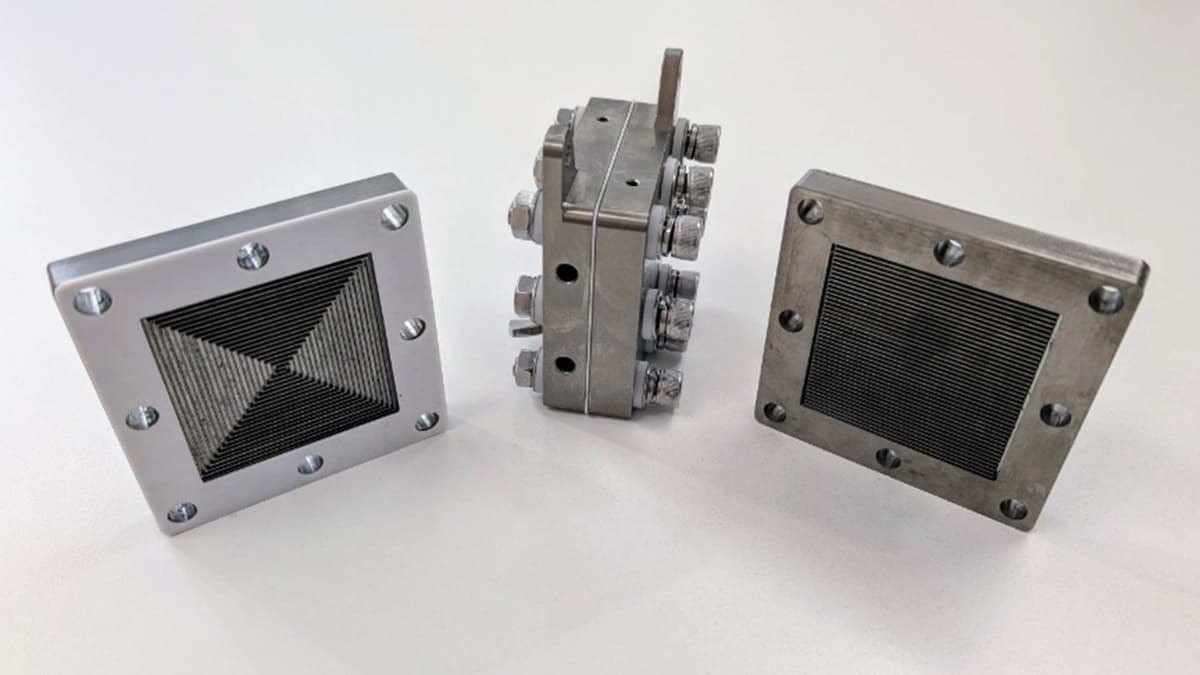
New Process Uses Plasma and Electricity to Produce Ammonia Directly from Air, Without Fossil Fuels or High Temperatures.
Researchers at the University of Sydney have developed a technique that could revolutionize the way the world produces ammonia. The new process does not rely on fossil fuels and eliminates the traditional Haber-Bosch method, responsible for a large part of industrial emissions on the planet.
A Leap Against Carbon
Ammonia is an essential ingredient for fertilizers and is linked to the production of nearly half of the food consumed globally.
The problem is that its current manufacturing method, the Haber-Bosch process, requires high temperatures, intense pressure, and heavy use of fossil fuels. The environmental impact is significant.
-
They were brilliant! Scientists discover that our ancestors in China were already making super advanced tools 160,000 years ago, changing everything we knew.

-
Scientists unveil 3 million years of climate secrets hidden in the ice of Antarctica.

-
Ancient farmers created “aggressive plants” that changed nature forever.

-
Astronomers find a “backward” solar system that ignores all the rules of space and leaves scientists scratching their heads!

Now, the Australian team has created a cleaner solution. Based on plasma and electricity, the scientists have managed to convert air directly into ammonia gas.
The result was achieved through a membrane electrolyzer, which transforms excited nitrogen and oxygen molecules into ammonia without the extreme requirements of the traditional model.
Gas Directly, Without Liquid Stage
The study represents an important innovation also in how the final product is delivered. Many previous studies only managed to produce ammonia in liquid form, requiring an additional step to convert it into gas.
In the case of the University of Sydney, the new approach eliminates this phase.
“In this research, we successfully developed a method that allows the conversion of air into ammonia in its gaseous form using electricity,” stated Professor PJ Cullen, project leader. According to him, this is a significant advancement toward clean and decentralized ammonia production.
Local and Low-Cost Production
The possibility of producing ammonia more cheaply and close to the point of use is of great importance for rural communities or areas off the electrical grid.
The new system developed is scalable and can be adapted for different sizes and needs, facilitating its adoption in various scenarios.
“Over the past decade, the global scientific community, including our laboratory, has been wanting to find a more sustainable way to produce ammonia that does not depend on fossil fuels,” Cullen emphasized.
Beyond Fertilizers
The utility of ammonia goes beyond agriculture. The substance is seen as a viable alternative for storing and transporting hydrogen.
Containing three hydrogen atoms, it can function as an energy carrier. Companies are already working on ways to extract hydrogen from ammonia.
This potential is attracting the attention of the shipping sector, which is seeking cleaner fuels to reduce its environmental impact. The maritime industry is responsible for about 3% of global emissions and is looking for viable alternatives to decarbonize its operations.
Silver Electrolyzer and Green Future
The new technology created by the Australian team revolves around a membrane electrolyzer. This small metal box is where the final transformation of air into ammonia gas occurs.
According to Cullen, the system is already showing good results with the plasma component but still needs adjustments in the energy efficiency of the electrolysis stage.
The study was published in the scientific journal Angewandte Chemie International Edition and could redefine the way the world views one of the most widely used and most polluting chemicals in the industry.








-

Uma pessoa reagiu a isso.