





 Portuguese
  English
  Spanish
  3 min of reading
  5 comments


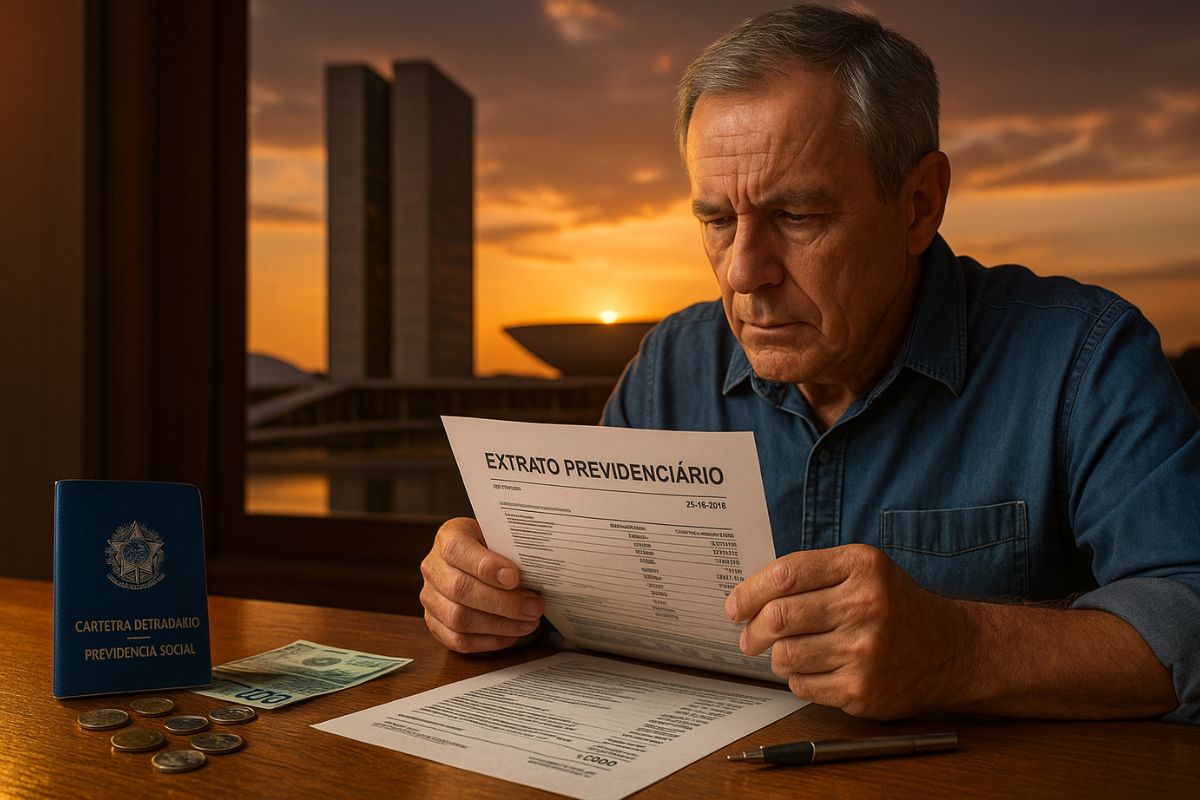


Chamber Approves Advance That May Benefit Millions of Retirees Who Continued Contributing to the INSS, Provided They Have at Least 60 Months of Contributions After Granting the Benefit.
The Chamber of Deputies approved a new bill in committee that promises to correct a historical distortion of Social Security: retirees who continued working and contributing to the INSS but never saw those contributions reflected in their benefit amount. Under the proposal, anyone who has already retired and made new contributions for at least 60 months can request a recalculation of income.
Experts such as lawyer Elizelton Reis Almeida highlight that this measure responds to a long-standing demand. Until now, the money collected after retirement served only to sustain the system without generating individual gain.
If it becomes law, the project will create a real incentive for workers who remain active even after retirement.
-
The government is considering a temporary subsidy for cooking gas following the spike in oil prices due to the war in Iran and warns about the impact of 20% of imports on the prices paid by families.

-
The lack of truck drivers in the country is already halting shipments and threatening deadlines: 88% of transport companies are unable to hire, with an average of eight trucks idle, and the port complex of Itajaí is now feeling the impact.

-
Petrobras is about to transform a forgotten city in the far north of Brazil into the capital of oil: Oiapoque is already feeling the effects even before the first drop of oil comes out from the seabed.

-
The Economist says that Brazil has a secret weapon in the oil war during this crisis: ethanol, biodiesel, and flex-fuel vehicles. With Petrobras holding costs, fuel prices are rising 10% to 20% here, compared to 30% to 40% in the USA.


What Changes With the New Bill

The approved text allows retirees to request a review of their monthly income as long as they have made five years of new contributions to the INSS. This minimum requirement was included to prevent review requests with short contribution periods, which could compromise the system’s balance.
According to Elizelton Reis Almeida, the change corrects a historical injustice, as thousands of insured individuals were forced to contribute without any return.
Now, these contributions may lead to an increase in benefits, ensuring more equity in social security.
Relation to the Retirement Adjustment Blocked by the STF
This debate harkens back to an old legal battle known as retirement adjustment. For years, insured individuals went to court to use contributions made after retirement in the recalculation of benefits.
Many lawsuits were victorious in lower courts, but in 2016 the Supreme Federal Court (STF) ruled that there was no legal provision for this type of review.
The new bill creates exactly the legal basis that was missing. If definitively approved, Congress addresses the gap pointed out by the STF and makes the review a right guaranteed by law.
Impacts for Retirees and the Social Security System
The change could benefit millions of Brazilians who continue to work even after retiring. Freelancers, entrepreneurs, public servants who migrated to the private sector, and formally employed workers are among the most affected.
On the other hand, the government will have to evaluate the additional costs of this measure. The social security system already faces budgetary pressures, and the inclusion of new calculations could increase expenses.
The criterion of 60 months of new contributions is seen as a protective mechanism to mitigate the impact.
Points That Still Need to Be Defined
Despite the progress, important doubts remain. The project does not detail the calculation formula for integrating new contributions into the already granted benefit. It is also unclear whether there will be limits, reductions, or transition rules.
Defining these points will be essential to measure the real gains for retirees.
Moreover, the proposal needs to go through new committees, the plenary of the Chamber, and the Senate before proceeding to presidential sanction. Only after that can the right be effectively exercised.
The new bill approved in the Chamber reignites a historical debate and may represent a significant victory for those who continued contributing to the INSS even after retiring.
The proposal responds to a long-standing demand and creates expectations of justice for millions of insured individuals.
And what about you? Do you believe that this recalculation is a fair way to value retirees who remained active or do you fear that the fiscal impact may be an obstacle to final approval?
Leave your opinion in the comments; we want to hear from those living this reality.









Se trata de justiça social. Porque o aposentado que continua contribuindo para a Previdência social está participando da produção de riquezas (PIB) e nada mais justo que receba sua parcela de contribuição em forma de reajuste na Aposentadoria.
Essa decisão corrige uma injustiça visível, tendo em vista os calores contributivo, sem qualquer retorno ao contribuinte. Já demorou bastante e deveria ser retroativo, ao término dos 5 anos.
Muito justo, trabalho a mais de 15 anos após minha aposentadoria desconto INSS, e não tenho retorno nenhum, muita injustiça para com o trabalhador, que realmente venham reconhecer e que a lei seja aprovada, os trabalhadores merecem .