





 Portuguese
  English
  Spanish
  3 min of reading
  0 comments


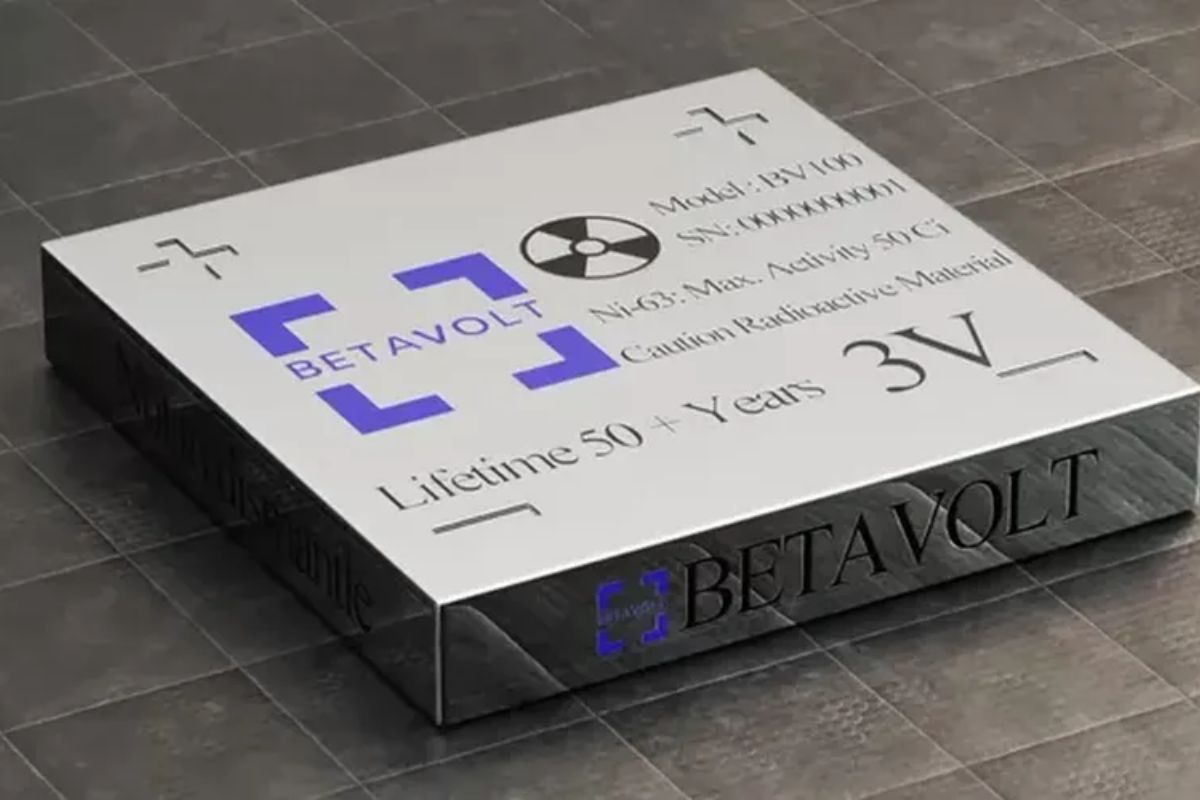
Nuclear Battery Promises 50 Years Of Runtime Without Recharge. New Chinese Technology Creates Nuclear Battery That Can Last Half A Century Without Recharge And With Three Times Greater Efficiency Than Current Ones.
The nuclear battery promises 50 years of runtime without recharge, marking a historic leap in the quest for more reliable energy sources. Developed by Chinese scientists, the innovation is especially geared towards extreme environments, such as space missions and equipment in deep waters, where frequent maintenance is unfeasible.
According to researchers, this new technology overcomes the limitations of conventional batteries, offering unprecedented durability, stability, and energy efficiency. The promise is to transform strategic sectors and redefine the future of projects requiring a constant energy supply.
Why The Nuclear Battery Promises 50 Years Of Runtime Without Recharge
The nuclear battery promises 50 years of runtime without recharge precisely because it was designed to address the bottlenecks of current systems. Today, chemical batteries and photovoltaic cells fail to maintain reliable performance in hostile environments. This deficiency hinders the progress of space exploration projects, military operations, and underwater research.
-
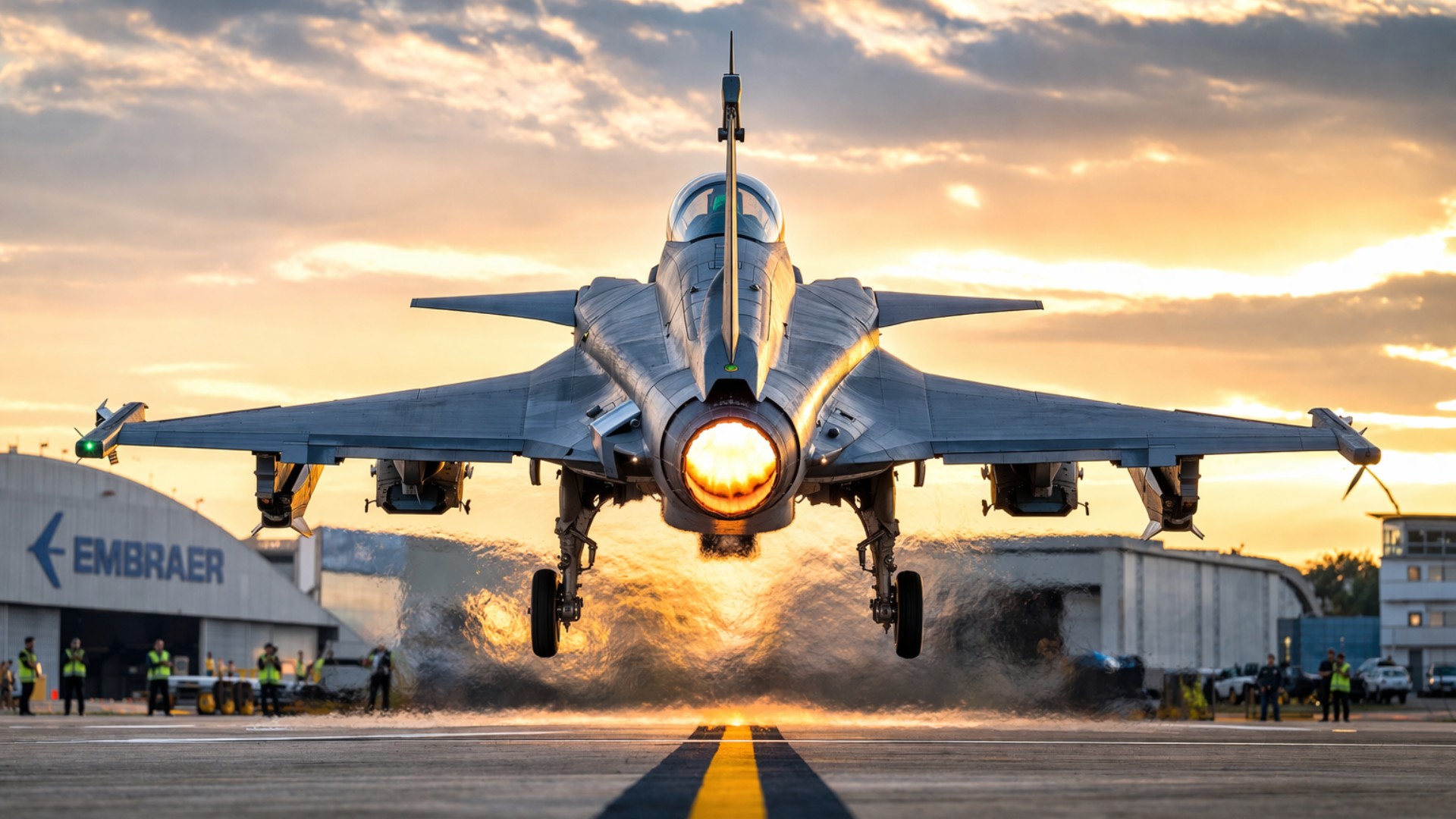
Brazil joins the select group of countries by producing a supersonic fighter that reaches 2,400 km/h with advanced electronic warfare technology, US$ 4 billion in investments, 36 units planned, 350 trained engineers, and unprecedented national production by 2032.
-
At the bottom of the sea, scientists have found a true underwater cathedral measuring 62 meters at the base, 31 meters at the top, and 1,347 square meters of giant coral in the Maug Islands, estimated to be 2,050 years old.

-
Surrounded by the sea, the airport will have a system to prevent airplanes from falling into the water; technology will be installed in Ilhéus (BA), with an investment of R$ 70 million.

-
With a cost per shot close to zero, the DragonFire laser could change naval warfare in 2027 and provide British ships with nearly unlimited defense against drones.


Based on radio-photovoltaic cells (RPVCs), the new device uses the isotope strontium-90 combined with GAGG:Ce crystals, known for their high green luminosity at 520 nanometers. The result is a battery that can operate without maintenance for decades, with minimal performance loss.
How The Nuclear Battery Works
According to teams led by Professor Haisheng San from Xiamen University and Professor Xin Li from the Chinese Academy of Atomic Energy, the secret of the innovation lies in a design that balances efficiency and stability.
In tests, the battery achieved 2.96% energy conversion efficiency, with an output power of 48.9 microwatts per individual cell. When grouped, the RPVCs reached up to 3.17 milliwatts of power, surpassing all previous designs. For comparison, the efficiency was three times higher than traditional structures.
Durability Test Results
What confirms that the nuclear battery promises 50 years of runtime without recharge was the stress test under conditions equivalent to half a century of use. Even after this simulation, the system showed only 13.8% performance loss, which is considered exceptional.
This means that the nuclear battery is ideal for critical applications, such as space probes, long-duration satellites, autonomous underwater missions, and even defense systems. For scientists, this technology represents the beginning of a new energy era.
Limitations And Challenges For Mass Production
Despite the advancement, researchers acknowledge that there are still obstacles. The biggest one is the high cost of strontium-90 radioisotopes and the difficulties in scaling up production. Additionally, there are regulatory and safety challenges related to the use of nuclear materials in commercial devices.
Even so, experts believe that the nuclear battery promises 50 years of runtime without recharge will be a key component for the future, especially in areas that rely on energy self-sufficiency in extreme conditions.
What To Expect In The Coming Years
With the promising results, the nuclear battery promises 50 years of runtime without recharge is already drawing interest in strategic sectors. Space exploration projects, scientific research, and military infrastructure could be the first to adopt the technology.
If it can overcome production barriers, this innovation could reach large-scale civilian applications, revolutionizing everything from electric cars to personal electronic devices.
If its commercial viability is confirmed, this technology may radically change the concept of portable and sustainable energy.
The nuclear battery promises 50 years of runtime without recharge and demonstrates to be one of the most significant advances in energy engineering in recent years. Durability, efficiency, and stability position this innovation as a candidate to redefine the limits of what we understand as device autonomy.
What do you think, do you believe this battery can really change the energy market? Or do you think the challenges of cost and safety will still delay its adoption? Leave your opinion in the comments — we want to hear the views of those closely following this revolution.








Seja o primeiro a reagir!