





 Portuguese
  English
  Spanish
  3 min of reading



In Controlled Laboratory Conditions, the Wind Harvester Reliably Powered About 40 LEDs While the Wind Blowed at a Rate of 4 Meters Per Second
The Nanyang Technological University, in Singapore, played a role in developing an affordable device that can capture energy from small wind vibrations, like a breeze, and store it as electricity.
As a “wind collector,” the lightweight and durable gadget also redirects any energy that is not being used immediately to a battery, where it is stored to power equipment when there is no wind present.
In tests conducted by the university scientists, a small-scale prototype measuring 15 by 20 centimeters produces a voltage of three volts and generates up to 290 microwatts when subjected to wind speeds as low as two meters per second (2 m/s). This amount of energy would be sufficient to power sensors, light small LEDs, or send data to a mobile phone or computer.
-
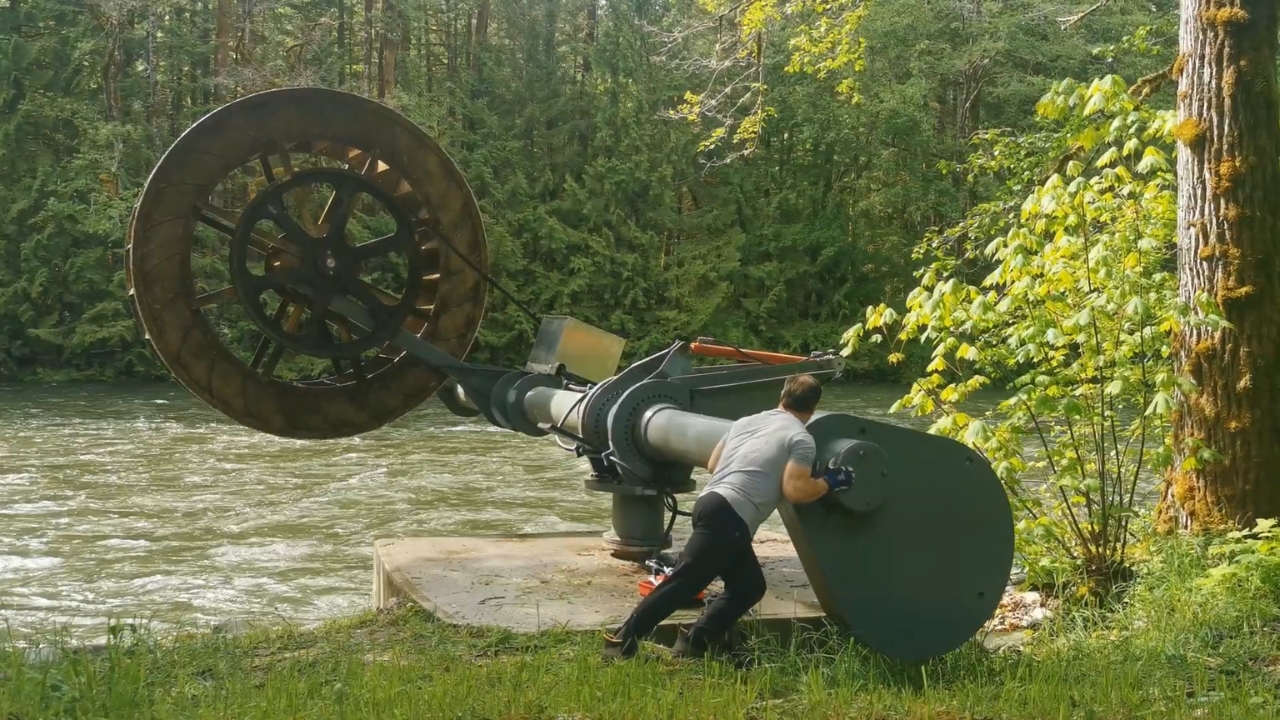
A Canadian retiree creates a hydroelectric system on a real river, generating energy continuously throughout the day and demonstrating how the power of water can supply a house with stability even in a simple structure.
-
Giant of the winds in Rio Grande do Norte: Serra do Tigre Wind Complex receives new investments and accelerates the expansion of clean energy generation to supply millions of Brazilian homes.

-
Petrobras reaffirms its commitment to the market and ensures that it will carry out the energy transition safely to maintain national sovereignty.

-
Researchers discover a possible hydrogen deposit of up to 46 million tons beneath an ancient coal basin, and the volume could exceed half of the entire global production.


Due to its lightweight nature, the device is easily mountable on the sides of buildings and would be more suitable for use in urban situations where the average wind speed is below 2.5 meters per second.
The group of scientists believes that their creation could one day replace batteries in applications such as providing electricity to LED lights and sensors that monitor the structural integrity of buildings and bridges, among other applications that require low but continuous energy.
How the Wind Harvester Works
The wind harvester is a vibratory device that leverages the so-called galloping effect, which is an aerodynamic instability produced in a wind current by a physical structure. This effect can be easily observed in electrical cables. In traditional wind turbines, what captures the wind and converts it into movement is a weather vane. However, this new wind collector is a vibratory device that harnesses the “air galloping” effect, a kind of instability that occurs when the air current passes through a structure.
When the wind harvester is subjected to the moving air flow, the dynamic design of its construction causes it to start vibrating, which makes its plate move closer to and farther from a stop, which acts as a movement limiter. This happens because the plate has a variable distance between it and the stop.
Due to the triboelectric effect, the movement results in the accumulation of electrical charges in the vibrating arm. A flow of electricity that can be used immediately or sent to a battery for later use can be generated by electrodes that are coupled to a management system and allow this flow to be produced.
Energy-Generating Device is Made with Low-Cost Materials
The main accessory of the device, which interacts with the wind, is made from low-cost materials such as copper, aluminum foil, and polytetrafluoroethylene, which is a durable polymer better known by its brand, Teflon.
The group plans to continue development with the goal of improving energy storage capabilities, and also plans to conduct experiments with a variety of materials in an effort to increase its energy production.







Seja o primeiro a reagir!