





 Portuguese
  English
  Spanish
  4 min of reading
  0 comments


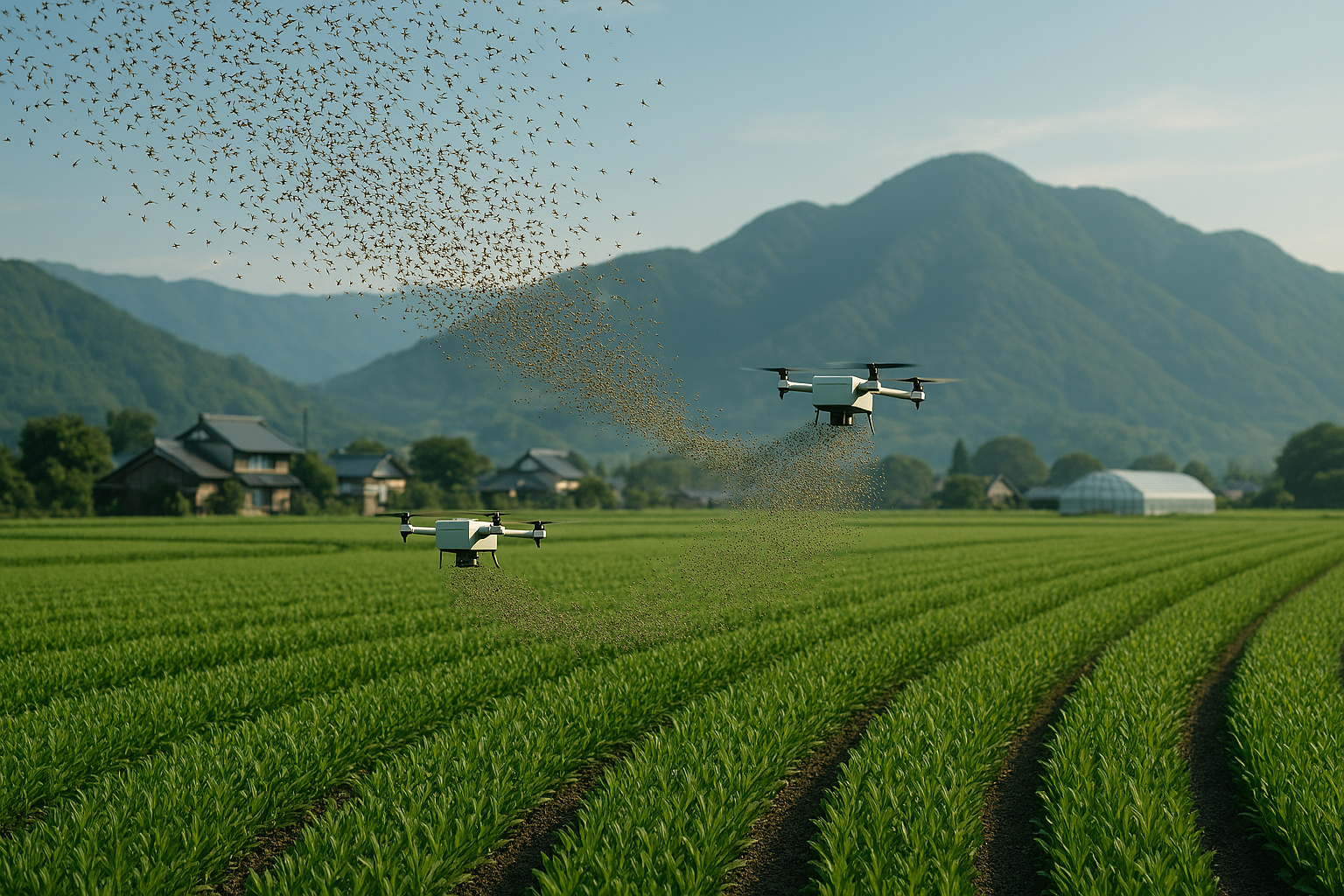
Japan Eliminated Agricultural Pests Without Pesticides by Releasing Millions of Sterile Insects, Protecting Crops, Saving Billions, and Creating Pesticide-Free Zones on Entire Islands.
For decades, Japan faced a silent yet devastating enemy to its agriculture: highly invasive fruit flies, capable of destroying entire harvests of fruits, vegetables, and greens in a matter of weeks. Species like Bactrocera dorsalis and Ceratitis capitata spread rapidly, attacking mango, citrus, melon, guava, and various other high-value crops. Traditional combat, based on intensive chemical spraying, brought severe side effects: environmental contamination, pest resistance, risks to human health, and losses to international trade, as many countries impose strict restrictions on products with pesticide residues.
It was in this context that Japan decided to take a radically different path.
The Japanese Strategy: Breaking the Pest Biological Cycle
Instead of trying to kill adult insects with poisons, Japan relied on pure science. The country implemented on a large scale the Sterile Insect Technique (SIT), a method initially developed in nuclear and biological research after the war, but found its most ambitious application in Japanese agriculture.
-
BNDES releases R$ 129 million for CNH Industrial Brazil to create more modern agricultural machines, with eight projects that include harvesters, accessible tractors, and a planter capable of applying seeds, fertilizers, and inoculants all at once in the Brazilian field.

-
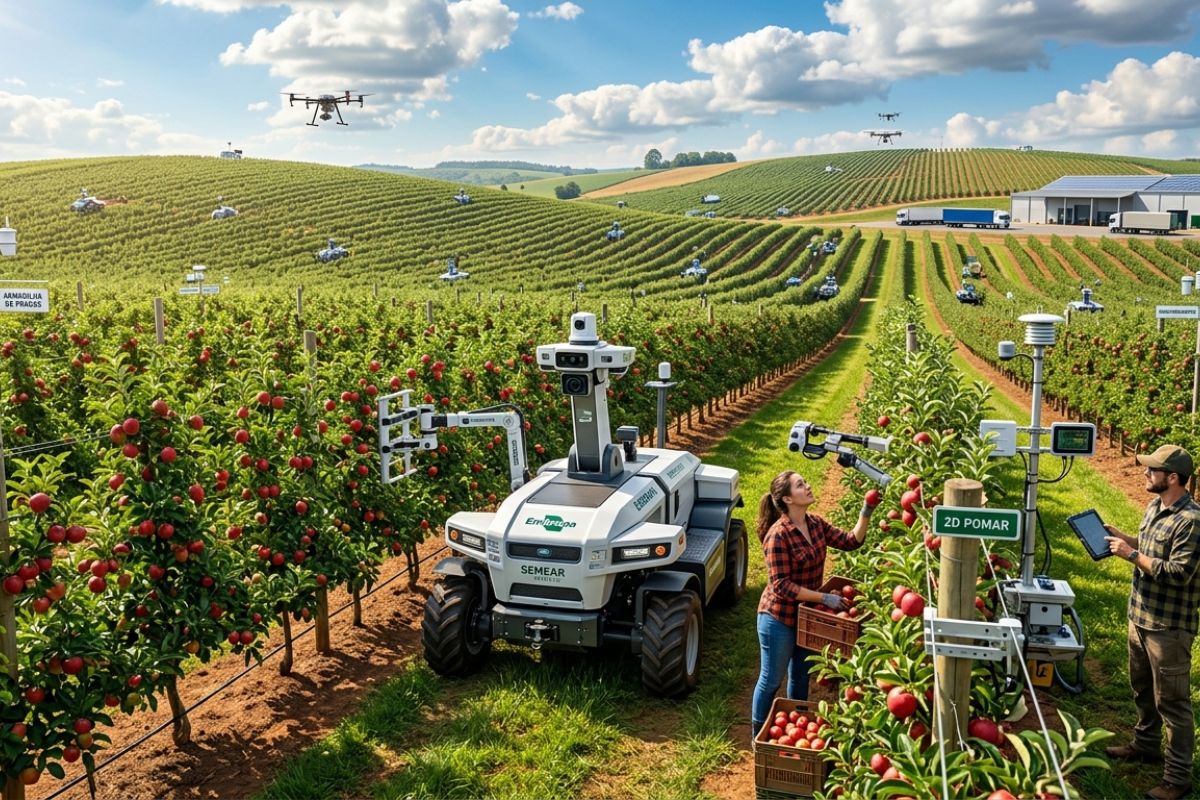
From manual harvesting to robotics: Vacaria, the apple capital, becomes an Embrapa laboratory in Semear Digital, with point-to-point mapping, pest traps, traceability, and 2D orchards to combat labor shortages.
-
In 2026, Brazilian soy becomes airplane fuel: Corsia mandates SAF, oil gains a premium of 40% to 80%, biorefineries alongside crushing plants and long-term contracts remove the producer from the commodity discount.

-
Brazilian agribusiness advances in four countries at the same time, gains space to sell fruits to Cuba, and opens shipments of meat, seeds, and feed to new markets.



The principle is simple yet powerful: insects of the pest’s own species are raised in the lab, sterilized by radiation, and released in mass into the environment. These sterile males compete with fertile males in nature. When a female mates with a sterile insect, no offspring are born.
Over time, the population collapses.
Millions of Insects Released on Entire Islands
Japan took this technique to an unprecedented level. In regions like Okinawa and the southern islands of the archipelago, the Japanese government began releasing tens of millions of sterile insects per week, for consecutive years.
Only in the fruit fly eradication program in Okinawa, it is estimated that more than 300 million sterile insects were released throughout the project, completely transforming the local agricultural landscape.
The result was historic: entire islands declared free of the pest, something considered impossible until then without the continuous use of pesticides.
Agriculture Without Chemical Spraying on a Large Scale
With the eradication of the target pests, Japan achieved something rare in modern agriculture: virtually eliminating all chemical spraying associated with the control of these specific species.
This brought direct and measurable impacts:
– drastic reduction in pesticide use
– recovery of beneficial insects and pollinators
– lower contamination of soil and water
– food with virtually zero levels of chemical residues
– opening of previously restricted international markets
In many areas, producers began operating entire years without any application of insecticide, something unthinkable in conventional agricultural systems.
Economy, Export, and Food Security
The economic impact of the strategy was enormous. Before the program, the presence of flies prevented the export of fresh fruits to demanding markets like the United States and the European Union. After eradication, the restrictions were lifted, allowing Japanese products to gain value and competitiveness.
Studies from the Japanese government itself indicate that the program generated savings of hundreds of millions of dollars over the decades, considering the reduction of pesticides, avoided agricultural losses, and increased exports.
More than that, the model increased food security by reducing dependence on imported chemical inputs and making the system more resilient.
Technology, Logistics, and Absolute Control
The Japanese operation is not simple. It involves:
– highly controlled biofactories
– massive insect breeding in a sterile environment
– sterilization by ionizing radiation
– constant population monitoring in the field
– coordinated aerial and ground release
Everything is accompanied by smart traps, genetic analyses, and population modeling, ensuring that the release is always higher than the natural reproduction rate of the pest.
Japan has turned biological control into applied population engineering, with near-industrial precision.
Why Few Countries Have Managed to Repeat the Feat
Although the Sterile Insect Technique is globally known, few countries have managed to apply it with the same success as Japan. The reason is clear: it requires continuous investment, long-term planning, and state coordination.
It does not work with improvised solutions or short political cycles. It is a strategy that takes years to show results, but when it works, it eliminates the problem at its root.
Japan bet on this model because it understood that killing insects does not solve the problem; interrupting reproduction does.
The Japanese experience proved something that challenges the dominant logic of agriculture in recent decades: it is possible to protect entire crops without relying on pesticides, even in tropical and subtropical regions highly susceptible to pests.
Instead of increasing doses, creating new poisons, or chasing after increasingly resistant insects, the country opted for applied biological engineering at a territorial scale.
A Living Laboratory for the Future of Agriculture
Today, the pest-free Japanese islands operate as living laboratories, observed by scientists, governments, and producers worldwide. The model has already inspired similar programs in countries in Asia, Oceania, and Latin America.
More than an experiment, Japan has shown that the future of agriculture may lie less in chemicals and more in a deep understanding of biology.
And while many are still spraying trying to contain symptoms, Japan continues to tackle the cause.









-

-

-

3 pessoas reagiram a isso.