





 Portuguese
  English
  Spanish
  3 min of reading


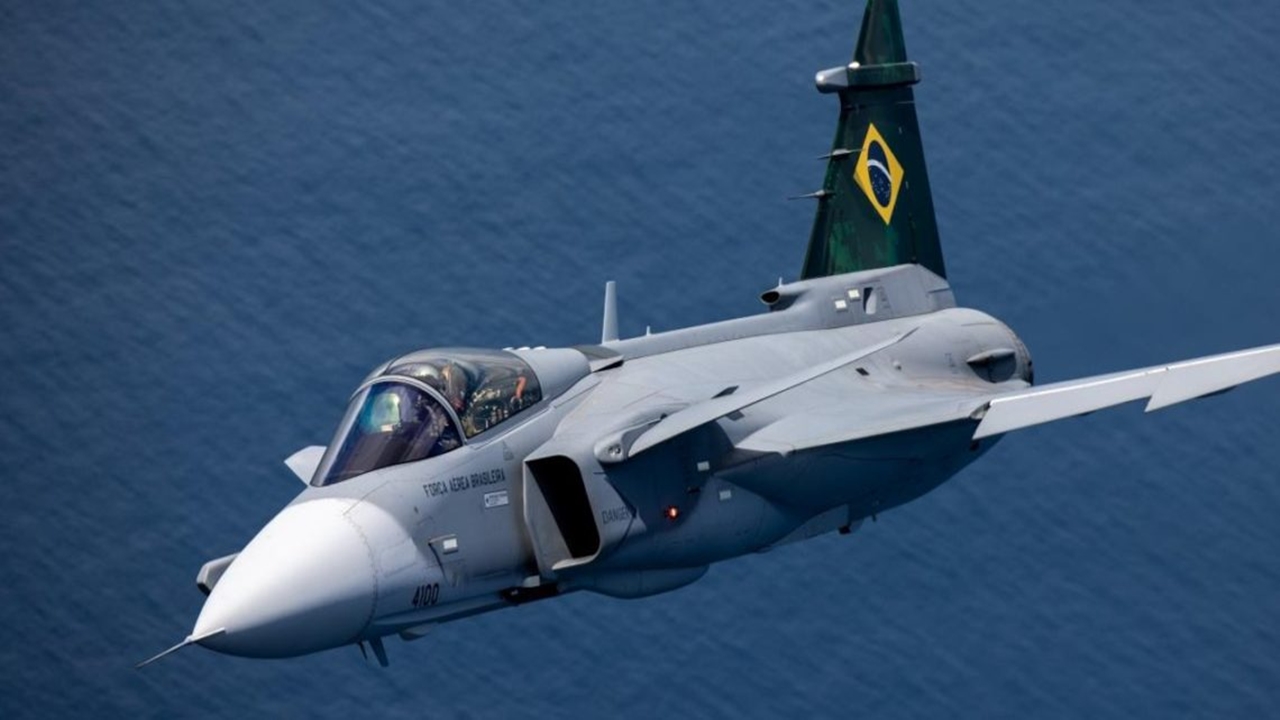
The New Fighter Jet of the Brazilian Air Force Will Perform Supersonic Flights Over the Next Few Months. Flying Faster Than the Speed of Sound Creates a Different Sound Wave, a Sonic Boom That May Seem More Like Thunder Than an Aircraft Passing
Saab confirmed today (3) that the new fighter jet of the Brazilian Air Force (FAB), F-39 E Gripen, has begun the supersonic flight testing phase in Brazil. The tests with the aircraft are being conducted at Embraer’s facility in Gavião Peixoto (SP), where the Gripen Flight Test Center (GFTC) is located. Looking for a job? Job openings in RJ for civil and industrial construction works at Companhia Brasileira de Serviços de Infraestrutura – CBSI
Read Also
- Petrobras Uses Artificial Intelligence and Reduces the Reservoir Modeling Phase by 80%
- Job vacancies for primary, secondary, technical, and higher education for offshore and onshore contracts in Rio das Ostras, Macaé, Aracruz, and São Paulo
- With 27 Contracts Invoiced by Petrobras on Offshore Platforms, Engeman Macaé Calls for Job Openings in Various Positions
- After Ford’s Exit from the Country, Multinationals Honda and Chevrolet Halt Vehicle Production in Brazil, and the Automotive Industry May Face Collapse
The supersonic flights conducted by Saab are carried out in predetermined testing areas northwest of the GFTC and at high altitudes, above 5,000 meters.
The Swedish company states that the supersonic tests of the new fighter jet of the Brazilian Air Force “are essential to test the aircraft’s performance and functions” and to continue the certification and acceptance procedures for the new FAB fighter, which expects to receive the first operational units by the end of this year – the first Gripen that arrived in Brazil in September 2020 is a specific model for flight testing and certification.
-
Premium Brazilian brand born during the pandemic brings fine cocoa from Bahia to Switzerland, Germany, and France, has won 9 awards, and claims to have the 2nd best milk chocolate in the world: meet Luz Cacau.

-
Júnior Friboi has just purchased one of the largest feedlots in all of Brazil, located in Goiás, with the capacity to produce 180,000 cattle per year, and the manager has already come forward to reassure employees about layoffs.

-
Pharmacy inside the supermarket: what changes now in your purchase, why medicines won’t go on the shelves, which rules remain strict, mandatory pharmacist, separate space, controlled storage, more convenience and competition in the country.

-
Ports like Santos and Paranaguá are operating at their limits and may block containers as early as 2030, warns a study by Macroinfra; bottlenecks increase costs and delays and push cargo to Rio, Salvador, Pecém, and Suape across Brazil.


“The Gripen will perform supersonic flights over the next few months. Flying faster than the speed of sound creates a different sound wave, a sonic boom, that may seem more like thunder than an aircraft passing. It is possible that residents in the area will hear this noise during the tests with the new Brazilian fighter. We take care to ensure that these supersonic flights are conducted in designated testing areas, in coordination with aviation authorities according to Brazilian Air Force procedures,” explains Sven Larsson, director of the GFTC.
In Sweden, which also ordered the new fighter for its air force, the Gripen E began supersonic flight testing in October 2017. The aircraft is designed to fly at Mach 2 (about 2,470 km/h).
Testing the New Fighter Jet of the Brazilian Air Force in Supersonic Flight in Brazil Aims to Test the Aircraft in Tropical Climate
The activities in Brazil include flight control system testing and climate systems. It also aims to test the aircraft in tropical climate. Unique features of Brazilian aircraft, such as weapon integration and the Link BR2 communication system – which provides encrypted data and voice communication between aircraft – will also be tested in Brazil.
The partnership with Brazil began in 2014, with a contract for the development and production of 36 Saab Gripen E/F aircraft for the Brazilian Air Force, including systems, support, and equipment. A comprehensive technology transfer program, which is being executed over a ten-year period, is driving the development of the local aerospace industry through partner companies participating in the Brazilian Gripen program.









-

Uma pessoa reagiu a isso.