





 Portuguese
  English
  Spanish
  3 min of reading
  1 comment


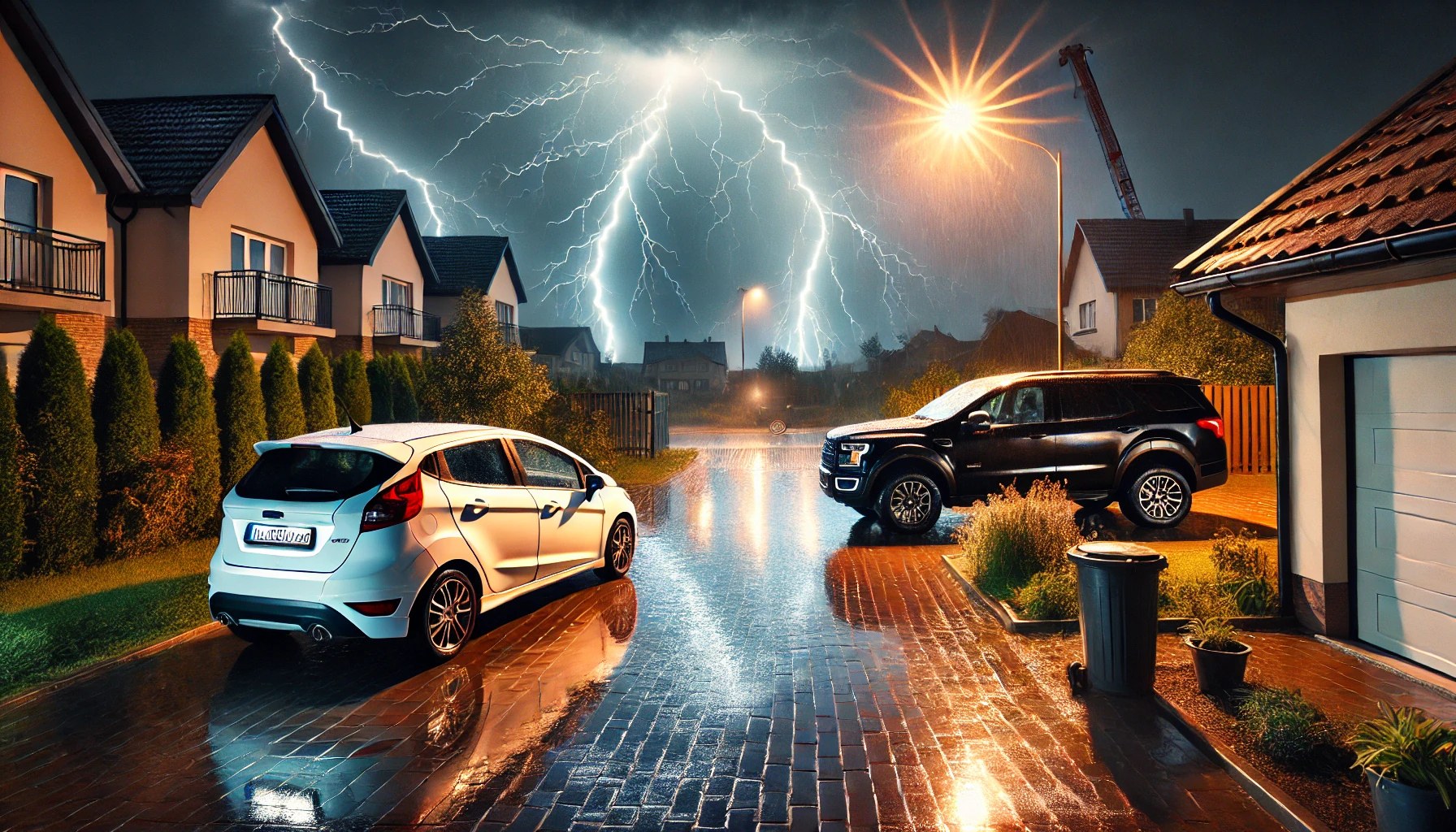

Lightning Storms Can Be Dangerous, And Many People Wonder If A Car Is A Safe Place To Shelter. When A Lightning Strike Hits A Vehicle, Its Metal Structure Functions As A “Faraday Cage”, Protecting The Occupants, But The Impact Can Cause Electrical Damage And Affect Electronic Components.
Lightning is one of nature’s most impressive spectacles, but it also represents a real danger. When lightning strikes a car, the consequences can be unexpected and surprising. Many people believe that rubber tires protect the occupants, but the reality is different.
The Impact Of A Lightning Strike On A Car
When lightning strikes a vehicle, the first point of contact is often the antenna or the roof. The electricity travels through the metal structure, causing various damages.
Since many modern cars have defrosting wires in the rear window, these components are frequently affected.
-
Fiat is preparing an offensive with a 7-seater SUV larger than the Fastback, debuting in October 2026 with the Smart Car platform, electric versions with up to 400 km of range, turbo hybrid, new pixelated LEDs, and an advanced ADAS package.
-
OMODA 7 transforms the car into a global aesthetic expression by combining automotive design and fashion in London.
-
JAECOO takes the lead in global strategic markets and accelerates its trajectory to become a “global blockbuster maker” in the automotive industry.
-
OMODA redefines global aesthetics and elevates the OMODA 7 to a multicultural fashion icon, uniting design, technology, and international identity.


There are also risks for the antenna, electrical system, and tires, as the current can pass through the internal steel belts.
If the discharge is intense, the heat generated can cause internal fires or malfunctions in the car.
Despite this, occupants are generally safe, as long as they do not touch metal parts during the storm.
The Myth Of Rubber Tires
There is a popular belief that rubber tires protect a car from lightning. This is not true. What really protects the passengers is the “Faraday cage” effect.
The car’s metal structure conducts electricity to the ground, minimizing the risk for those inside. Even modern vehicles made with composite materials have metallic elements to maintain this protection.
However, this defense mechanism only works in cars with metal roofs and sides. Convertibles or vehicles with large carbon fiber panels do not offer the same safety.
How Often Does This Happen?
Being struck by lightning inside a car may seem like a rare event, but statistics show it occurs more frequently than one might think.
The individual chances are about one in 100,000, but worldwide, millions of vehicles are struck annually.
Real cases illustrate this phenomenon. In April 2024, a woman driving on a highway in the state of Virginia had her car struck by lightning.
The impact was alarming, but she emerged unscathed. In July of the same year, a driver in Georgia had his vehicle damaged by a lightning strike. In both cases, the occupants were safe, but the cars sustained damages.
Tests And Experiments
In a famous experiment on the “Top Gear” show, former host Richard Hammond tested the resilience of a Volkswagen Golf to a discharge of 800,000 volts.
The car withstood the impact, but Hammond reported a tingling sensation in his hands. This suggests that a small amount of current can reach the passengers.
Interestingly, most automakers do not conduct specific tests to assess their vehicles’ resistance to lightning. This makes each real occurrence an opportunity to learn about how cars react to electrical discharges.
How To Protect Yourself
If you are inside a car during a lightning storm, some precautions can increase your safety:
- Avoid touching metal parts or those connected to the electrical system.
- Keep your hands in your lap and wait for the storm to pass.
- If possible, park in a safe location and remain inside the vehicle.
Modern cars offer good protection against lightning, but understanding how this safety works can help avoid unnecessary risks.


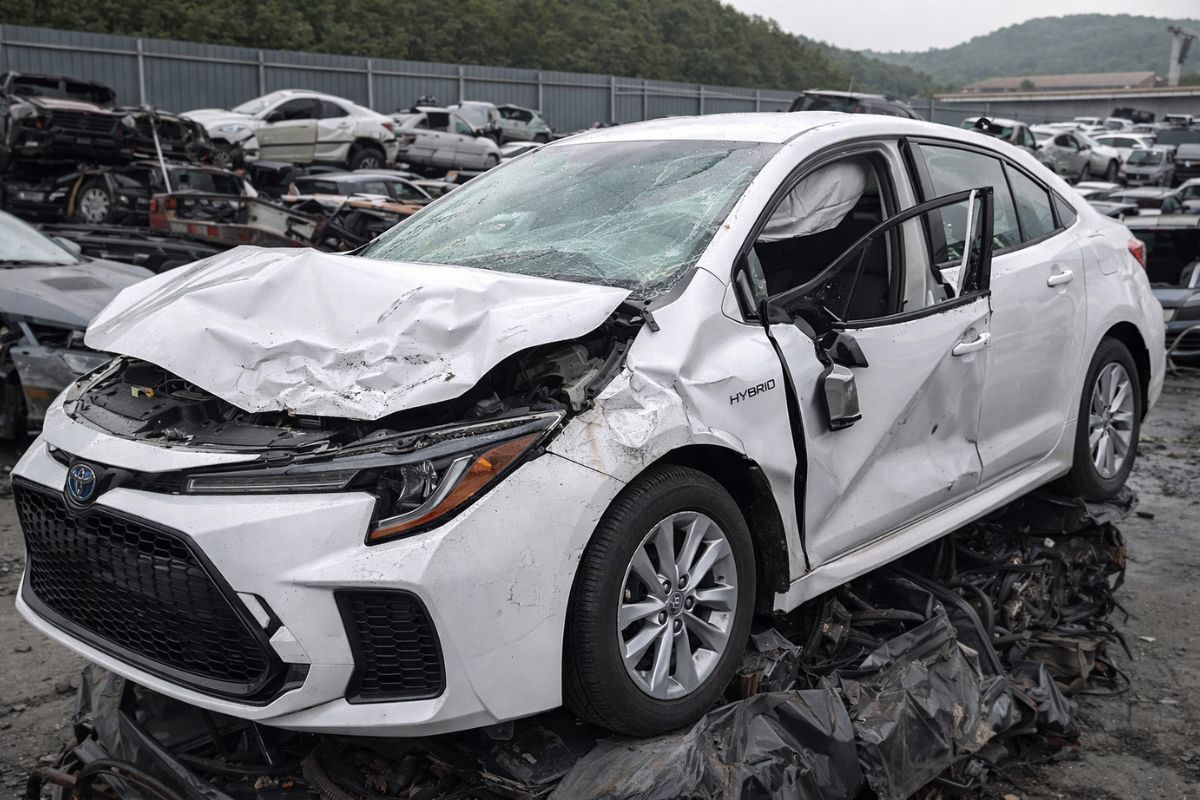







Aconteceu comigo, um estrondo seguido de uma clarão, o carro estava em movimento, imediatamente toda a parte eletrônica do mesmo colapsou, um forte cheiro de plástico queimado tomou o interior do veículo, após alguns minutos consegui sair do veículo e o único dano visível foi a antena, a mesma havia desaparecido do teto. Uma semana após o incidente, a seguradora decretou a perda total do veículo, no laudo constava dano severo a toda parte elétrica e eletrônica. Agora fico com receio de tempestades e, o conselho que sempre digo é procurar abrigo.