





 Portuguese
  English
  Spanish
  3 min of reading
  0 comments


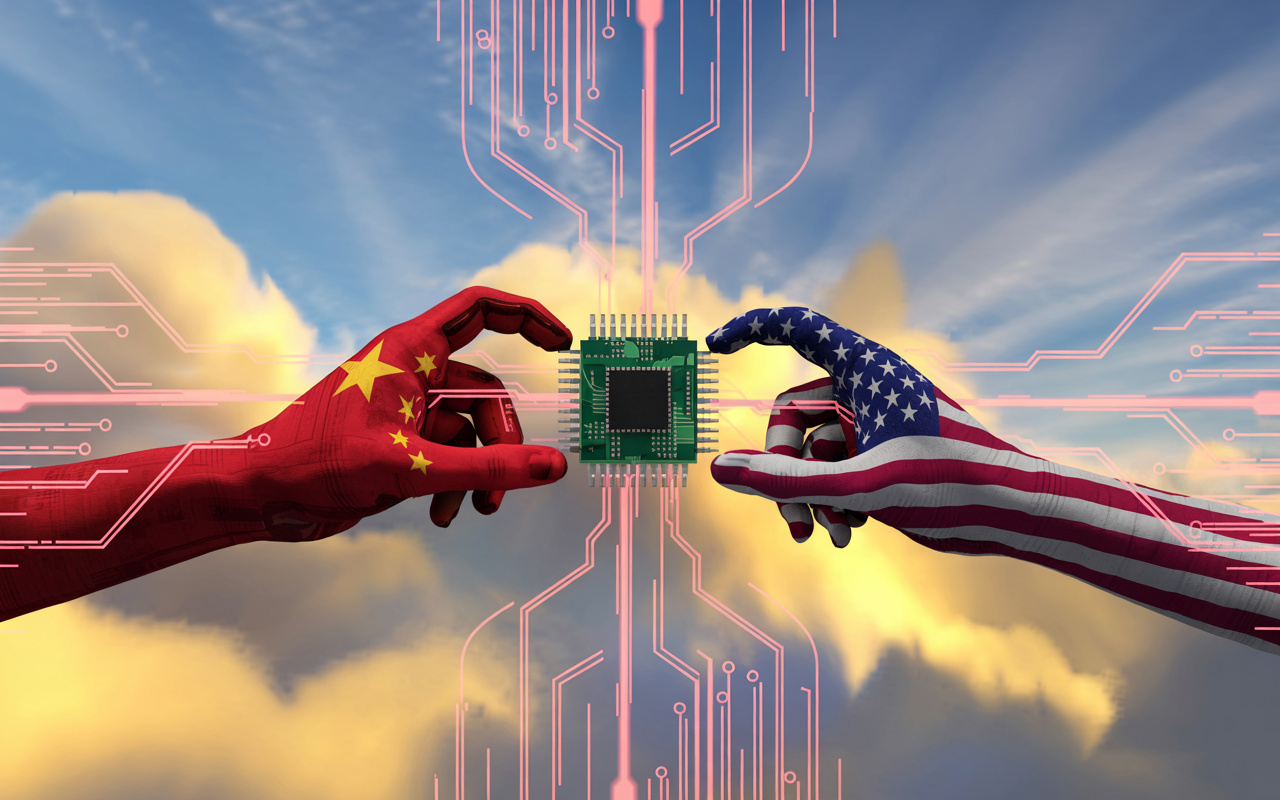
Even With Sanctions, Huawei and Xiaomi Lead the New Phase of Chinese Chips and Put Western Hegemony in Check in the Semiconductor Market.
The United States has spent years trying to curb China’s technological advancement through sanctions, blocks, and severe restrictions on the semiconductor sector. But by 2025, the landscape is changing — and fast. The Chinese giants Huawei and Xiaomi are becoming key players in a turnaround that seemed unlikely until recently. Even under heavy pressure, both are developing advanced chips with proprietary technology, showing that the semiconductor war is far from over.
The Mate 60 Pro Was Huawei’s Most Direct Message to the West
Everything began to change more visibly in August 2023, when Huawei launched the Mate 60 Pro. The smartphone hit the market with the Kirin 9000S processor, developed and manufactured in China by SMIC (Semiconductor Manufacturing International Corporation). This was the first high-performance chip entirely domestic to be launched in a commercial product — and it landed like a bomb in the tech world.

The most surprising part? Huawei achieved this despite U.S. sanctions aimed at cutting off its access to cutting-edge tools and equipment. The chip may not outperform Taiwanese or South Korean competitors with 3 or 5 nanometers, but its existence is already a geopolitical victory.
-
They were brilliant! Scientists discover that our ancestors in China were already making super advanced tools 160,000 years ago, changing everything we knew.

-
Scientists unveil 3 million years of climate secrets hidden in the ice of Antarctica.

-
Ancient farmers created “aggressive plants” that changed nature forever.

-
Astronomers find a “backward” solar system that ignores all the rules of space and leaves scientists scratching their heads!


The Mate 60 Pro has become a symbol of Chinese technological resilience, demonstrating that blocking innovation can have the opposite effect: accelerate internal progress even further.
Xiaomi Enters the Fight and Advances With Own Chips
While Huawei fights for the spotlight, Xiaomi is also doing its homework. The brand, globally known for its cost-effective smartphones, is quietly expanding its internal semiconductor production. It’s not a complete chip like Huawei’s, but Xiaomi is already developing strategic components like power management chips and processors for camera systems.
This movement shows that the company does not want to depend on anyone when it comes to essential technology. Each advancement represents another step towards reducing China’s reliance on Western suppliers and increasing control over its product ecosystem.
Beijing Invests Heavily to Transform the National Industry
None of this happens by chance. The Chinese government is investing billions of dollars in the chip sector, creating aggressive incentive policies, developing local suppliers, and pushing for the use of open architectures like RISC-V. The idea is clear: to build a 100% self-sufficient semiconductor industry.

This includes the development of national photolithography technologies, chip packaging, manufacturing infrastructure, and even reverse engineering of equipment that China can no longer legally import. The strategy is long-term, but the signs indicate that it is already working.
U.S. Sanctions May Have Provoked the Opposite Effect
The U.S. sanctions policy was designed to stifle Chinese advancement. But in practice, it forced China to accelerate its technological independence. And now, instead of weakening, Chinese companies are stronger — and more determined to challenge the West.
Behind the scenes, U.S. security and technology experts admit concern. Some analysts warn that, in less than a decade, China might not need any foreign technology to manufacture its own cutting-edge chips. This would completely change the balance of power in the global market.
Western Hegemony in Chips Is Being Questioned
Today, Taiwan, South Korea, and companies like TSMC, Samsung, and Intel still dominate the most advanced semiconductor industry. But this leadership is being contested. Huawei, Xiaomi, and other Chinese companies show that the race is tighter than ever — and that the stakes are not just technological but also economic and geopolitical.
The U.S. response remains uncertain. What is clear is that containment has become a turning point. And the world is watching the next move.








Seja o primeiro a reagir!