





 Portuguese
  English
  Spanish
  4 min of reading
  0 comments


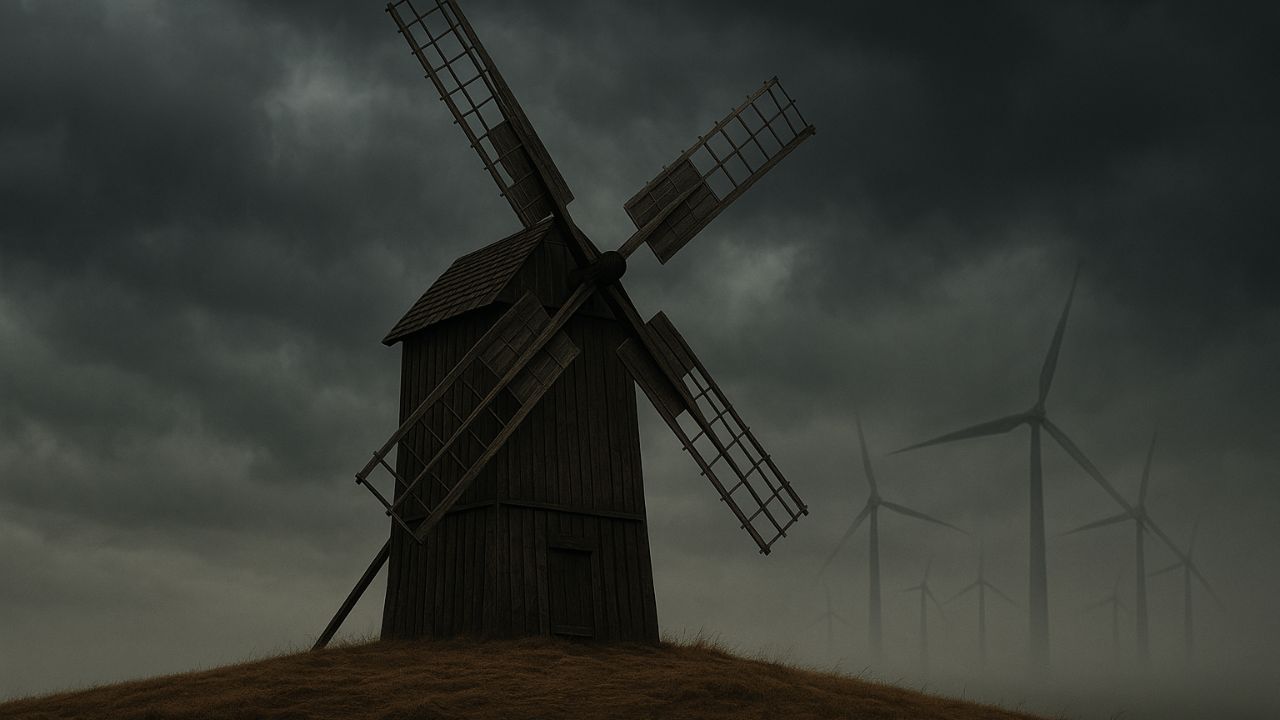
The History Of Wind Energy Is Full Of Innovations. Discover If The Wind First Powered Music Or Grain Milling.
The intriguing question about the primordial use of wind energy, whether to move an “orchestra” or to grind grains – invites us to explore human ingenuity. Often, captivating narratives about technological origins can obscure the complexity of development. This article dives into the history of technology to uncover the chronology and nature of the first applications of the wind’s force, separating romance from documented reality and examining the role of figures like Hero of Alexandria.
Hero Of Alexandria’s Wind Organ And Wind Energy
At the center of this investigation is Hero of Alexandria, a mathematician and inventor from the 1st century A.D. in Roman Egypt. He documented and invented various devices, including a wind-powered organ. The design involved a small wind wheel that, when spun by wind energy, activated a piston. This piston forced air through organ pipes, producing sound. The mechanism converted the rotational motion of the wind wheel into linear motion of the piston.
Accounts describe the music as “whistles ‘similar to the sound of a flute'”, indicating a simple sound. It is crucial to note that Hero’s wind organ is “considered the first example of wind powering a machine”. However, some analyses suggest that Hero’s description “is not a practical windmill, but rather a primitive wind toy”. Hero himself viewed some of his inventions, like the eolipile, as a “novelty, a remarkable toy”. Even as a concept, its value lies in the conceptualization of harnessing wind energy for terrestrial mechanical work.
-
The village where two rivers run side by side without mixing in Santarém and Alter do Chão reveals some of the most beautiful freshwater beaches on the planet.

-
Brazil’s nuclear submarine with a speed 5 times greater than normal advances after nearly 50 years and R$ 40 billion spent.

-
A Brazilian island charges R$ 0.50 to receive visitors and prohibits any new residents.

-
Why was the Great Wall of China built? The truth that many are unaware of!


Pioneering Applications Of Wind Energy
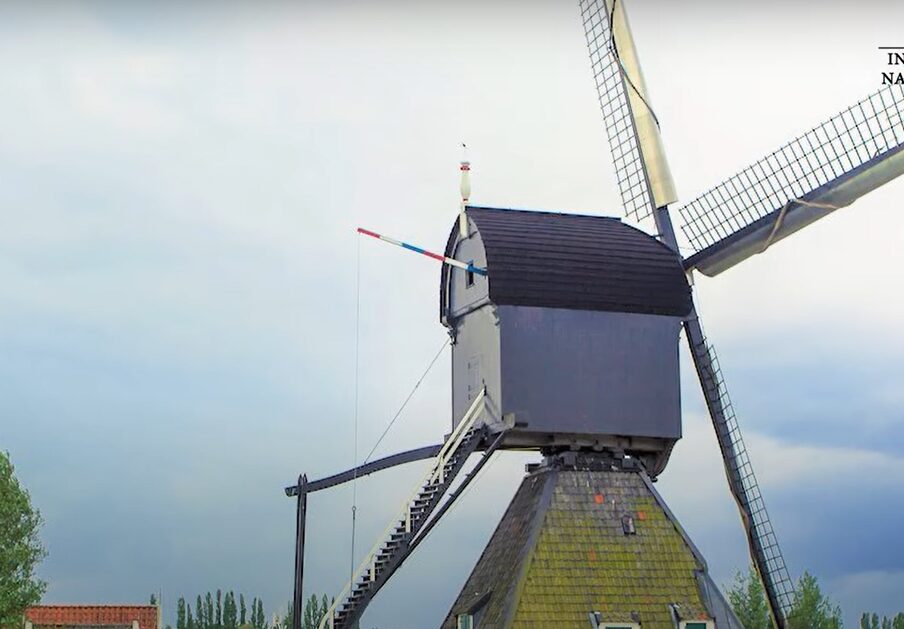
To contextualize Hero’s invention, it is vital to examine other early uses of wind energy. The oldest application was in navigation. As early as 5,000 B.C., Egyptians used sails to propel boats on the Nile. Archaeological evidence points to even earlier uses, such as by the Cucuteni-Trypillia culture in the sixth millennium B.C.
Regarding stationary mechanical applications of wind energy, history also precedes Hero. Around 200 B.C., wind-powered water pumps were already in use in China. More directly, windmills with woven reed sails were employed to grind grains in Persia and the Middle East, also around 200 B.C. This dating is significant, as it predates Hero’s era. There are references to the Babylonian emperor Hammurabi using windmills for irrigation in Mesopotamia in the 17th century B.C., although with less firm evidence than later mills. Vertical-axis mills are documented in Iran and Afghanistan in the early Islamic era for milling and pumping.
“Did It Move An Orchestra”? The Reality Of Ancient Mechanical Music
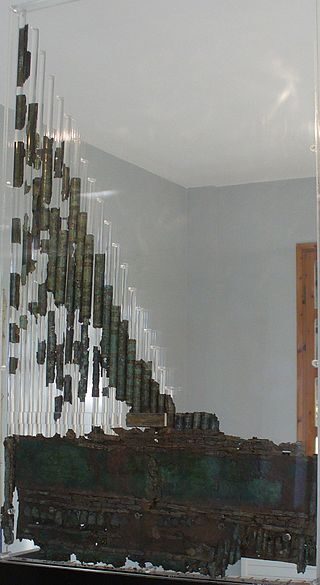
Determining if the wind, or more precisely, wind energy, “moved an orchestra” requires understanding the concept in Hero’s time. Musical instruments are ancient, but primitive organs like the hydraulis, while mechanized, depended on human or hydraulic operation. Complex musical automatons are much later developments. Jacques de Vaucanson’s flute player (1738) is one example.
True “orchestrions,” machines that emulate an orchestra, are inventions of the 18th to 20th centuries. Hero’s organ was a single instrument, with a simple sound, far from the multiplicity of an orchestra. The “orchestra” in the question is a metaphorical descriptor. The modest power of Hero’s “small wind wheel” would be inadequate for something complex. The invention is notable for its innovative source of wind energy, not for musical complexity.
Grain Before The “Wind” Orchestra


Synthesizing the evidence: did wind energy “move an orchestra” before grinding grains? The chronological comparison is clear. Windmills for grinding grains in Persia and the Middle East have been documented since at least 200 B.C. Hero’s wind organ dates to the 1st century A.D. Therefore, the use of wind energy for grain milling in some regions predates the invention of Hero’s wind organ.
Hero’s “orchestra” was a single simple organ. Its invention, however, was significant, potentially the first wind-powered machine for entertainment. Hero’s organ may have been the first instance of a specific type of wind-powered machine. The “before” is relative and geographically dependent. The literal claim that a wind orchestra universally preceded grain milling is unsupported.







Seja o primeiro a reagir!