





 Portuguese
  English
  Spanish
  4 min of reading
  8 comments


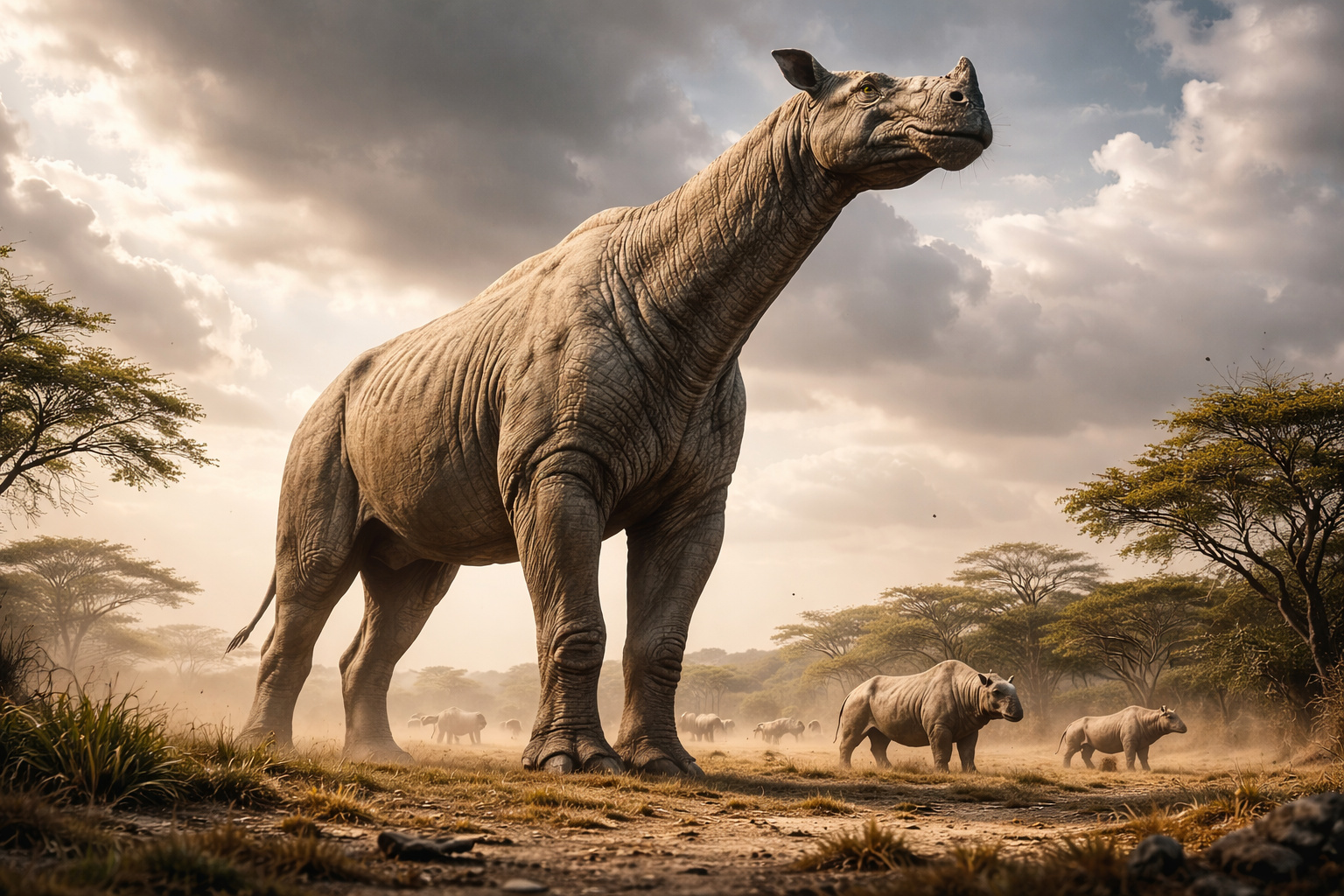


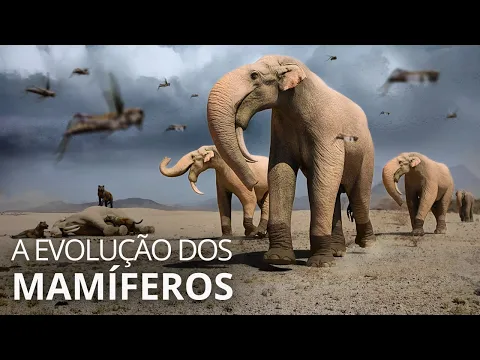
Paraceratherium Was The Largest Terrestrial Mammal Ever Recorded: Up To 8 Meters In Length, More Than 15 Tons, And Size Greater Than African Elephants.
When talking about terrestrial giants, it is common to immediately think of elephants or mammoths. However, none of them comes close to the true absolute record holder in the history of mammals. The Paraceratherium, a giant extinct rhinoceros, surpassed all known land animals in size, weight, and grandeur, occupying a level that has never been achieved again by evolution.
This colossus lived between 34 and 23 million years ago, during the Oligocene, in vast regions of Central Asia, including areas that today correspond to Kazakhstan, Mongolia, China, and Pakistan. Its fossils reveal an animal so large that it completely redefines the modern notion of “megafauna”.
Dimensions That Surpass Any Modern Elephant
The most accepted estimates indicate that the Paraceratherium reached more than 8 meters in body length, with a shoulder height close to 2 meters. When it raised its head and neck to feed, it could reach almost 5 meters in height, equivalent to a two-story building.
-
A promise made to their father led three men to unearth a forgotten house that had been swallowed by time for over 70 years, in a story of memory, abandonment, and reconstruction that seems straight out of a movie.

-
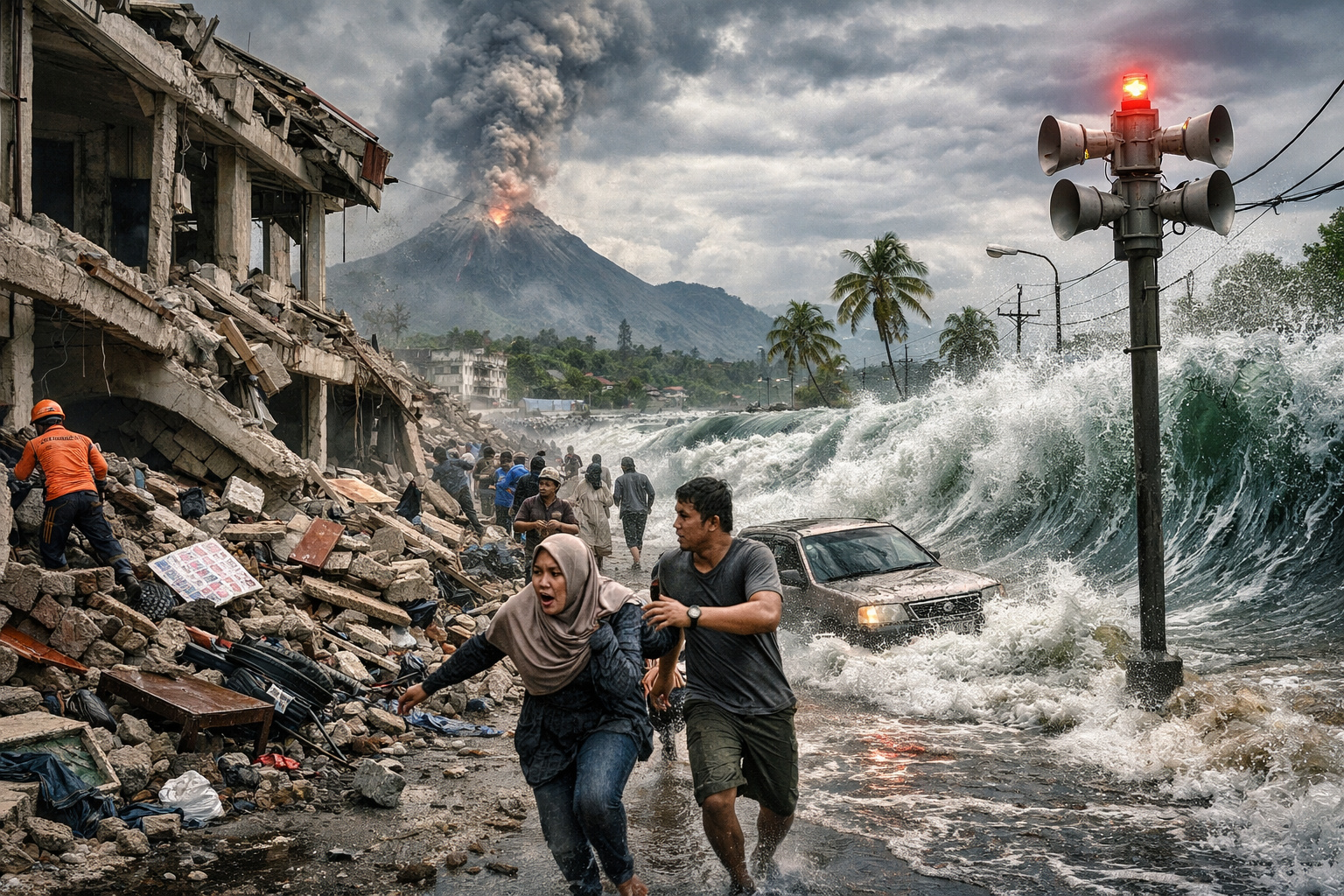
A strong earthquake in Indonesia affects houses and schools, causes panic, triggers a tsunami alert, and records a rise in sea level of up to 30 centimeters in some areas.
-
The Argentine government celebrates the lowest poverty rate in 7 years, but experts warn that the methodology has changed, real wages have fallen, unemployment has risen, and the number of people on the streets of Buenos Aires has increased by 57% since Milei took office.

-
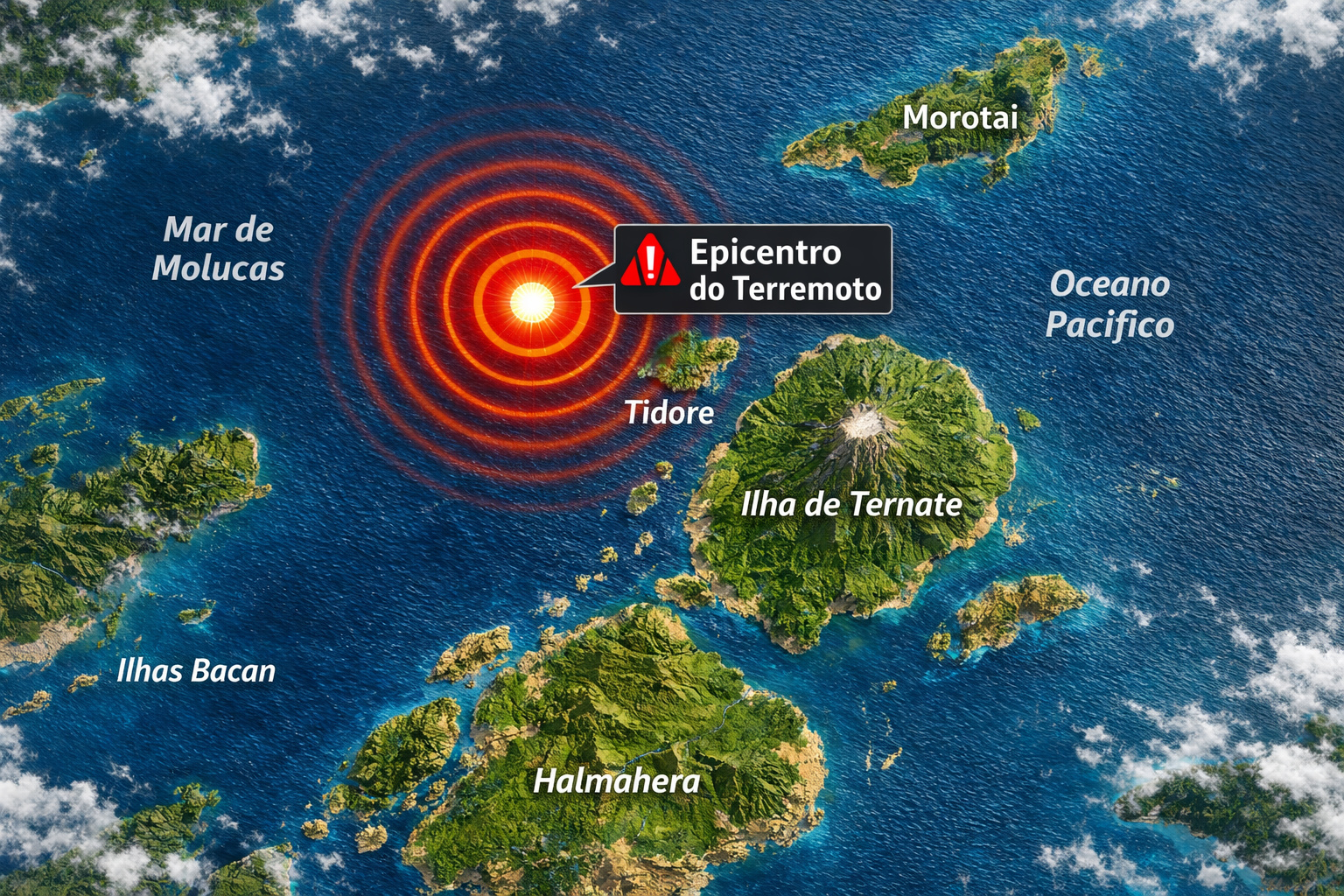
7.8 magnitude earthquake in Indonesia frightens the population, triggers tsunami alert, and hits an island with over 200,000 inhabitants this Thursday.


The weight is even more impressive. Bone analyses indicate a body mass between 15 and 20 tons, placing it well above the largest modern African elephants, which rarely exceed 6 to 7 tons. In practice, a single Paraceratherium could weigh the equivalent of two or even three adult African elephants combined.
A Rhinoceros Without A Horn, But With Incomparable Size
Despite being classified as a rhinoceros, the Paraceratherium did not have a horn. Its body was elongated, with long and relatively straight legs, designed to support a colossal mass without compromising stability.
The long neck and relatively small head in proportion to the body indicate a feeding strategy focused on high leaves, similar to that of modern giraffes, but on a much larger scale. This shape allowed it to exploit food niches inaccessible to other herbivores of the time.
The absence of horns reinforces the idea that the Paraceratherium did not need conventional defensive weapons. Its size alone functioned as an almost absolute protection against predators.
Direct Comparison With African Elephants
Comparing it to the African elephant helps to gauge just how extreme this animal was. An adult African elephant measures about 3.3 meters high and weighs, on average, 6 tons. The Paraceratherium, on the other hand, could be almost 2 meters taller when upright and more than double the weight.
While modern elephants live in groups and rely on collective strength for defense, the Paraceratherium was likely practically invulnerable when adult. No known terrestrial predator of the Oligocene would have had the real capacity to take it down.
Feeding And Ecological Impact On An Extreme Scale
To sustain a body of more than 15 tons, the Paraceratherium needed to consume gigantic amounts of vegetation daily. It primarily fed on leaves, branches, and shoots of tall trees, acting as one of the greatest landscape molders of its time.
By removing large volumes of vegetation, the animal created clearings, altered the structure of open forests, and directly influenced the soil nutrient cycle. Just like modern elephants, but on an even larger scale, the Paraceratherium acted as a true ecological engineer.
Its presence determined which plants thrived and which disappeared, shaping entire ecosystems over thousands of years.
Predators Practically Nonexistent
The extreme size of the Paraceratherium put it out of reach of the vast majority of predators. Even large carnivores of the period, such as the ancestors of big cats and hyaenodonts, did not represent a real threat to a healthy adult.
The only potentially vulnerable individuals were calves, which could be attacked by opportunistic predators. This helped the species remain dominant for millions of years without the need for sophisticated natural weaponry.
Why The Largest Terrestrial Mammal Went Extinct
The extinction of the Paraceratherium did not occur due to a single factor. Gradual climate changes transformed the environment of Central Asia, reducing open forest areas and altering food availability on a large scale.
Animals of extreme size have low reproductive rates and high dependence on stable environments. When the climate changed and habitats fragmented, giant species like the Paraceratherium lost the evolutionary advantage that sustained them.
Unlike elephants, which managed to adapt to a larger variety of environments, the Paraceratherium did not find viable alternatives to survive these transformations.
The Maximum Limit Of Terrestrial Gigantism
The Paraceratherium represents the peak that the evolution of terrestrial mammals has ever achieved. Since its extinction, no other mammal has even come close to that level of size.
Its disappearance shows that there is a practical limit to gigantism on land. Beyond a certain point, the energy cost, environmental dependence, and vulnerability to climate changes make long-term survival unfeasible.
The Paraceratherium was not just the largest terrestrial mammal in history. It was proof that the Earth once sustained creatures on scales that today seem unreal. Comparing it to modern elephants reveals just how much megafauna has shrunk over time.
When this giant disappeared, it took with it not just a record but an entire ecosystem model that has never returned to exist.







Que hace tonteras se feo
Os humanos viviam nesta época? Para os humanos, tamanho não é documento.
Incrível, hoje paramos de prestar atenção a essas coisas do passado e somos direcionados obrigatoriamente sem a nossa vontade a questões políticas diariamente, com governos e receita federal ameaçando o povo em páginas de notícias para tirar o último centavo que temos em nome da arrecadação para políticos e toda a estrutura **** desse governo se alimentar, ter dinheiro em espécie hoje é quase crime e será logo logo… Brasil país da corrupção e arrecadação
Sim, esse governo do nove dedos é tão neoliberal quanto o do “mito”. O neoliberalismo nos pôs ladeira abaixo há décadas.
Nem se compara, nobre… force a barra não!
Prezado amigo todo governo trabalha com arrecadação de impostos, isso já acontece desde os primórdios da era romana e outros povos. A Receita Federal, é o órgão arrecadador dos impostos federais bem como de combate a corrupção e descaminhos,neste país chamado Brasil, o cidadão não é cobrado ou investigado se não roubar ou tentar usar de fraude pra não pagar o imposto devido. Agora no atual momento tem uma gama de políticos que se utilizando do famigerado orçamento secreto, que é uma aberração, facilitando o desvio do dinheiro público. Nosso país ainda é um lugar que ainda se pode viver relativamente bem, basta a pessoa procurar melhorar de vida, existem vários programas e políticas públicas pra se conseguir isso. Não se pode viver de ideologia utó****, em que voce foi bitolado a acreditar no que é errado e pensar que está tudo bem.Saia dessa vida, ainda há tempo de reconstruirmos nosso país, necessariamente não precisarmos nos odiar, criar um clima de injúria, injustiça e divisão entre nosso povo. Quanto a reportagem é de grande valia e que serve pra ilustrar nosso conhecimento através da autora que certamente se debruçou vários dias e noites pra trazer essa passagem tão linda do nosso planeta, e que talvez uma parcela da população quer destruir em detrimento da ideologia política, que só atende os interesses dos ricos e aproveitadores e o povo é deixado de lado, lembrado quando precisam do voto.
O que tem a ver o c* com as calças?
Mais um **** falando **** e de política sem saber de **** nenhuma. Aqui é uma página de ciência e para os lixoloides a ciência não existe. Inclusive vocês nem acreditam em ciências. Vai tomar teu Rivotril com vodka mané.