





 Portuguese
  English
  Spanish
 5 min of reading
  0 comments


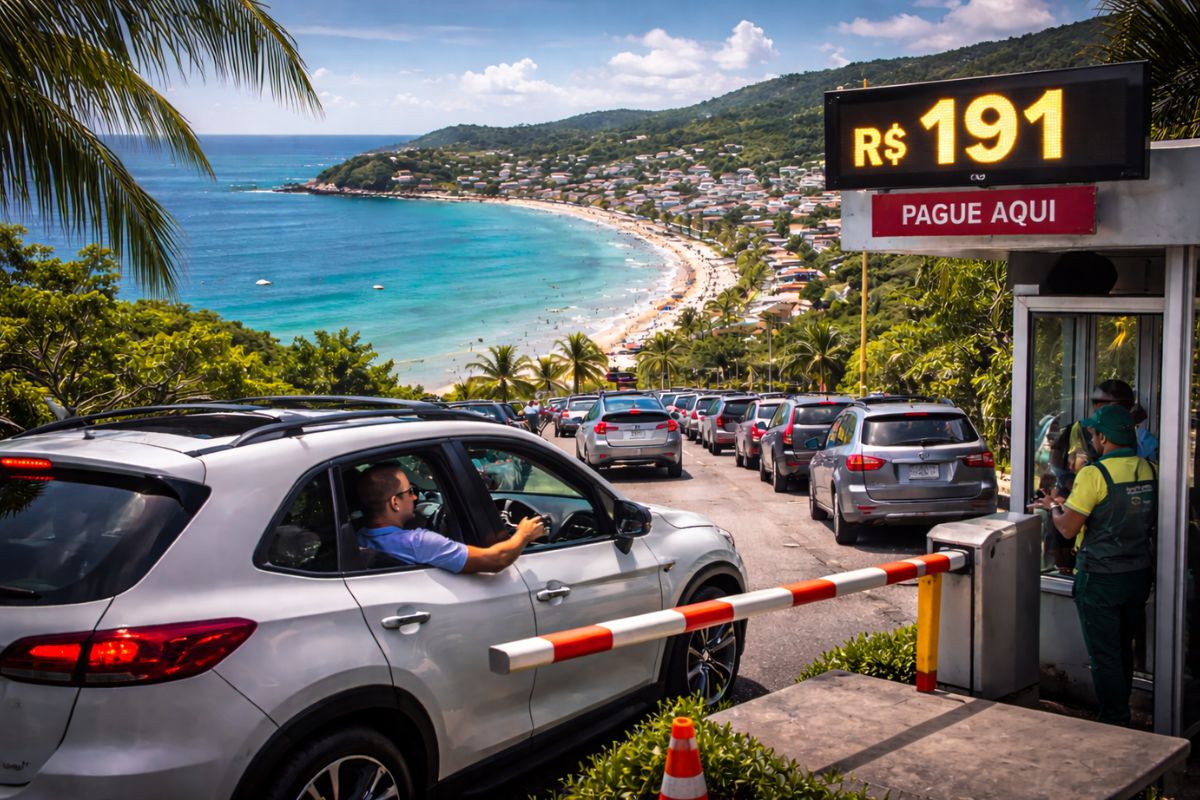
Bombinhas, Paradise with 39 Beaches and 67% Green Area, Charges Environmental Preservation Fee Since 2015, with Seasonal Rates up to R$ 191 per Vehicle, Welcomes 2.3 Million Tourists per Season and Tries to Contain Mass Tourism that Shrinks the Smallest City in SC During Peak Touristic Months.
Bombinhas returns to the center of the debate on mass tourism in Santa Catarina: the paradise with 39 beaches reaffirms, for the tenth consecutive summer, the mandatory collection of the Environmental Preservation Fee for all vehicles entering the city during high season, with rates that can exceed R$ 190 depending on the size of the vehicle.
Between November 2024 and April 2025, the smallest city in area in the state welcomed 2.3 million visitors and saw the resident population of about 25,000 multiply up to eighteen times per month. During this period, the environmental toll is presented by the city hall as a tool to contain pressure on beaches, streets, and urban services, while simultaneously becoming one of the main local sources of revenue.
How Much Does It Cost to Enter the Paradise with 39 Beaches

The Environmental Preservation Fee is collected seasonally, from November to April, and varies according to the type of vehicle.
-
The largest executive jet in Brazil belongs to the Safra Family and is for sale: it is a 2002 Boeing BBJ, with a range of 11,500 km, 80 m² of interior space, a master suite, an office, and capacity for 18 passengers.

-
BRICS is building its own payment system that could be operational by 2030, and experts say it could increase trade between the countries by up to 10% per year and add 3% to the GDP of each member of the bloc.

-
Government suspends over 3 million traffic fines in Brazil and drivers breathe a sigh of relief.

-
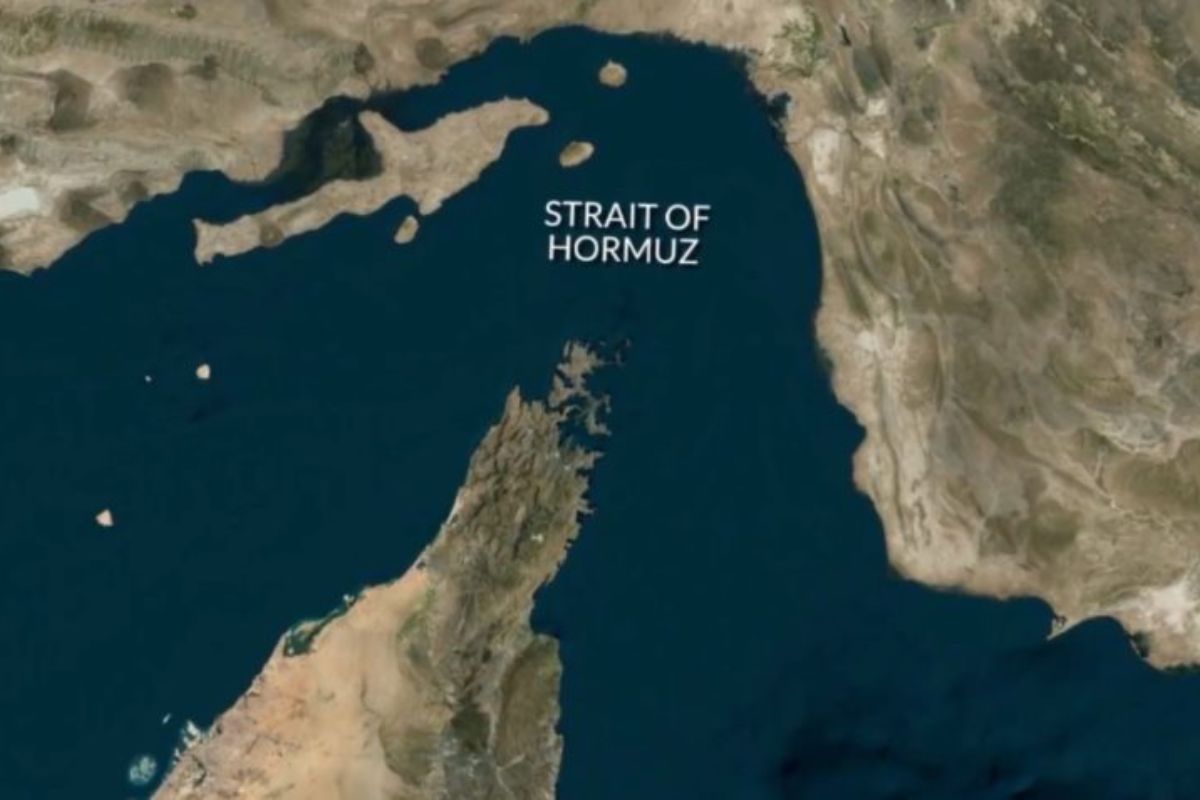
Iran has just approved toll charges for ships in the Strait of Hormuz and has completely prohibited the passage of vessels from the United States and Israel in the world’s most important maritime route for the global energy market.
In practice, every visitor arriving by car at the paradise with 39 beaches needs to calculate the daily cost before crossing the tollgates of Bombas and Zimbros, the main road access points to the municipality.
The rates reported by the city hall for the current season are:
Motorcycle, moped, and motorbike: R$ 4.50 per defined period of stay
Small passenger vehicles: R$ 38.00
Utility vehicles such as pickups and vans: R$ 57.00
Excursion vans and minibuses: R$ 76.50
Trucks: R$ 114.50
Tourist buses: R$ 191.50
According to the municipal administration, the Environmental Preservation Fee secured R$ 26.4 million in revenue during the most recent season, with R$ 16.6 million paid by national vehicles and R$ 9.8 million by foreign automobiles.
The city hall states that the funds are allocated for inspections, environmental education actions, recovery of native vegetation, maintenance of public areas, and infrastructure to support the intense tourist flow.
How the Environmental Preservation Fee Works in Bombinhas

The fee was instituted in 2015 and is presented as a direct reaction to the advance of mass tourism over a small territory of 34.5 square kilometers, where 67 percent of the area is protected as green, and there are three formally recognized conservation units.
Bombinhas currently holds the title of National Capital of Ecological Diving and uses the label of paradise with 39 beaches as an international showcase, with five of them certified with the Blue Flag seal, one of the main symbols of environmental quality of beaches worldwide.
The city hall argues that, without filtering the flow of vehicles and the specific charge for those entering the city, the “postcard beach” model would be quickly pressured by excess cars, waste, and disorderly occupation.
However, the measure is not consensual.
The city hall itself admits that the environmental toll has been the subject of lawsuits and challenges over the past decade.
Nonetheless, the Environmental Preservation Fee remains in effect and serves as a reference for other tourist destinations, such as Fernando de Noronha and Jericoacoara, which have adopted similar charging mechanisms for visitors.
Explosion of Tourists Shrinks the City During High Season
Between November 2024 and April 2025, the official historical series points to 2.3 million tourists in Bombinhas, with an average of 460,000 visitors per month.
In a municipality with about 25,000 residents, the practical effect is the shrinkage of the city in the face of a floating population that can be 18 times larger during certain periods of the season.
The evolution over the past summers shows that the volume of tourists has been increasing or maintaining a high level since 2017, with seasons that varied between 1.3 million and just over 2.1 million visitors before reaching the most recent record of 2.3 million.
The combination of a short beach, narrow streets, and high vehicle density led the city hall to treat the Environmental Preservation Fee as a tool for managing circulation and pressure on urban infrastructure.
In parallel, Bombinhas has increased its national and international exposure.
In November 2025, a survey by Booking.com placed the municipality in fifth place among the most sought-after Brazilian destinations by foreigners for New Year’s Eve, alongside Florianópolis.
In practice, the paradise with 39 beaches has started to compete with traditional capitals in the race for consumption, accommodation, and year-end spending, increasing the challenge of balancing visitor volume and preservation.
Digital Collection, Tollgates, and Self-Service Kiosks
The Environmental Preservation Fee can be paid in advance through the official city hall website or via a dedicated app, with the option to settle via Pix.
For those who prefer to automate the process, Bombinhas has integrated the collection with automatic payment tags Sem Parar, ConectCar, and Taggy, allowing the debit to be made directly when the vehicle crosses the access tollgates.
In addition to digital channels, the municipality has deployed self-service kiosks at strategic points in the region, such as the Komprão Koch Atacadista, on Rua Araçá in the Sertãozinho neighborhood, Shopping Tropical on Avenida Vereador Manoel dos Santos in the center, Supermercado Comper on Avenida Leopoldo Zarling in Bombas, and the tollgate at Morro do Macaco in Canto Grande.
At these locations, visitors can regularize their situation, issue receipts, and avoid subsequent fines.
For questions, pending issues, or debt resolution, the Finance Department maintains telephone and WhatsApp support, in addition to an electronic channel via email, reinforcing the permanent nature of the collection structure surrounding tourist flow.
Paradise with 39 Beaches or Expensive Filter at the Entrance of the Santa Catarina Coast
In defending the maintenance of the Environmental Preservation Fee, the city hall asserts that the paradise with 39 beaches remains an environmental showcase only because there is an explicit cost associated with the use of its streets and beaches by visitors, in contrast to destinations that do not charge an environmental toll and face chronic problems of waste, traffic, and infrastructure wear and tear.
Critics, however, see the fee as a financial barrier that affects mainly families traveling by car and needing to add fuel, lodging, food, and now, another toll upon arrival.
Even though the charge is not formally a barrier to accessing Santa Catarina, the additional cost at the entrance of Bombinhas functions, in practice, as an economic filter for the most sought-after coastal segment of the state.
While the municipality accumulates revenue records and exposure in search rankings, the debate about how legitimate it is to transform a tourist destination into a permanent access toll continues among residents, business owners, and frequent visitors to the region.
In your opinion, does the paradise with 39 beaches really need this high environmental fee to protect itself, or has the toll become too expensive for those intending to enter Santa Catarina by car in the upcoming seasons?






-

-

2 pessoas reagiram a isso.