





 Portuguese
  English
  Spanish
 4 min of reading
  0 comments


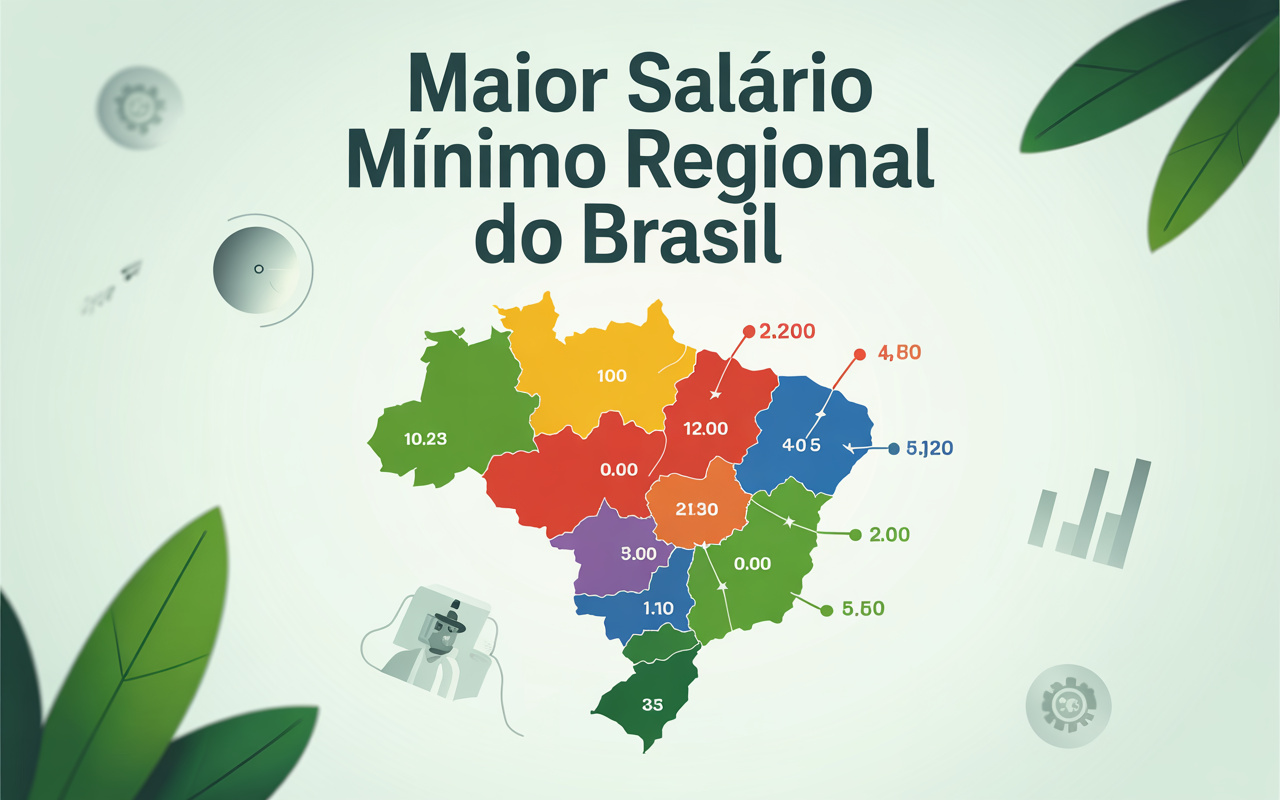
Paraná Has The Highest Regional Minimum Wage in Brazil in 2025: Floor Reaches R$ 2,275 And Benefits Up To 1.5 Million Workers, With Direct Impact On The Economy And Valuation Of Technical Labor.
In a scenario of wage inequality and timid adjustments in much of the country, the state of Paraná took the lead in 2025 by approving the highest regional minimum wage in Brazil. With values ranging from R$ 1,984.16 to R$ 2,275.36, the new Paraná floor not only surpasses the national minimum wage of R$ 1,518 but also establishes a progressive model that values different sectors and levels of qualification. The adjustment, which came into effect retroactively from January 1st, promises to benefit up to 1.5 million workers, especially those not covered by agreements or collective conventions.
The measure was formalized by Governor Ratinho Junior through Decree 9468/2025, after approval by the State Council of Labor, Employment, and Income (Ceter), composed of representatives of workers, employers, and the state government. The average increase was 6.5%, above the inflation rate of 3.71% recorded in 2024, representing a real gain in purchasing power for the state’s workers.
Wage Ranges Define Different Levels For Distinct Categories
Unlike the federal model — which adopts a single value — Paraná uses a system of progressive wage ranges, based on the sector of activity and the degree of qualification of the worker. In 2025, the floor was defined as follows:
-
The institute that trained the greatest aerospace engineers in Brazil has just opened its first campus outside São Paulo after 75 years: ITA Ceará will have R$ 445 million, new courses in energy and systems, and classes are expected to start in 2027.
-
Luciano Hang, owner of Havan, goes to Juiz de Fora after the tragedy in February, brings R$ 1 million, hands out R$ 2,000 cards, and donates up to R$ 15,000 to victims in the region.

-
The Brazilian passport allows legal residence in dozens of countries without the need for a prior visa, and most Brazilians are unaware that they can apply for residency directly upon arriving in nations in South America, Africa, and even Europe.

-
Petrobras sends a message to Brazilian truck drivers after fuel collapse and reveals plan to have 100% domestic diesel.

- Range 1 – R$ 1,984.16: for workers in agriculture, fishermen, and general rural services;
- Range 2 – R$ 2,057.59: for professionals in commerce, administrative services, and domestic workers;
- Range 3 – R$ 2,123.42: applied to workers in industry, construction, and other operational functions;
- Range 4 – R$ 2,275.36: for technicians with specific vocational training.
The highest value, of R$ 2,275.36, represents a significant leap for technical professionals and evidences a policy of encouraging training and qualification of the workforce in the state. This differentiation, in addition to promoting wage justice, makes Paraná more competitive on the national stage.
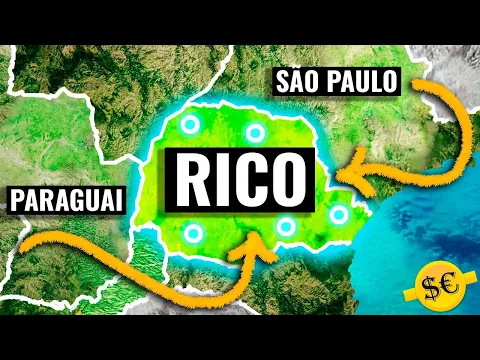

Direct Impact On The Economy And Local Consumption
In addition to the immediate benefit for workers, the new Paraná minimum wage should provoke a series of positive effects on the state economy. With more money circulating, especially among the lower classes, there is a tendency for growth in the consumption of goods and services, heating up commerce, strengthening small businesses, and boosting tax collection.
Studies conducted by state institutions indicate that the wage increase is expected to inject hundreds of millions of reais into the Paraná economy throughout 2025, with direct effects on job creation and the reduction of informality.
Furthermore, by offering a higher regional floor, Paraná also increases its ability to attract qualified labor, which is an important differential in the competition for industrial and technological investments with other states.
Comparison With Other States Highlights Paraná’s Leadership

Although five Brazilian states adopt regional floors — Paraná, São Paulo, Rio de Janeiro, Rio Grande do Sul, and Santa Catarina — none of them reach the values applied in Paraná:
- São Paulo: R$ 1,804.00 (single value);
- Rio Grande do Sul: from R$ 1,656.52 to R$ 2,267.21;
- Santa Catarina: from R$ 1,730.00 to R$ 1,978.00;
- Rio de Janeiro: maintains values from 2019 until a new adjustment is approved.
With this, Paraná not only leads the national ranking in absolute value but also adopts the most comprehensive system in terms of ranges and categories, ensuring greater coverage and protection for workers.
Adjustment Model Based On Technical Basis And Tripartite Dialogue
One of the characteristics that set Paraná apart from other states is how the regional floor is defined. The proposal is constructed within the framework of Ceter, with the participation of representatives from labor unions, employer federations, and the state government. This ensures greater legitimacy to the process and prevents adjustments from being at the mercy of political disputes or isolated economic moments.
For 2025, the adjustment proposal was discussed throughout the second half of 2024, unanimously approved, and published in January, with immediate effect and retroactive effects. This model creates predictability for companies and workers, allowing for better financial planning and legal security.
Regional Minimum Wage And The Challenge Of National Valuation
While Paraná advances, the national minimum wage still faces structural challenges. Although the value of R$ 1,518 represents a real gain compared to previous years, it remains far below what is necessary to ensure a dignified life in large cities, especially in light of rising costs of food, transportation, rent, and energy.
According to Dieese, the ideal minimum wage in January 2025 would be R$ 6,900.00, considering the real survival costs for a family of four. In this context, the Paraná floor, while not reaching this value, comes closer to the ideal than the federal minimum — especially in the upper ranges.
With the new regional floor approved for 2025, Paraná establishes itself as the state with the highest minimum wage in Brazil. The maximum value of R$ 2,275.36 demonstrates a clear commitment to the valuation of work, social protection, and strengthening the state economy.
By adopting progressive wage ranges and adjustments based on technical criteria, the state positively distinguishes itself and offers an example of how public policies can balance social justice and fiscal responsibility.
For Paraná’s workers, the new salary represents more than just a raise: it is the recognition of their role in building a strong and just economy. And for Brazil, the alert remains — it is possible to improve wage conditions when there is political will and dialogue among the sectors of society.







-

-

-

-

-

14 pessoas reagiram a isso.