





 Portuguese
  English
  Spanish
  6 min of reading
  1 comment


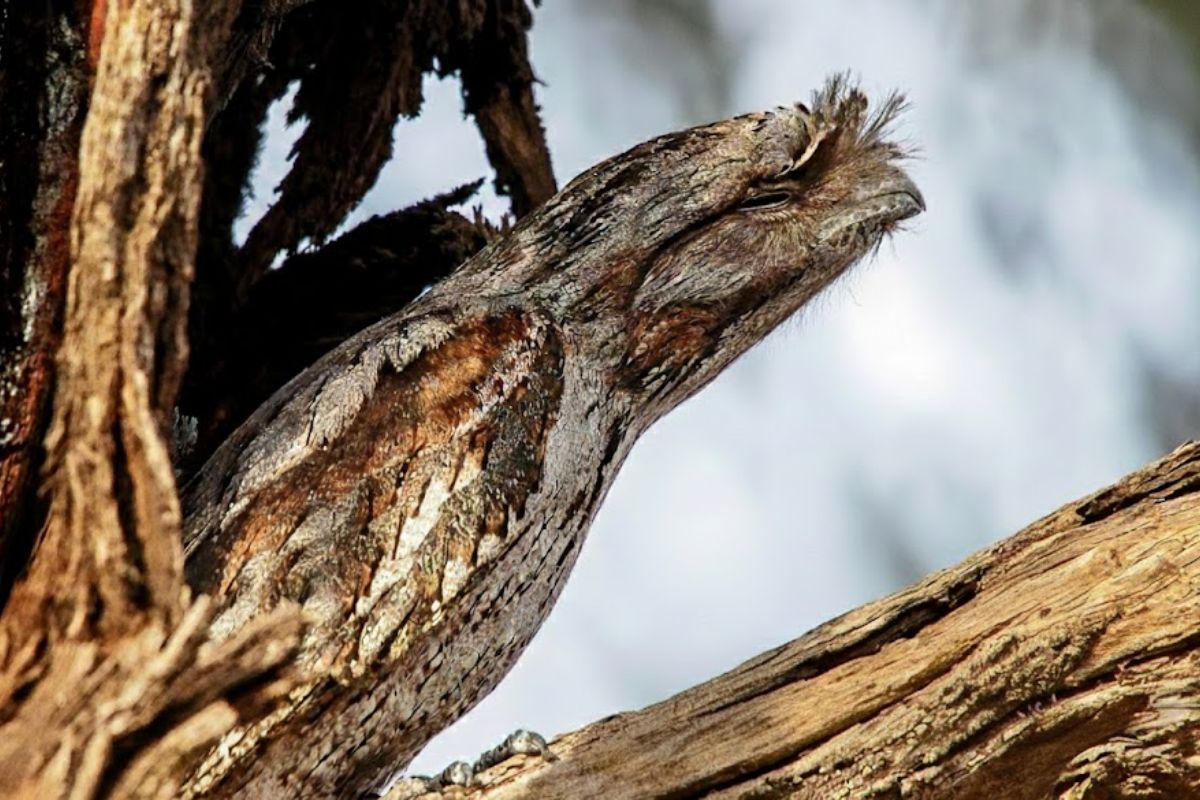


In The Forests And Wooded Cities Of Australia, The Frogmouth Dominates Cryptic Camouflage And Hunts At Night With A Wide Mouth And Enormous Eyes. Relative Of The Nightjars, It Is Not An Owl, But It Looks Like One. It Feeds Mainly On Insects And Small Mammals, Waiting For Prey To Approach And Keeps Pairs Sharing Nest And Chick.
The Frogmouth Is A Nocturnal Predatory Bird That Seems Built To Deceive The Human Eye: Motionless Body, “Branch” Posture, Enormous Eyes, And A Disproportionate Mouth That Becomes A Trap In The Dark. For Much Of The Time, It Doesn’t “Hide”; It Simply Blends Into The Scenery With Such Efficiency That It Exists Only As A Detail Of The Environment.
This Trick Is Not Just Aesthetics. It Is Strategy. When The Frogmouth Blends In With The Tree, It Reduces The Risk Of Being Noticed By Predators And, At The Same Time, Increases The Chance Of Capturing Prey That Naturally Circulate There. The Result Is A Predator That Hunts Without Pursuit And Without Commotion, Based On Patience, Camouflage, And Timing.
Who Is The Frogmouth And Why Does It Look Like An Owl Without Being One

The Frogmouth Belongs To A Family Of Nocturnal Predatory Birds Related To The Nightjars. This Helps Explain Why It Behaves As A Crepuscular And Nocturnal Hunter, But Also Why Its Appearance Is Confusing: Large Eyes, “Serious” Expression, And Nocturnal Habits Resemble Owls, Although The Lineage Is Different.
-
The village where two rivers run side by side without mixing in Santarém and Alter do Chão reveals some of the most beautiful freshwater beaches on the planet.

-
Brazil’s nuclear submarine with a speed 5 times greater than normal advances after nearly 50 years and R$ 40 billion spent.

-
A Brazilian island charges R$ 0.50 to receive visitors and prohibits any new residents.
-
Why was the Great Wall of China built? The truth that many are unaware of!


This “Resemblance” Is A Classic Example Of Evolutionary Convergence: Distinct Groups End Up Acquiring Similar Traits When Facing Similar Challenges.
In The Case Of The Frogmouth, The Package Of Adaptations For Seeing And Acting In Low Light Creates A Familiar Silhouette And, At The Same Time, A Set Of Striking Differences When Closely Observing The Anatomy.
The Absurd Mouth That Replaces Claws And Defines The Hunting Style
One Of The Keys Of The Frogmouth Is That It Does Not Rely On Robust Claws To Dominate Its Prey. The Claws Are Small And Not “Designed” To Tear Like Those Of Owls. Instead, The Role Is Taken By The Head: Large, Expressive, And With A Wide Mouth Opening.
The Beak May Look Short, But It Is Wide And Usually Has A Hook At The Tip, Forming An Efficient “Clamp.”
When Prey Approaches, The Capture Happens With The Mouth, Not With The Feet. This Changes The Type Of Attack: Less Running, Less Diving, More Waiting, And A Fast Closing At The Right Moment.
Cryptic Camouflage: How It Turns Into A Branch And Disappears From The Landscape

The Frogmouth Is A Master Of Cryptic Coloration, A Type Of Camouflage Where The Appearance Mimics Textures And Tones Of The Environment.
It Can Flatten Itself, Control Its Feathers On The Head And Body, And Adjust Its Posture To Seem Like An Extension Of The Branch It Is Perched On.
The Effect Is So Convincing That “Disappearing” Happens Even In Places With Human Movement, As Long As There Are Trees And Relative Silence.
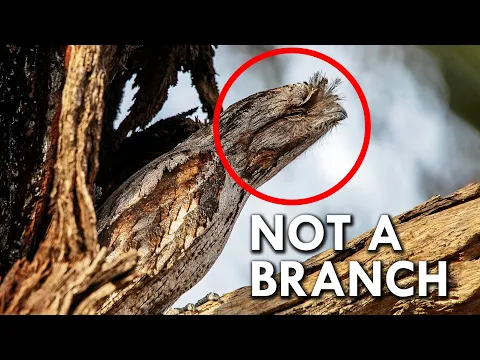
This Is Why Many People Describe The Encounter As Something Strange: The Gaze Sweeps The Canopy And Does Not Find “An Animal,” It Finds Shapes Until The Shape Blinks, Turns Its Head, Or Opens Its Mouth.
Enormous Eyes And Nocturnal Life: Seeing More Light Is Surviving Better
The Large Eyes Of The Frogmouth Are Not An Aesthetic Exaggeration; They Are A Work Tool. In Low Light Conditions, Letting In More Light Means Identifying Movement, Distance, And Direction More Accurately. The Ocular Morphology Reveals The Shift: It Has Been Shaped For The Night.
This Visual Capability Combines With Immobility. Instead Of Spending Energy Flying Aimlessly, The Frogmouth Saves Movement And Turns Waiting Into An Advantage.
The “Attack” Begins Long Before The Capture: It Starts When It Chooses The Right Spot And Becomes Invisible There.
Swallowing Silently: Why Insects And Small Mammals Are The Ideal Target

The Diet Mentioned For The Frogmouth Mainly Includes Insects And Small Mammals. This Choice Relates To The Technique: Prey That Circulate In The Environment, Climbing On Trunks, Flying Near Leaves, And Passing Through Predictable Routes. It Doesn’t Need To “Go To The Food”; The Food Comes To It, And The Capture Happens By Surprise.
A Curious Detail Is The Idea Of Visual Lure: The Inside Of The Mouth Can Be Bright Yellow And, Combined With Facial Feathers Suggesting “Whiskers,” It Can Create An Appearance That Resembles A Flower.
Insects Are Attracted To Flowers; And When The Scenario Resembles Something Safe And Familiar, The Approach Becomes More Likely.
Reproduction And Parental Care: The “Domestic” Side Of A Grumpy Predator
Despite Its Always Severe Air, The Frogmouth Is Described As Having Strong Bonds: Pairs That Stay Together For Long Periods And Share Tasks.
In Spring, The Pair Builds The Nest, Although It Is Not A Elaborate Construction There Is A Tendency Towards Simple Nests, Made With Few Materials, As If The Priority Were Positioning Rather Than Architecture.
Males And Females Share Incubation And Also The Provision Of Food. The Chicks, According To Description, Leave The Nest At About Five Weeks Of Age.
This Divided Care Is Consistent With Their Lifestyle: A Predator That Relies On Fixed Position And Camouflage Needs Cooperation To Balance Vigilance, Feeding, And Protection.
Where It Lives And What Threatens Such An Adaptable Species
The Frogmouth Has A Wide Distribution In The Indo-Pacific Region, With 13 Described Species And Within The Australian Context, There Are Species That Thrive In Different Landscapes. It Is Associated With Areas With Many Trees, But It Also Appears To Be Versatile, Seen Even In More Arid Environments, A Sign Of Adaptation.
This Adaptability, However, Does Not Render The Species Immune To External Pressures. Destruction Of Habitat, Wildfires, And Use Of Insecticides Are Mentioned As Threats.
For An Animal That Relies On Trees, Available Prey, And Stability In The Canopy, Abrupt Changes In The Environment Can Affect Shelter, Feeding, And Reproduction.
Why The “War” Against The Invisible Is So Difficult, Even Without Alarming Numbers
What Scares Most About The Frogmouth Is Not Aggressiveness But Its Silent Efficiency. It Doesn’t Need Noisy Pursuits, Nor Display.
It Needs A Spot, An Angle, A Background That Matches. This Creates The Feelings That It Appears Out Of Nowhere, When In Reality, It Has Been There All Along.
And There Is A Larger Lesson: Nature Does Not “Paint” Camouflage To Be Pretty. Camouflage Is A Language Of Survival. When A Predator Disappears From Sight, It Is Indicating That It Dominates The Environment At A Level That The Human Eye Rarely Reaches.
The Frogmouth Is An Uncomfortable Reminder That, At Night, The Tree Canopy Does Not Become Empty; It Becomes Discreet. A Branch Can Be An Animal.
A Silence Can Be Prey. A Gaze Can Be A Trap. And The More We Learn About Mouth, Eyes, Camouflage, And Behavior, The More It Becomes Clear Why It Seems “Grumpy”: It Is The Face Of One Who Spends Their Life Waiting For The Perfect Moment.
Now, I Want A Personal And Specific Response: Have You Ever Confused An Animal With A Part Of The Environment, Like A Leaf, Stone, Or Branch? And If You Could Choose, What Other “Master Of Camouflage” Would You Like To See Explained In Detail: An Insect, A Reptile, Or A Bird?







NoBrasil ,nós temos o URUTAU bem semelhante ao Boca de Sapo