






 Portuguese
  Spanish


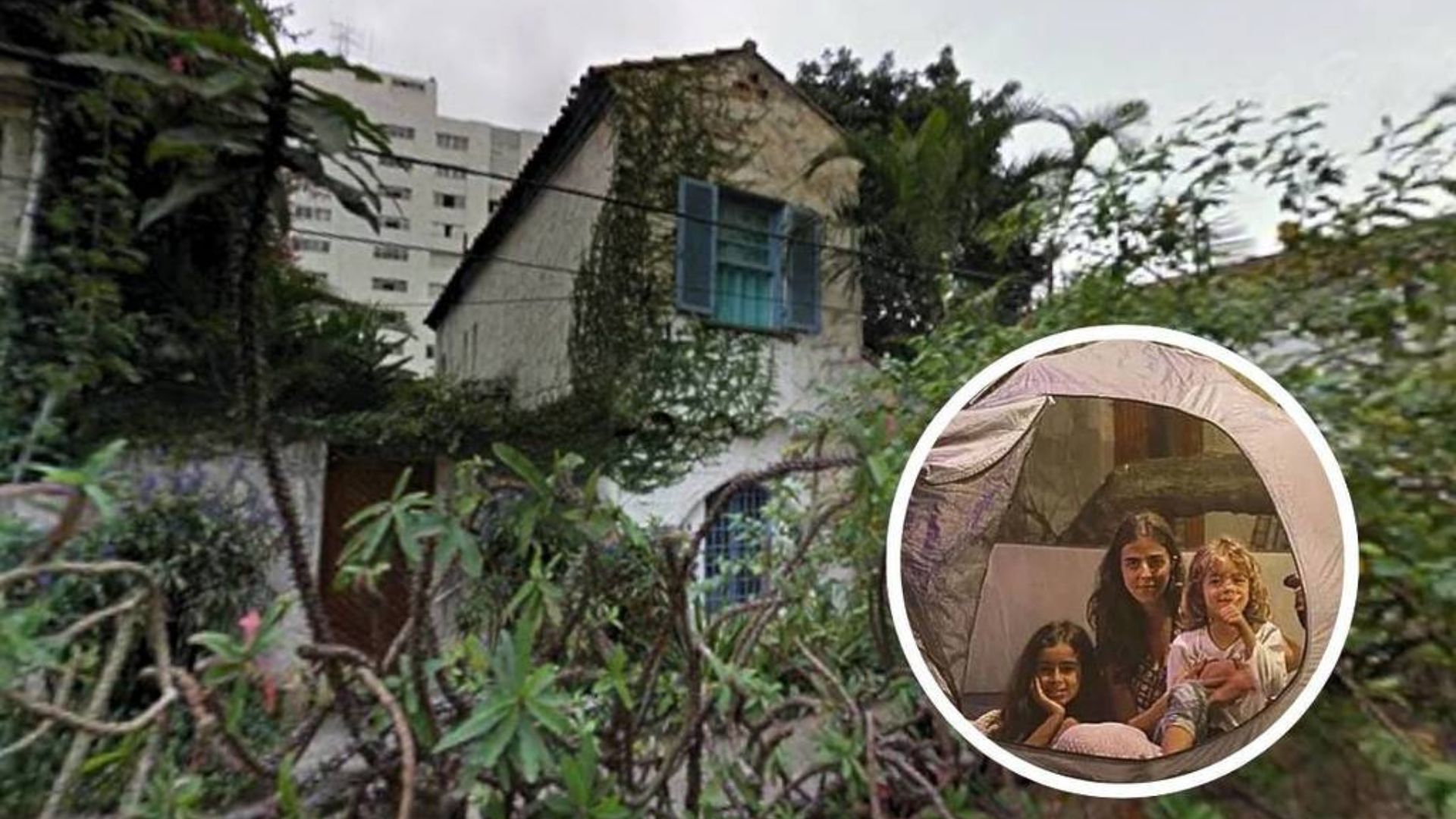


Historical Village in South Zone of São Paulo Remains Closed for Years Awaiting Decision on Listing as Heritage, While Legal Dispute and Lack of Maintenance Increase the Risk of Deterioration of the Site.
For eight years, one of the last historical residential complexes in São Paulo has remained closed, in legal dispute and without a decision regarding its heritage listing.
The so-called Vilinha da Vila Mariana, located at Rua Conselheiro Rodrigues Alves, 289, comprises seven houses built between the 1920s and 1930s and has been vacant since 2017, when the residents left after the land was sold to a developer interested in constructing a new enterprise.
Historical Architecture and Prolonged Abandonment
The village, currently surrounded by fences, retains architectural features typical of the early 20th century, such as twin houses, aligned facades, and an internal courtyard.
-
Entrepreneur Turns Rio Cemetery Canteen into a Successful Snack Chain Generating $4.9 Million Annually and Expanding to Metro Stations

-
Rare fox feared “extinct” found alive on Caribbean island after over two decades without official sightings

-
21-Year-Old Brazilian Student Turns Homemade Popsicle Hobby into $100,000-a-Month Business

-
Australia Dumps Hundreds of Thousands of Tons of Gravel into Rivers to Restore Natural Barriers and Reverse 150 Years of Erosion




The presence of vegetation and the layout of the complex were noted by former residents as elements that fostered coexistence among families in the area.
With the removal of residents and the closure of access points, the space ceased to receive maintenance.
The courtyard, once used by the neighborhood, remains empty, and the structures continue to lack defined use while awaiting an administrative and judicial decision about their future.
Sale, Vacancy, and Attempted Demolition
Until 2017, the entire area belonged to a single owner.

The sale of the complex to a developer led to notifications to the residents to vacate the properties.
After the families’ departure, the company responsible for the land began preparations to demolish the houses, a stage which, according to former residents, included the partial opening of external walls.
The demolition, however, was interrupted by a court decision obtained by former residents, who requested a suspension of the work until the historical value of the complex could be assessed.
Since then, the property has remained in limbo, without authorization for significant interventions.
Requested Listing and Process Without Conclusion
The request for heritage listing of Vilinha was first made in 2006 by residents seeking recognition of the complex as a historical heritage.
The process was formally opened by the Municipal Council for the Preservation of Historical, Cultural, and Environmental Heritage of the City of São Paulo (Conpresp) after the 2017 eviction.
The opening of this procedure guarantees temporary protection, but the definitive analysis remains pending.
While there is no decision, the area cannot be demolished or restored without authorization.
Experts and representatives of preservation entities warn that, during this period, it is common for historical properties to suffer deterioration due to the impossibility of structural work.
Documentary Registers Trajectory of the Village

The trajectory of the village was recorded by actress and filmmaker Ana Petta, who lived for 14 years in one of the houses.
She directed the documentary “Amora”, produced after the residents left.
The film follows the perspective of her son, Pedro, who spent his childhood there, and uses personal accounts to contextualize the impact of the eviction and changes to the space.
“Amora” premiered at the 49th International Film Festival in São Paulo in 2025 and was subsequently screened at festivals in Mexico and Uruguay.
According to organizers and heritage researchers present at the events, the film helped to broaden the debate on traditional forms of housing and the preservation of small-scale architectural complexes in the capital.
Urbanism experts point out that audiovisual works like this help document social aspects of transforming areas, even though they do not replace technical studies on heritage listing or urban impact analysis.
Mobilization for Preservation and Uncertainty About the Future
Even with the property closed, residents of Vila Mariana, former residents, and preservation entities continue to carry out public awareness actions.

The initiatives include campaigns, meetings, and dissemination of information about the administrative process.
Groups advocating for protection assert that Vilinha includes architectural and urbanistic elements representative of the period of formation of the neighborhood.
The developer that purchased the land awaits Conpresp’s decision to determine whether it can execute the original project, adapt it, or if it will be prohibited from undertaking new constructions.
Until a decision is reached, the property remains unused, a situation that raises concerns among experts and institutions dedicated to heritage, who cite the risk of progressive deterioration when old buildings go long periods without maintenance.
With structures exposed to the weather, leaks, and visible wear, the complex remains in a state of uncertainty.
The question among local residents and researchers in the area is whether the decision on the heritage listing will arrive in time to allow for the recovery of the houses or whether the complex will lose essential characteristics before any authorized intervention.
What will be the fate of Vilinha da Vila Mariana after nearly two decades of waiting for a definitive decision?





