





 Portuguese
  English
  Spanish
  4 min of reading
  0 comments


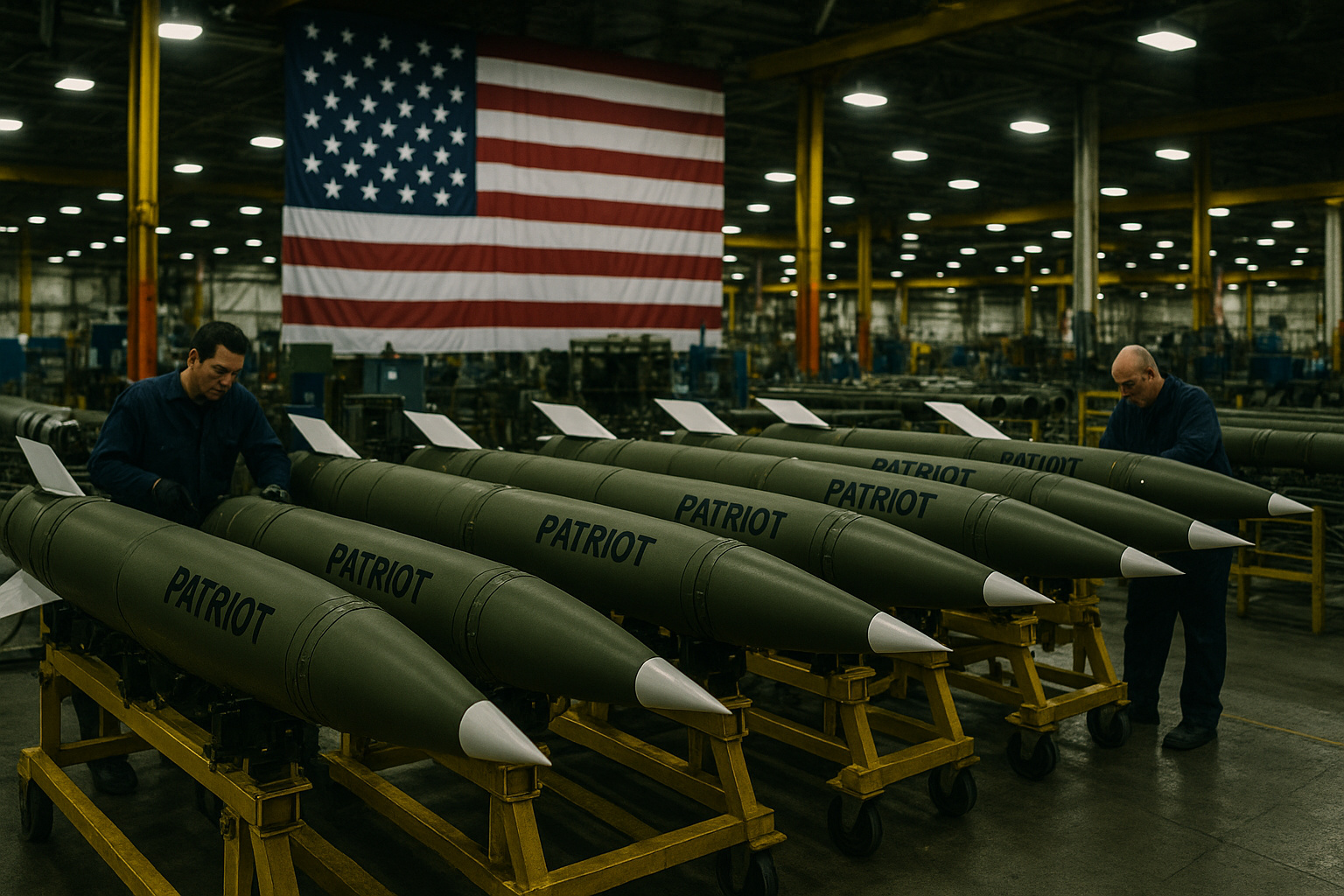
Amid Critical Stockpiles After Years of Military Aid to Ukraine and the 12-Day War Between Israel and Iran, the Pentagon Accelerates the Arms Race Against Beijing and Pressures Giants Like Lockheed Martin to Deliver Thousands of Missiles by 2026.
The alert came from one of the most influential defense institutions on the planet. The Pentagon issued an urgent order for the American industry to quadruple weapons and missile production in the coming years. The goal is not only to bolster arsenals but also to prepare for a potential direct conflict with China in the Pacific.
According to information released by the Wall Street Journal, the priority includes 12 weapon systems, notably the Patriot missiles, crucial for modern air defense. This determination represents an unprecedented scale leap, as the United States aims to double or even quadruple current production rates to compensate for years of stock depletion.
Lockheed Martin Has Already Received $10 Billion to Manufacture 2,000 Patriot PAC-3
The most emblematic example of this effort is Lockheed Martin, a defense giant that has already received nearly $10 billion to produce around 2,000 PAC-3 missiles by 2026. These interceptors are considered vital not only for the U.S. but also for allies such as Ukraine and Israel.
-
SUS surpasses Brazil and inspires a revolution in health: agreement with Mexico could bring universal, free, and more accessible care to millions of people outside the country.

-
With a total blockade of software, data, and connected systems, the U.S. has completely closed its doors to Chinese cars and transformed vehicles into geopolitical weapons, creating a new technological battlefield that could reshape the global automotive industry.

-
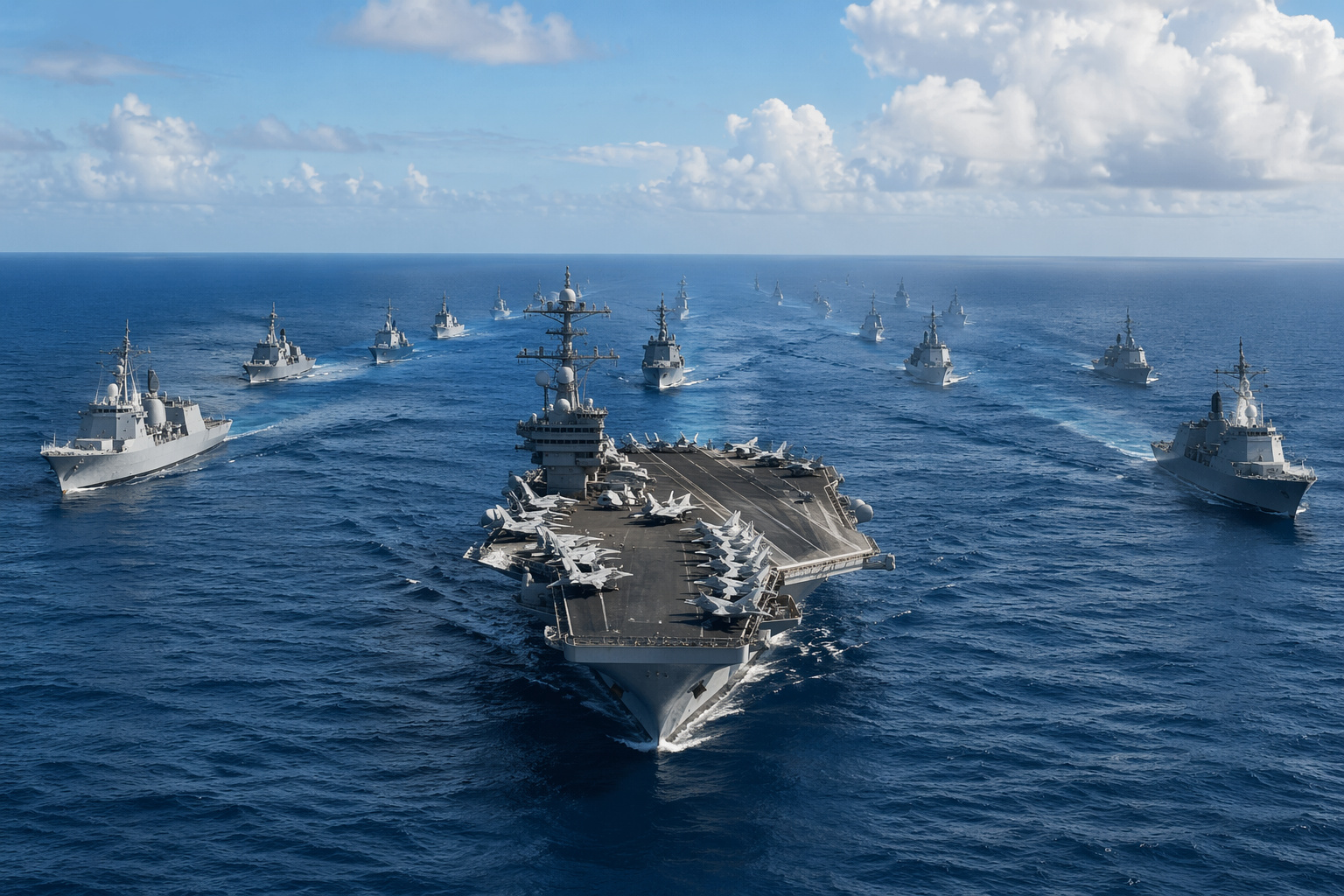
With US$ 65.8 billion and 34 new ships, the U.S. launches a mega naval plan that prioritizes nuclear submarines, strengthens military logistics, and repositions the strategy for prolonged conflicts in the Pacific.
-
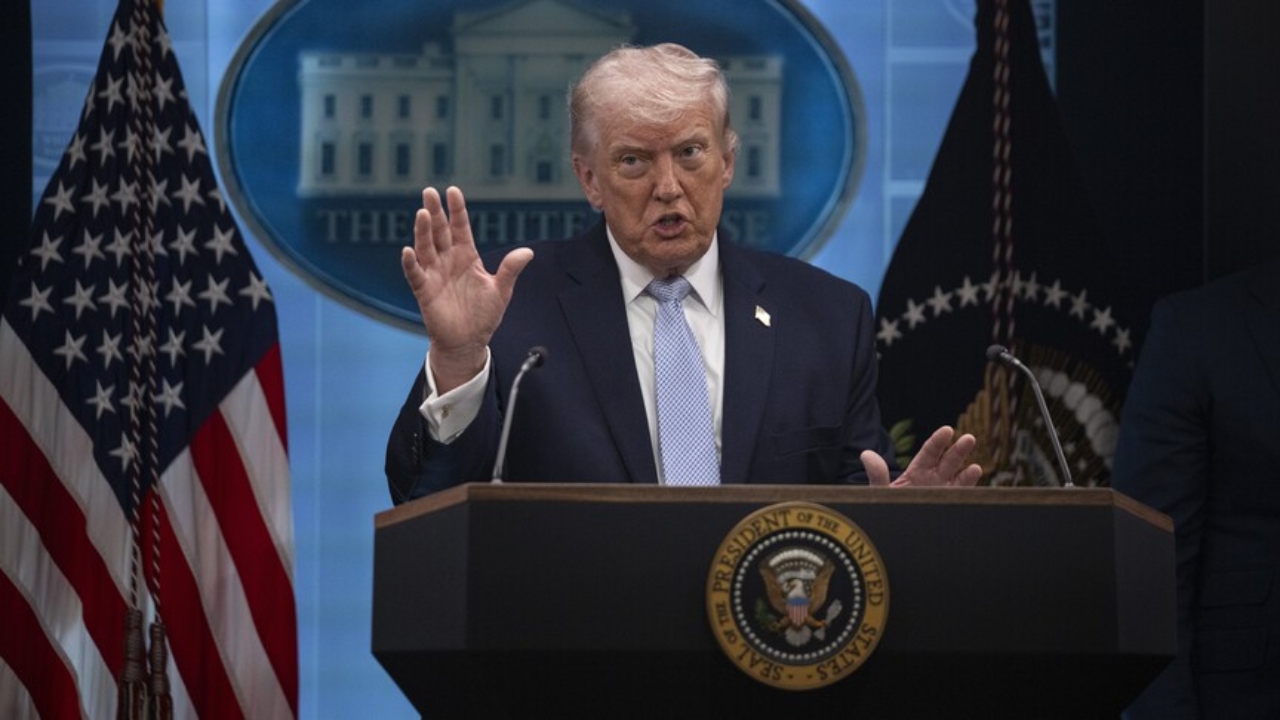
Trump pressures NATO in Europe with threats regarding bases and the use of troops in Spain and Germany to punish allies and change the military balance in the bloc.
The objective is simple: quickly replenish American arsenals, severely affected by more than three and a half years of intense arms shipments to Ukraine and by successive conflicts in the Middle East. The recent 12-day war between Israel and Iran, in which more than 600 Iranian ballistic missiles were fired, only accelerated this urgency.
Dangerously Low Stockpiles Have Already Affected Deliveries to Ukraine
The problem reached a critical point in July 2025, when the Pentagon was forced to pause shipments of precision munitions and air defense missiles to Kiev. The justification was clear: American arsenals were dangerously depleted, especially regarding long-range air defenses.
This cut directly impacted the Patriot system, developed in the 1980s that became the cornerstone of Western defense against ballistic missiles and high-altitude aircraft. In Ukraine, these missiles represented a game-changer, allowing the interception of advanced Russian projectiles like the Iskander. However, the intensive use, with hundreds of launches between 2024 and 2025, rapidly drained reserves.
Middle East Further Drains American Arsenals
If Ukraine was already draining stockpiles, the Middle East completed the scarcity picture. The war between Israel and Iran in 2025 was marked by the launch of more than 600 Iranian ballistic missiles against Israeli territory. Thanks to American support, with the provision of Patriot systems, over 80% of these threats were intercepted.
At the same time, Yemen’s Houthi rebels, supported by Tehran, forced the United States to reinforce its presence in the Red Sea, increasing from two to five destroyers to protect ships and trade routes. The cost of this effort was high: even lower stockpiles and proof that, in high-intensity wars, the decisive factor is not only technological quality but also the quantity of available armaments.
How the End of the Cold War Led to the Collapse of Mass Production
For experts, the primary culprit for this scenario is the disinvestment after the fall of the Soviet Union. The West prioritized cutting-edge technology and advanced systems but neglected mass production. The prevailing belief was that future conflicts would be asymmetric, involving coalitions of Western countries against weaker states.
The result was a defense industry capable of delivering sophisticated weapons, such as the Patriots, but in insufficient volumes for the clashes that have re-emerged. This lesson became clear in recent conflicts: both in Ukraine and in Israel, scarcity has shown that even superpowers can find themselves vulnerable in the face of a prolonged war.
Arms Race with China Accelerates in the Pacific
However, the main concern is not only in Eastern Europe or the Middle East but rather in the Pacific. The Pentagon has made it clear that its primary fear is an offensive by China against Taiwan or even against the Philippines.
The number of Chinese incursions into Taiwan’s airspace surged from a few dozen in 2020 to over 3,000 just in 2024, according to official data. By 2025, preliminary reports are already showing alarming numbers, fueling fears of a multi-front attack to alter the regional power balance.
With the Chinese Navy rapidly expanding and Beijing claiming almost the entire South China Sea, violent incidents with Filipino ships have multiplied. In this scenario, Washington seeks to strengthen alliances and, above all, ensure it will not be caught off guard with depleted stockpiles.
Quadrupled Production is a Strategic Survival Issue
With the war in Ukraine ongoing, continuous support for Israel, and the possibility of a Chinese offensive on the horizon, the Pentagon’s order to quadruple weapons production is seen not only as a replenishment strategy but also as a geopolitical survival issue.
According to analyses from Newsweek and the Wall Street Journal, the United States needs to prepare for a scenario where two or even three high-intensity conflicts occur simultaneously. In that case, even the largest military power on the planet would struggle to sustain the pace with its current manufacturing capacity.
Thus, by ordering this production leap, Washington sends a clear message: the arms race with China is no longer a distant prediction but an urgent reality.









-

-

-

-

4 pessoas reagiram a isso.