






 Portuguese
  Spanish


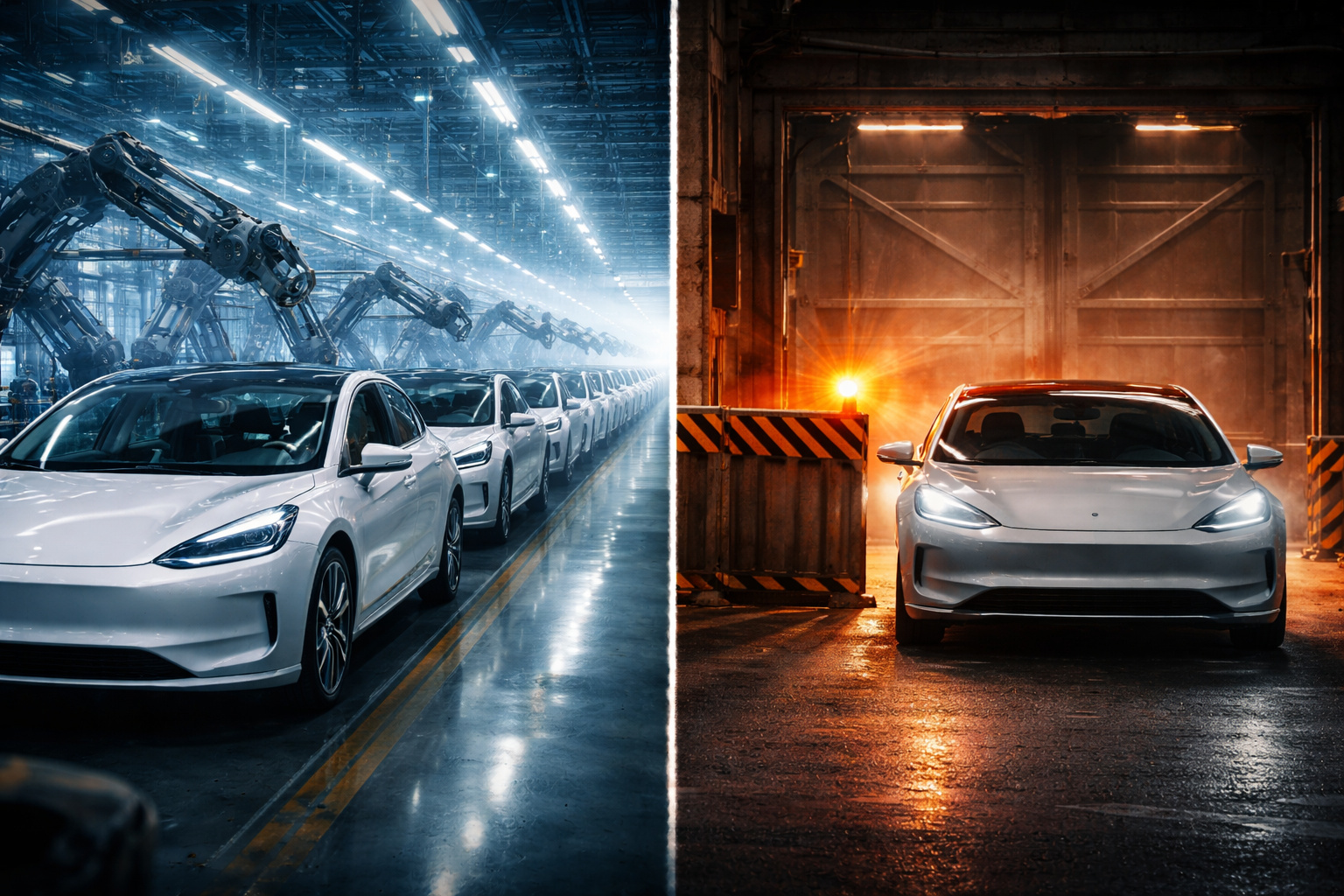


US maintains block on Chinese cars focusing on software and data, expanding the technology dispute and redefining the future of the global automotive industry.
On April 9, 2026, U.S. Trade Representative Jamieson Greer stated, in a declaration reported by Reuters, that the United States government does not intend to change the rules that restrict the presence of vehicles with Chinese software and hardware linked to connected vehicle systems in the American market. This signaling keeps in place one of the most strategic barriers ever imposed on the automotive sector, because the focus of the restriction is not only on tariffs or the physical importation of the car, but on the digital core that has come to define the modern vehicle.
The measure directly affects Chinese automakers and also vehicles that incorporate components classified by the Bureau of Industry and Security of the Department of Commerce as sensitive from a national security perspective. In the official text, the U.S. government argues that privileged access to these systems could allow for exfiltration of sensitive data, as well as remote access and manipulation of vehicles in circulation. In practice, the target is not only the automobile itself but the entire digital ecosystem that accompanies it.
This movement consolidates a structural change in the global automotive sector: vehicles are no longer treated merely as industrial products but are classified as critical technological platforms, with potential impacts on data, infrastructure, and national security. According to the final rule published in the Federal Register, the prohibition on software came into effect in March 2025, while restrictions on hardware will advance with subsequent implementation, reinforcing the geopolitical dimension of this dispute between powers.
-
Chinese Nuclear Submarine Launches Simulated Warhead Missile in Pacific, Heightening Regional Tensions Amid Naval Drills with Russia Near Qingdao; New Zealand and Papua New Guinea Warn of Persistent Chinese Military Presence

-
Ayatollah Ali Khamenei’s Funeral Draws 15 to 20 Million in Tehran, Calls for Revenge Against Trump After Joint Israel-U.S. Attack

-
U.S. Establishes Permanent Embassy in Jerusalem, Reigniting International Debate Over Israel’s Capital
-
The world has nearly 12,000 nuclear warheads, with the majority held by the United States and Russia; see the figures for China, France, and the United Kingdom.


Modern cars become data platforms and expand security concerns
The tightening of American rules is directly linked to the transformation of vehicles into highly connected systems. Today, modern cars operate as true centers for data collection and processing, integrating sensors, cameras, radars, navigation systems, and permanent connectivity to the internet.
These vehicles are capable of collecting information such as:
- Real-time location
- Travel patterns
- Driver biometric data
- Interactions with urban systems
- Critical infrastructure information
This level of collection has turned cars into potential points of vulnerability. American authorities argue that if this data is accessed by foreign governments, it could pose risks to national security.
Automotive software becomes the main target of US restrictions
Unlike traditional trade policies, the focus of the new rules is on embedded software and the digital systems of vehicles.
This includes:
- Vehicle operating systems
- Connectivity platforms
- Over-the-air updates (OTA)
- Driver assistance systems
- Integration with external networks
By restricting these elements, the United States can block not only imported vehicles but also any attempt at technological integration with Chinese suppliers.
This approach broadens the scope of the policy, affecting even non-Chinese automakers that use components or software developed in China.
Measure prevents direct and indirect entry of Chinese vehicles into the American market
The decision of the U.S. government creates a practically insurmountable barrier for Chinese automakers in the U.S. market. Even if a vehicle is produced outside of China, it can be blocked if it uses:
- Software developed by Chinese companies
- Connectivity systems linked to China
- Critical components with data access risks
This makes the policy extremely comprehensive, affecting the entire global production chain. In practice, the U.S. is redefining the concept of a vehicle’s origin, which is no longer just geographic but also technological.
Dispute between the US and China redefines the future of the automotive industry
The decision is part of a broader context of rivalry between the United States and China, which has intensified in recent years in strategic sectors such as technology, semiconductors, and artificial intelligence. The automotive sector, which was historically seen as a traditional industry, has now become a central part of this dispute.
Modern vehicles depend on advanced technologies, including:
- Artificial intelligence
- Embedded computing
- 5G connectivity
- Autonomous systems
This places the automobile on the same level of strategic importance as other critical sectors.
Global automakers face new challenge of technological adaptation
The new reality imposes significant challenges for automakers worldwide. Companies operating globally will need to adapt their production chains to meet different regulatory requirements.
This could lead to:
- Platform segmentation by region
- Development of proprietary software
- Reduction of dependence on Chinese suppliers
- Increased production costs
This market fragmentation may reduce global efficiency and increase prices for the end consumer.
China accelerates global strategy while facing blockade in the US
Despite American restrictions, China continues to expand its presence in the global vehicle market. Chinese manufacturers have rapidly advanced in markets such as:
- Europe
- Latin America
- Southeast Asia
- Middle East
These companies offer vehicles with competitive prices and high technological levels, gaining significant market share.
The blockade in the United States may even encourage greater market diversification by Chinese automakers.
Vehicles are now treated as critical infrastructure
One of the most relevant points of this change is the implicit classification of vehicles as critical infrastructure.
Just like electrical networks, telecommunications, and financial systems, connected cars are now seen as elements that can directly impact national security. This elevates the level of regulatory control and may pave the way for new restrictions in other countries.
The advancement of these policies may lead to the formation of distinct technological blocs in the automotive sector. On one side, countries aligned with the United States may adopt specific standards and suppliers. On the other, China may consolidate its own technological ecosystem.
This scenario may result in:
- Incompatibility between systems
- Reduction of global interoperability
- Duplication of investments in technology
- Increased industrial complexity
This fragmentation represents a profound change from the globalized model that has dominated the industry in recent decades.
Impact goes beyond the industry and reaches consumers and governments
The consequences of these decisions are not limited to automakers. Consumers may face:
- Less variety of vehicles
- Higher prices
- Different levels of technology by region
Governments, in turn, will play a more active role in defining technological and regulatory standards.
New phase of the automotive industry places technology at the center of global dispute
The maintenance of the block on Chinese cars by the United States marks the beginning of a new phase in the automotive sector.
The dispute is no longer just about market share but involves technological control, data security, and geopolitical influence.
In this new scenario, the success of automakers will depend not only on mechanical engineering but also on the ability to develop and control complex digital systems.
Is this blockade strategic protection or the beginning of an irreversible division of the global market?
With vehicles becoming highly connected technological platforms, the decision by the United States raises a central question for the future of the industry: does this strategy represent necessary protection against real risks or mark the beginning of a permanent fragmentation of the global automotive market?
The debate gains momentum as more countries evaluate similar measures, indicating that the sector may be entering an era of deep and lasting technological divisions.


