





 Portuguese
  English
  Spanish
  3 min of reading
  0 comments


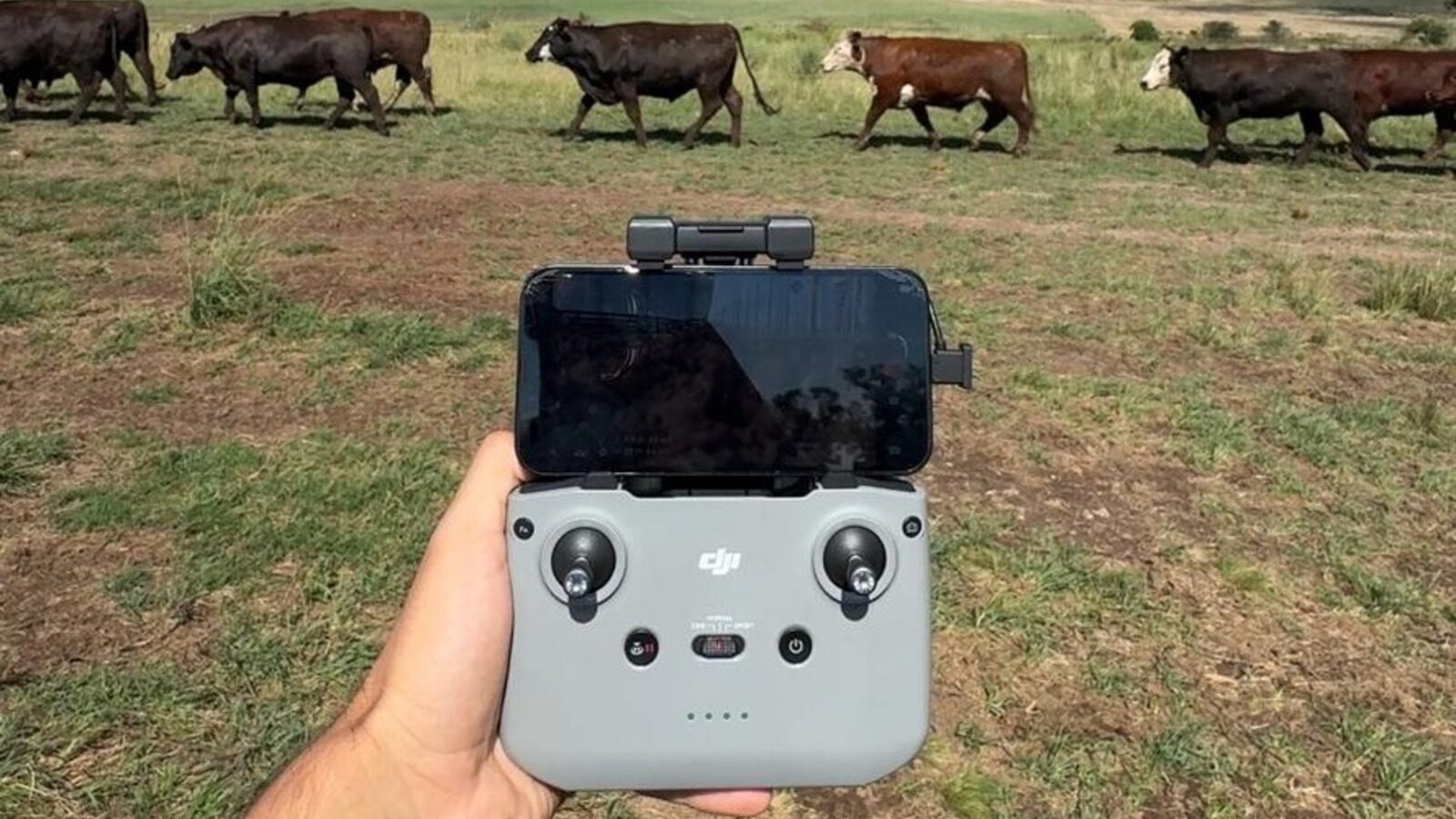
Startups from Uruguay and Brazil Create Technologies That Weigh Cattle with Drones and Cameras, Reducing Costs, Time and Animal Stress
The routine of livestock farming may be about to change because three startups have developed technologies that promise to replace traditional scales used on farms. These solutions eliminate the time-consuming and stressful process of conventional weighing, which often reduces productivity.
The Uruguayan Bet
Ganader-IA, from Uruguay, has created a service based on drones and artificial intelligence. The system is already operational in Argentina, Chile, and Colombia.
Now, the focus is to expand into Brazil, which has the largest commercial cattle herd in the world, with 238.2 million heads.
-
They were brilliant! Scientists discover that our ancestors in China were already making super advanced tools 160,000 years ago, changing everything we knew.
-
Scientists unveil 3 million years of climate secrets hidden in the ice of Antarctica.

-
Ancient farmers created “aggressive plants” that changed nature forever.

-
Astronomers find a “backward” solar system that ignores all the rules of space and leaves scientists scratching their heads!


According to Erik Wansart, business development manager at the agtech, negotiations to enter the Brazilian market are at an advanced stage.
The goal is also to reach Paraguay and, in a second phase, achieve global presence.
The operation is simple: the producer only needs a drone. During flight, the equipment films the herd, and Ganader-IA’s software analyzes each animal, estimating weight and counting them.
Academic Origin
The project was born at Universidad ORT in Montevideo, during a student challenge to create solutions for health, tourism, or livestock.
The developers realized that the cost, time, and stress on animals were bottlenecks of traditional weighing.
It took two years of training to achieve fully functional artificial intelligence, six months ago.
The system already analyzes 300 to 400 cattle in half an hour, with a margin of error between 0% and 5%. The average is considered acceptable by ranchers, but the company aims to further reduce this rate.
Brazilian Technology with Cameras
In Brazil, Olho do Dono bets on cameras and computer vision to monitor cattle and swine. The solution is already operational on farms in Brazil, Argentina, and Paraguay, serving producers with herds starting from 500 animals.
Only in 2025, the technology has already weighed 500 thousand heads. The goal is to triple this number by 2026, reaching 1.5 million monitored animals.
CEO Pedro Henrique Mannato states that the difference lies in speed. While manual weighing can take up to eight hours, the digital tool does the job in just 15 minutes.
Moreover, frequent monitoring reduces losses and helps ensure quicker returns on investment.
Expansion with New Features
Olho do Dono has completed a funding round of R$ 2.2 million, led by BR Angels group. The investment will allow for the development of options for smaller producers, expanding the customer base.
Mannato emphasizes that the goal is to democratize access to technology. “We are creating formats so that small farms can also adopt the system,” he said.
The Strategy of Gado Pesado
Another Brazilian that bets on this innovation is Gado Pesado, operating in 60 properties across ten states and three farms in Paraguay.
Among its clients is JBS, a global meat giant. The company offers image-based weighing services in Rondônia, where the number of conventional scales is still low.
According to Executive Director Adrielly Santos, the proposal is to make the rancher’s day-to-day easier by showing herd evolution and scheduling future weighings.
The idea is for the breeder not to have to spend time moving animals to use physical scales.
Costs and Accessibility
Gado Pesado’s service packages start at R$ 720 per year. To capture the images, the producer needs to purchase a camera worth R$ 2,500.
Because of the accessible cost, even small producers have adopted the technology.
The executive states that the combination of low price and practicality attracts producers who previously lacked tools to closely monitor the performance of their animals.
The Future of Weighing
These three startups demonstrate that livestock farming is undergoing a transformational moment. Drones, cameras, and advanced software allow for agile herd monitoring without compromising animal welfare.
Whether in Uruguay, Brazil, or Paraguay, the trend is clear: the physical scale may be on borrowed time.
The field, once marked by slow processes, is beginning to adopt technologies that save time and increase productivity.
With information from Globo Rural.







-

-

4 pessoas reagiram a isso.