





 Portuguese
  English
  Spanish
  3 min of reading


Brazilian Researchers Developed a Prototype That Can Transform Ethanol Into Hydrogen for Electric Cars. The Product Is Ready to Be Launched on the National Market.
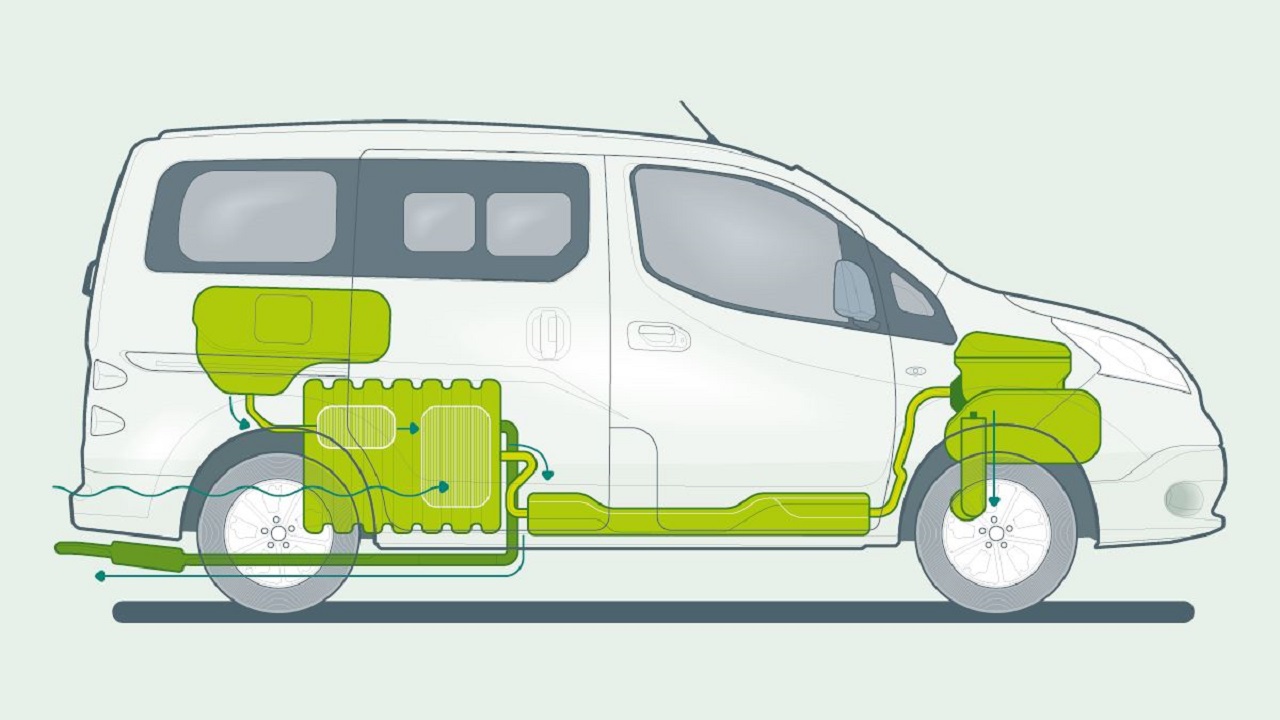
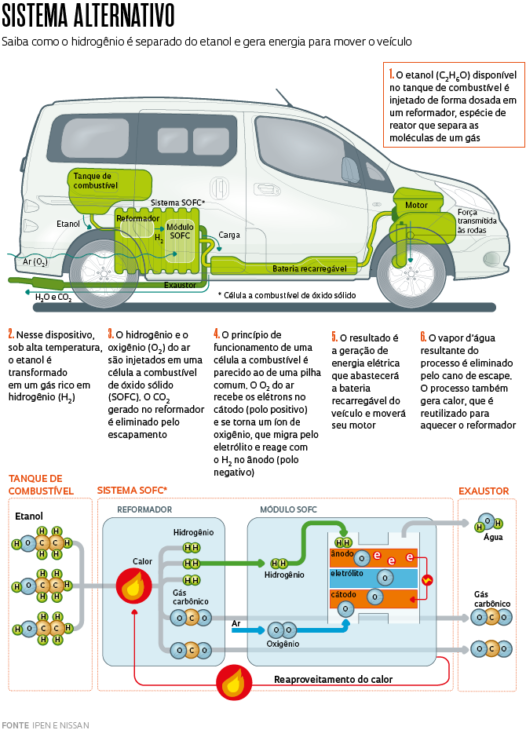
Brazilian researchers have developed equipment that is about to revolutionize the world of hydrogen generation from renewable sources. It is a compact chemical reactor called a microreactor. In summary, it generates embedded hydrogen from ethanol inside electric cars through a fuel cell and generates energy for the electric motor to function.
Brazilian Researchers from FEQ Unicamp Develop 5CM Prototype
This project is already at a scale for use and was developed by researchers from the Optimization, Design, and Advanced Control Laboratory (LOPCA) of the School of Chemical Engineering at the University of Campinas (FEQ Unicamp).
It is important to highlight that the prototype, the heart of the system, is only 5 centimeters long. Because of these characteristics, the efficiency and control of the reactions are improved compared to common reactors.
-
Goodbye expensive popular car: electric vehicle for less than R$ 70,000 starts being sold in Brazil with a range of 200 km and targets those looking to escape gasoline.
-
OMODA & JAECOO grows in Europe in 2026 with an integrated strategy of sales, innovation, local production, and technological advancement in the United Kingdom, Italy, and Spain.

-
OMODA & JAECOO expands after-sales service in Brazil with competitive maintenance, a 7-year warranty, and high availability of parts for technological SUVs.

-
OMODA & JAECOO appoints Alessandra Souza as executive marketing director in Brazil and accelerates brand expansion with a focus on innovation, networking, and hybrid portfolio.


The microreactor for electric cars is a reformer with reduced dimensions, through which ethanol is fed in from one side and hydrogen is obtained from the other. The chemical reactions occur in a confined space and bring the benefits of process intensification, enhancing heat and mass transfers, and thus generating high ethanol conversions in a very short time.
Understand How the Equipment from Brazilian Researchers Works
The plates that feature a mesh of microchannels are developed using 3D printing on specific metal equipment. With the use of additive manufacturing in production processes, it is possible to utilize design and topology optimization software.
The number of microreactors to power electric cars greatly depends on the specifications. To scale up to sufficient power for the model, it is necessary to multiply the number of reaction modules.
According to Brazilian researchers, ethanol was chosen because it is a biofuel produced on a large scale in the country, so there is already knowledge in storing and handling this substance.
In addition, there is national production infrastructure that generates jobs and income. The reduction of pollutant emissions is another advantage. Although the reform of ethanol to obtain hydrogen for electric cars may generate some carbon emissions in the process, this emission can be negated when considering the entire agro-industrial chain.
Project for Electric Cars Can Already Enter Production Scale
According to the professor of Chemical Engineering at Unicamp and coordinator of LOPCA, Rubens Maciel Filho, the technology is now ready to be used by electric car owners in the Brazilian market.
Brazilian researchers have fully mastered the technology of 3D printing in metals, polymers, and ceramics and have been working on this subject since the year 2000, thus making it possible to enter industrial production scale.
Furthermore, according to Rubens, manufacturing technology has global interest and its application to produce hydrogen from ethanol will surely attract interest from various countries that produce ethanol and even those that do not but can purchase it.










Seja o primeiro a reagir!