





 English
  Francês
  Alemão
  Italiano
  Japonês
  Norueguês
  Portuguese
  Spanish
  2 min of reading


The New Diesel That Will Receive Investment from Petrobras Has Distinct Characteristics Compared to Traditional Biodiesel
Petrobras is committed to energy transition and sustainability, and recently announced that it will invest in the production of R diesel, a next-generation fuel resulting from the coprocessing of fossil and vegetable oil. This new fuel has distinct characteristics compared to traditional biodiesel. This article will present more details about Petrobras’ investment in this new technology and the benefits of R diesel.
More Information About Petrobras’ Investment and the Benefits of R Diesel
Petrobras plans to invest approximately R$ 3 billion in the conversion of processes at three existing refineries to produce R diesel. The refinery in Paraná, Repar, already produces vegetable diesel, and now the company will also start production in Duque de Caxias (Reduc) and in Cubatão. In Cubatão, production will be 100% vegetable diesel, representing a revolution in this sector.
R diesel is considered a renewable fuel and has unique characteristics. Unlike traditional biodiesel, vehicle engines accept 100% of this new fuel without mixing limitations. R diesel has a content made up of 5% to 7% vegetable oils, providing a more sustainable and less polluting alternative compared to conventional diesel.
-
Renewable energy advances over protected areas in Brazil, and a survey by the Energy Transition Observatory reveals silent impacts that challenge environmental conservation and pressure sensitive traditional territories.

-
The Economist states that Brazil has a “secret weapon” against expensive oil and highlights how the country can reduce economic impacts even in international scenarios of high volatility.

-
Rio Grande do Sul accelerates energy transition: State invests in renewable technologies and consolidates decarbonization strategies and pathways to attract billions in new industrial investments.

-
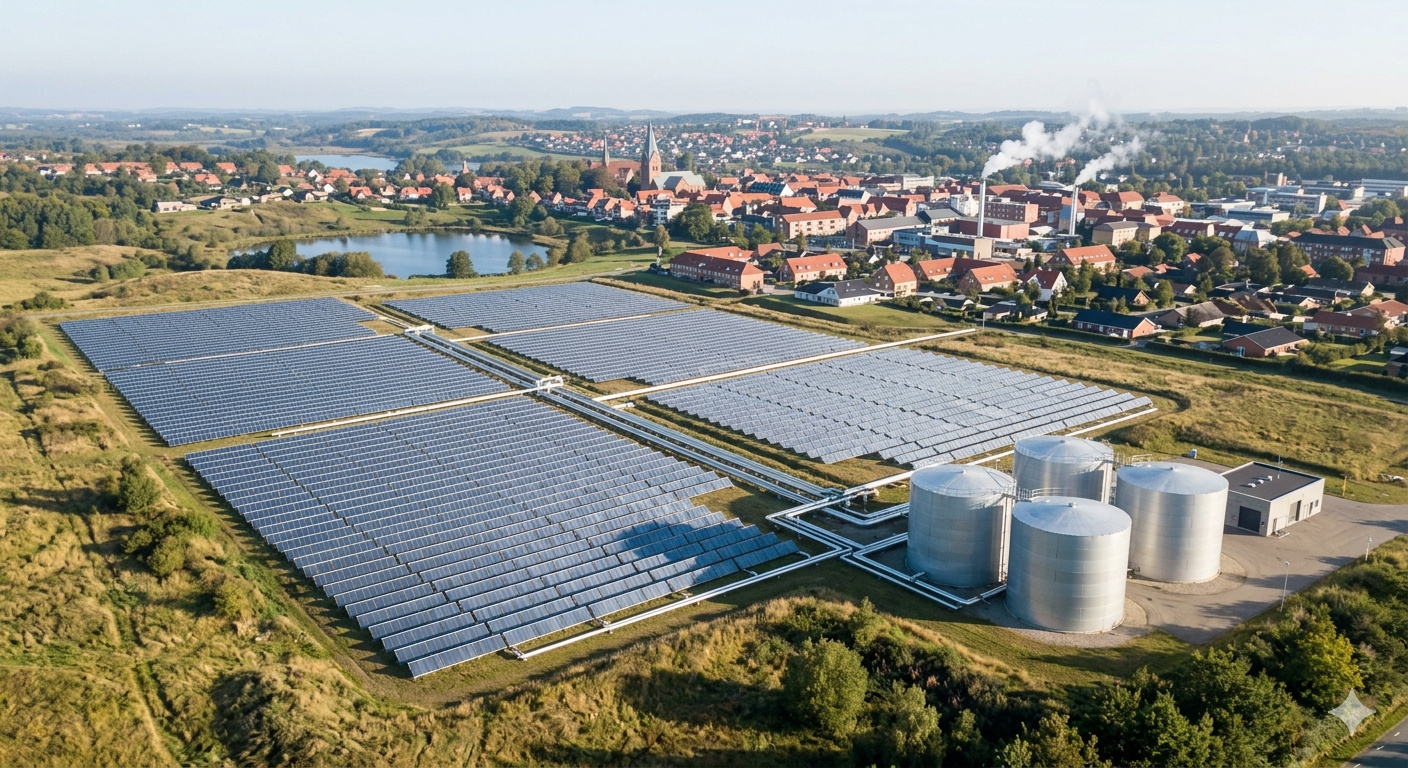
With 160,000 m² of collectors, an area larger than 20 football fields, Silkeborg, in Denmark, hosts a solar thermal plant that heats 19,500 homes and could become the largest solar heating plant in the world.

Petrobras’ Contribution to Sustainability and Investments in Renewable Energy
Mauricio Tolmasquim, director of Energy Transition and Sustainability at Petrobras, emphasized that one of the major global challenges is to make the fuels used in maritime and air transport logistics less polluting. Petrobras is committed to finding solutions to this problem and sees R diesel as an important step in that direction.
Furthermore, Petrobras’ strategic plan includes investments between 6% and 15% of capex in low-carbon initiatives. The company is seeking partnerships with other companies, in Brazil and abroad, to invest in wind and solar parks, aiming to produce green hydrogen. However, it is important to emphasize that a well-established regulatory framework in Brazil is essential to move forward in this regard.
Conclusion on Petrobras’ New Investment
Petrobras’ investment in the production of R diesel represents an important step towards sustainability and reducing pollution caused by fuels. With an investment of R$ 3 billion, the company will adapt three refineries for the production of this new renewable fuel.
R diesel has distinct characteristics and vehicle engines accept 100% of the new fuel, which represents an advantage over traditional biodiesel. Additionally, Petrobras is committed to investing in renewable energy and seeks partnerships to develop wind and solar parks, aiming for the production of green hydrogen.








Seja o primeiro a reagir!