Portuguese
 Spanish


Fiber-optic technology installed on the ocean floor tracks changes in Santos Basin oil reservoirs, improves operational decisions and reduces uncertainty in offshore production.
Petrobras now has permanent subsea reservoir-monitoring infrastructure at the Mero field in the pre-salt of the Santos Basin. The system comprises 4,425 seismic stations spread across approximately 220 square kilometers at a depth of 2,100 meters.
The delivery of the OptoWave PRM technology was announced Tuesday (Nov. 24) by Alcatel Submarine Networks (ASN), which supplied the system.
Installed about 180 kilometers off the coast of Rio de Janeiro, the infrastructure makes it possible to track how reservoirs change during oil production using seismic surveys conducted at different times.
-
Australian oil company plans to invest up to US$950 million to recover 60 million barrels of oil in the Santos Basin, reusing an FPSO and drilling four subsea wells, with production set to begin in 2030

-
Vår Energi strikes $4.4 billion deal to take over ConocoPhillips’ historic North Sea fields, targeting production above 500,000 barrels a day
-
China orders 59 offshore vessels for $1.64 billion, betting on natural gas-powered ships and preparing a new fleet for oil exploration by 2030
-
Transocean begins drilling offshore well in Australia with potential for 64 billion cubic feet of gas



The goal is to make better use of existing reserves and provide more precise information for engineering decisions.
Petrobras uses fiber optics to monitor reservoirs on the ocean floor
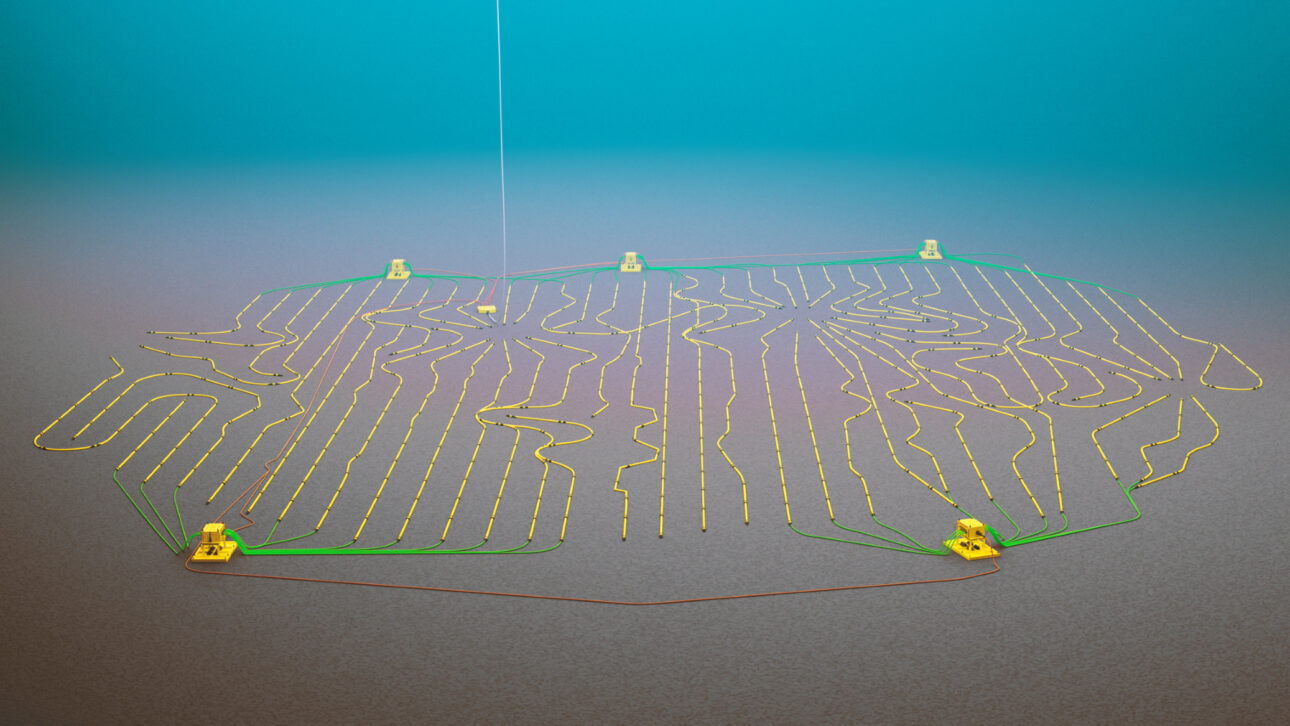
The technology used at Mero relies on sensors connected by fiber-optic cables. They record seismic signals without depending on active electronic components installed on the ocean floor.
The system enables surveys known as 4D seismic, a technique that compares three-dimensional images of a reservoir taken at different points in its producing life.
With this information, engineers can track fluid movement in geological formations, identify areas with oil recovery potential and assess the results of production strategies.
The key advantage is that the subsea infrastructure remains in place, making it possible to repeat surveys using the same sensor network and compare data over the years.
Project procurement began in 2023
In February 2023, Petrobras announced it had signed a contract with the consortium formed by Alcatel Submarine Networks and Maersk to build and install Mero’s permanent seismic monitoring system.
The delivery announced Tuesday marks a new phase of the project, following years of development and subsea infrastructure installation.
Monitoring is particularly important given Mero’s geological characteristics: the field has a high gas-to-oil ratio and high concentrations of carbon dioxide (CO₂).
The seismic data are expected to improve reservoir management, increase the oil recovery factor and help reduce the operation’s emissions intensity.
$450 million investment will enter its second phase in 2027
In April 2026, Petrobras announced an investment of about $450 million in the permanent seismic monitoring project, which the state-owned company considers the world’s largest.
The first phase includes more than 460 kilometers of subsea cables in the areas served by the Guanabara and Sepetiba FPSOs, corresponding to the Mero 1 and Mero 2 projects.
The second phase calls for installing another 316 kilometers of cables, covering an additional 140 km² in the areas of the Duque de Caxias and Alexandre de Gusmão FPSOs.
Scheduled for completion in 2027, the expansion will bring the monitoring technology to the field’s four main production units.
Mero field hit record output of 799,000 barrels of oil per day
Petrobras’ 2027–2031 Business Plan presentation says Mero reached a daily production record of 799,000 barrels of oil on November 8, 2026.
The field has 47 wells in operation: 23 producers and 24 injectors. The company’s plan calls for drilling another 19 wells by 2031.
Petrobras also plans to use artificial intelligence, in partnership with the Federal University of Rio de Janeiro (UFRJ), to analyze data collected by the permanent system.
With the first phase now operational, the state-owned company has an additional tool to extend the productive life of one of Brazil’s largest oil fields.