Portuguese
 Spanish


Project between Anchieta and Sarandi was completed in November with state funding; next phase calls for new pumping stations and canals.
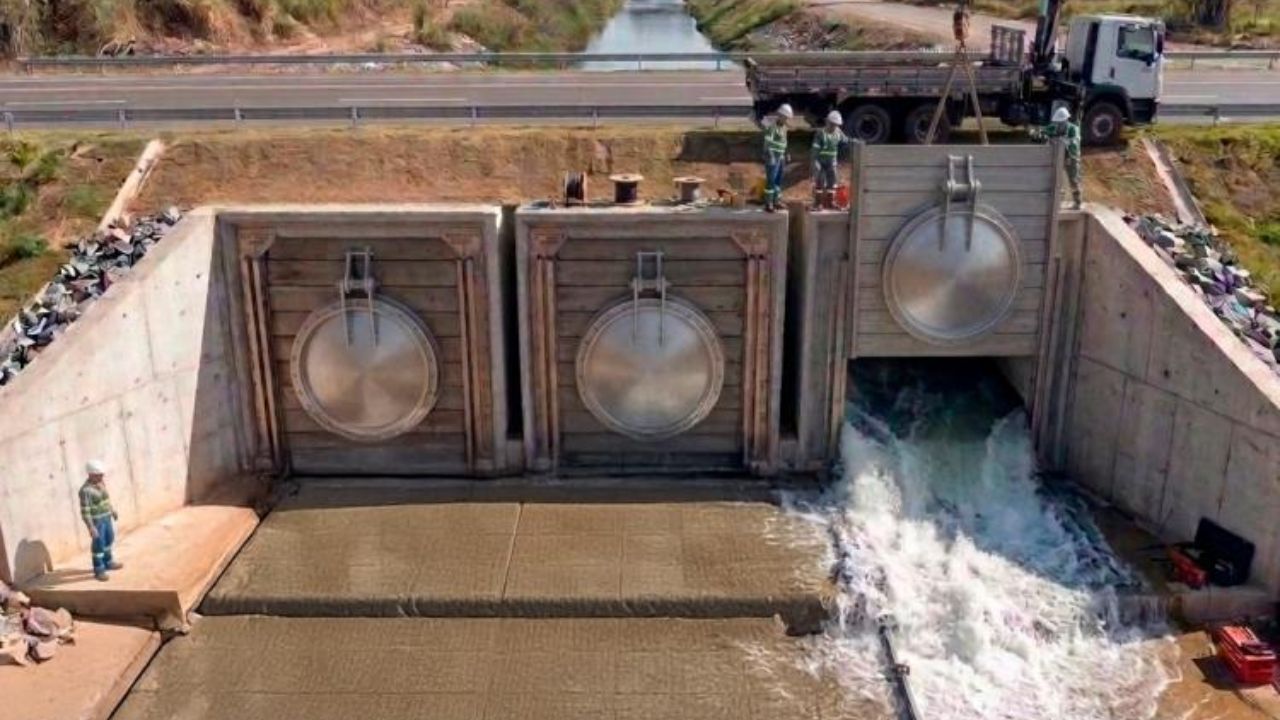
Porto Alegre City Hall completed on Tuesday, November 24, 2026, a R$60 million project to strengthen flood protection in the northern part of the southern Brazilian city. The system installed between the Anchieta and Sarandi neighborhoods includes a new levee, seven movable gates and eight floating pumps, with a combined capacity to remove 12,000 liters of water per second from flood-prone areas.
The Rio Grande do Sul state government, which announced the project’s completion on November 24, provided funding through the Rio Grande Plan Fund (Funrigs). The city carried out the work, which began in June. The system is part of flood protection for the area near Salgado Filho International Airport, which was affected by the historic floods of 2024.
Porto Alegre completes levee, seven gates and eight pumps to hold back the Gravataí River
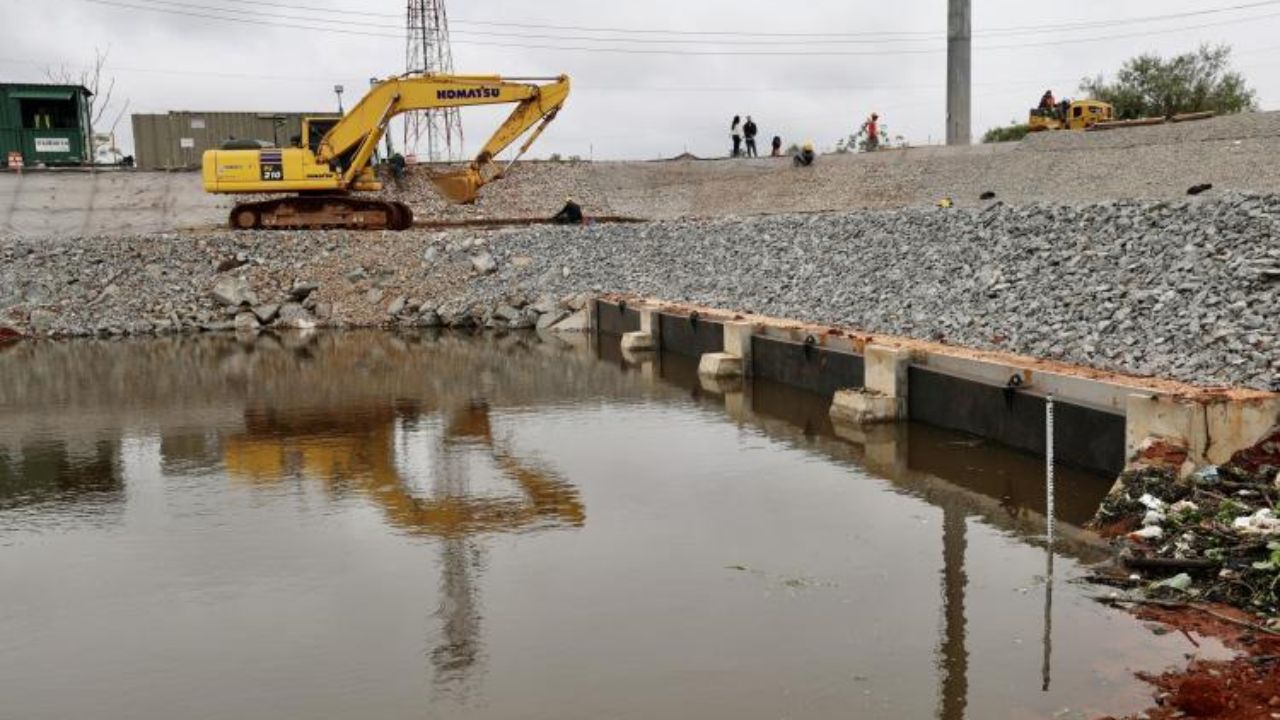
The work was carried out in Polders 7 and 8, areas protected by physical barriers and drainage systems. Its purpose is to prevent rising water in the Gravataí River from backing up through streams and drainage conduits that cross the city’s northern area.
-
Construction of Brazil’s R$174 million orthopedic hospital in Guará moves forward after delays

-
Rio Grande do Sul Prison Expands by 128 Beds with Completion of R$6.4 Million Project in Four Months
-
Santos launches R$183.6 million waterfront overhaul after 20 years, rerouting 23 bus lines
-
Construction Stalled at 40% and a R$796,000 Fine: Joinville Turns to a Third Contractor to Try to Finish Orchid Palace for R$13.9 Million
The new levee separates Passo das Pedras Creek from the Gravataí River. The project also includes movable gates installed where water passes through, as well as equipment to remove water that accumulates inside the protected area.
Information previously released by the Municipal Department of Water and Sewage (Dmae) says the section of levee built alongside the river is approximately 100 meters long.
Dmae designed the system with input from consulting firm Rhama Analysis. Construction began in late June and included civil works, equipment installation and operational adjustments before the official handover.
Dmae CEO Vicente Perrone said the work addresses approximately 60 vulnerable points identified after the 2024 floods. Porto Alegre City Hall shared the figure during an inspection marking the project’s completion; it does not guarantee that further flooding will not occur.
Pumps can remove 12,000 liters of water per second from protected areas
The system relies on two complementary actions: blocking river water from entering and allowing rainwater that accumulates inside the protected area to drain out.
When the Gravataí River is at normal levels, streams can drain into it naturally. During floods, however, the river can back up that flow or push water through existing passageways.
In this situation, the seven movable gates are closed to keep outside water from entering. Closing them protects the area from rising river levels, but also requires a mechanism to remove water from local rainfall.
That is when the eight floating pumps go into operation. Together, they have a stated capacity of 12,000 liters per second, equivalent to 12 cubic meters per second or 43.2 million liters per hour when operating continuously at their rated flow.
That volume is the stated hydraulic capacity of the equipment, not the amount actually pumped during a rain event. Actual performance depends on operating conditions and the characteristics of the system.
The distinction between flood protection and drainage is also covered in a CPG report explaining how surface and subsurface drainage channels water and helps reduce flooding.
Area near Salgado Filho Airport was affected by the 2024 floods
The project serves an area between the Anchieta and Sarandi neighborhoods that includes the vicinity of Salgado Filho International Airport. Its location calls for protective measures that can address both rising rivers and rainfall in nearby neighborhoods.
The May 2024 floods inundated large areas of Porto Alegre and disrupted a range of urban services. The airport was also flooded, becoming one of the symbols of the damage caused by the disaster.
After the event, the city began reviewing weaknesses in its flood-protection system. Dmae started identifying points where water could enter the city, including drainage passages and existing flood-control structures.
The capital’s flood protection does not rely solely on the newly delivered equipment. Porto Alegre has 68 kilometers of levees, including 24 kilometers of external levees and 44 kilometers of internal levees, according to Dmae’s technical documentation.
The system also includes 23 stormwater pumping stations, known as pump houses, as well as gates and structures serving different areas.
The human toll of the floods was also documented in a CPG report about a fisherman who took part in rescues in Porto Alegre after losing his own home in the flooding.
System began operating before its handover and underwent adjustments through November
Although the project was officially completed in November, the infrastructure began operating earlier. The city government said the movable gates at polders 7 and 8 were first closed in August 2026.
The operation allowed crews to activate the barriers as river levels rose. Crews continued installation work and made the adjustments needed to complete the planned system afterward.
In September, the city government again used the gates preventively in response to hydrological conditions. In October, Dmae reported the permanent installation of the floating pumps, completing a step needed for the system to operate as an integrated whole.
The project was formally handed over during an inspection attended by Mayor Sebastião Melo, Rio Grande do Sul Reconstruction Secretary Pedro Capeluppi, and federal Reconstruction Secretary Maneco Hassen.
The investment announced at completion was R$60 million, funded by Funrigs. In earlier statements, Dmae had reported R$47 million for a package of work and equipment; the R$60 million figure is the amount officially presented for the November handover.
Completion marks the end of this construction phase, but not of all the work planned for polders 7 and 8.
New R$300 million phase includes two pumping stations and levee reconstruction
The Porto Alegre city government is preparing a second phase of work in the same area, with an estimated investment of R$300 million, authorized by the federal government in September 2026.
The new project calls for building two Stormwater Pumping Stations, as well as work on the channels of the Passo das Pedras and Areia streams. Work is also planned on the Sarandi and Vila Dique levees.
According to the city government’s announcement on the handover, the next phase is expected to allow certain existing structures to stop serving primarily as flood barriers and instead become part of the urban drainage system.
Funding for this phase is expected to come from the Fund for Infrastructure Support for Recovery and Adaptation to Extreme Climate Events (Firece). The R$300 million is an estimate for future work, not an expense included in the R$60 million project already completed.
Dmae aims to complete the design for this new phase by the end of 2026. The city government has said it expects to open the bidding process to hire a contractor in the first quarter of 2027.
State government reports more than R$723 million for flood protection
The Porto Alegre project is part of the Reconstruction Fund-to-Fund Program, which the state uses to transfer money for municipal recovery and prevention projects.
The Rio Grande do Sul Reconstruction Secretariat said more than R$723 million had been approved for flood protection systems in municipalities across the state as of November 24.
The list includes Canoas, Novo Hamburgo, Eldorado do Sul, Gravataí, Pelotas, Esteio, São Leopoldo, Sapucaia do Sul and other cities. The funding covers separate projects, each with its own needs and timeline.
The state government also said other funding requests remain under review. Work will depend on progress through the technical and administrative stages of each project.
In Porto Alegre, the project completed Tuesday is now part of the operating infrastructure for polders 7 and 8, while the design for the next phase is expected to be completed in time for bidding in 2027.