





 Portuguese
  English
  Spanish
  3 min of reading
  0 comments


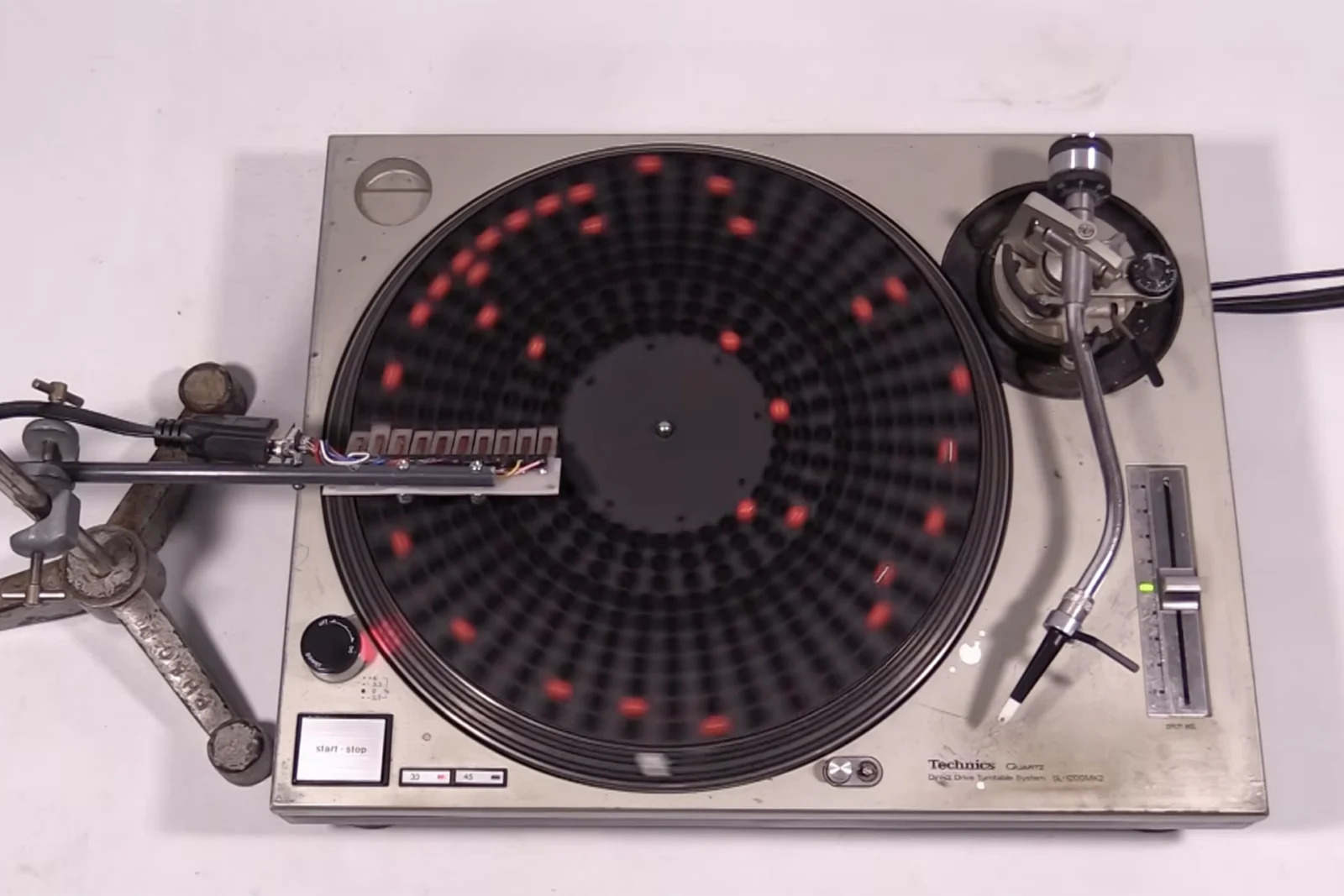
Graham Dunning’s project transforms turntables into mechanical sequencers, uses metal balls to trigger sounds and creates complex rhythms in just one bar
The musician, creator, and sound artist Graham Dunning developed in London a turntable that functions as a drum sequencer, a project linked to London South Bank University and designed to organize sounds on a physical grid over the record, with practical applications and its own limitations.
Project transforms turntables into sequencers
The device was created by Graham Dunning, who describes himself as a musician, creator, and sound artist. The project integrates his doctoral thesis at London South Bank University, titled Mechanical Techno: Extended Turntable as Live Assemblage.
The proposal combines functions of turntables and sequencers. Instead of operating as conventional equipment, the device organizes sounds in a quantized grid, where each horizontal line represents a different sound.
-
What seemed like just dirty ice in Antarctica turned into a global alert when a research vessel discovered an island measuring 130 meters, confirmed the actual coastline, and forced a revision of nautical charts.

-
Digital scams with artificial intelligence are becoming more sophisticated and harder to detect; see how criminals use AIs to deceive victims and discover effective strategies to avoid significant financial losses.

-
Photo taken by an astronaut on the ISS shows the Great Bahama Bank with turquoise waters only 2 meters deep visible from space, a region described as one of the most beautiful in orbit that was solid land about 20,000 years ago and drops 2,000 meters into the Tongue of the Ocean.

-
Super Typhoon Sinlaku reaches winds of 306 km/h in the Pacific Ocean and puts the Mariana Islands on high alert.

Each column of the grid corresponds to a defined time interval. The central difference is that, in this case, this grid does not appear on a screen or in software, but directly on the surface of the record.
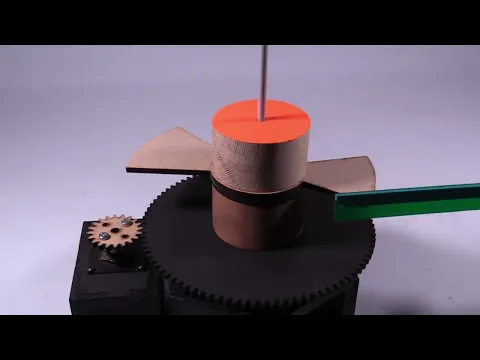

How the sound grid works on the record
In a common sequencer, the user positions sounds within a predefined temporal structure. In the turntable created by Dunning, this same logic is maintained but adapted to the circular movement of the platter.
This adaptation imposes an important limitation on the size of the rhythmic pattern. While most sequencers allow loops of four bars, the equipment developed by Dunning accommodates only one bar.
The thesis explains that, as the turntable spins at 33 1/3 RPM, a cycle of four beats produces a tempo of 133.333 BPM. Compressing two bars into the same space would raise this value to 266.666 BPM.
This level would even exceed the territory of gabber. Therefore, the structure of the device focuses on a single bar, maintaining the organization of time within this physical limit.
One-bar limit still allows complexity
Even restricted to one bar, the system still opens up space for complex rhythmic combinations. Each beat is divided into eighth notes, allowing for intricate and eccentric grooves within the same turn of the record.
The cited example highlights the kick drum. It triggers on the first beat and then reappears at different intervals on the following beats, creating a less predictable structure within the quantized grid.
Thus, the turntable does not extend the length of the pattern but increases the internal possibilities of sound organization. The spatial limitation coexists with a high degree of rhythmic variation.
Metal balls trigger the sounds
As this is not a conventional LP, the needle remains locked and protected. The notes are defined by placing a metal ball in the corresponding groove of the grid marked on the record.
On the other side of the turntable, a series of sensors similar to the rotating targets of a pinball machine are suspended. Each time a ball passes under the right flap, the system triggers the programmed sound.
These sounds are triggered on an electronic drum connected to the equipment. The process replaces the traditional reading of the needle and transfers the execution to a physical mechanism based on position and passage.
Practical use and visual appeal of the device
The project seems closer to an academic exercise than to an instrument for everyday use.
Still, the device can be practically used to create a simple and easily modifiable base.
One possibility mentioned is to use the turntable as a foundation for a DJ set. Additionally, the visual representation of the beat can help those who still find it difficult to manually synchronize two records.
With information from Gizmodo.








Seja o primeiro a reagir!