





 Portuguese
  English
  Spanish
  4 min of reading
  15 comments


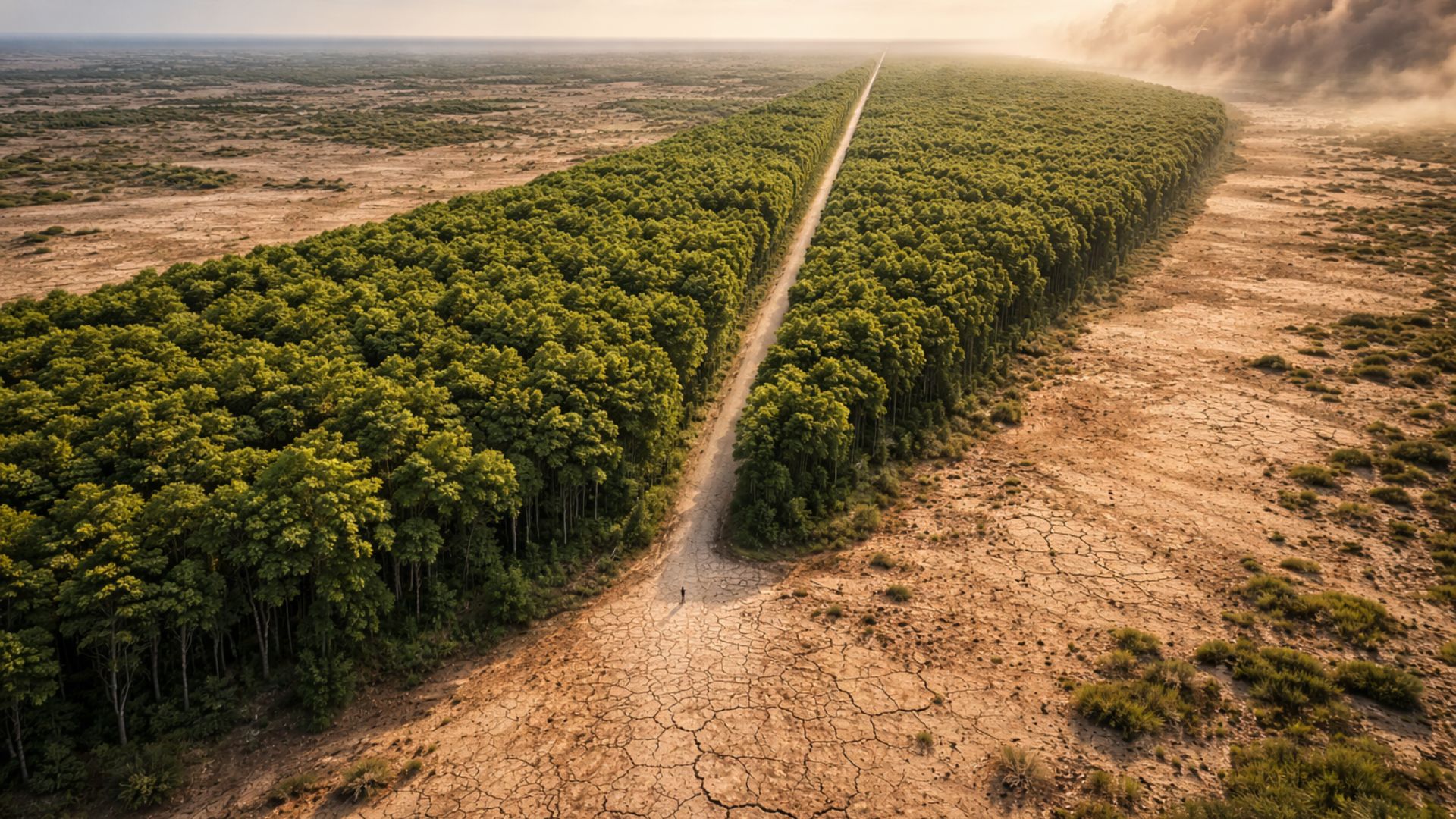


Tree Planting to Combat Desertification Changed Water Distribution in China, with Temporary Gains Against Dust and Degraded Soil, but Growing Pressure on Aquifers and Supply.
The strategy of planting extensive strips of trees to hold back desertification in northern China has helped reduce dust and stabilize soils in critical areas, but it has also raised water consumption in already pressured regions, affecting aquifers and water availability.
With the increase in vegetation, water loss to the atmosphere through evapotranspiration has grown, a natural process that can enhance moisture circulation but does not always return rain to the same place where the water was extracted.
Green Barrier Against the Advance of the Gobi Desert
Over decades, reforestation and large-scale restoration programs have been used as public policy to slow the advance of degraded areas and contain sandstorms affecting cities, crops, and logistical corridors in the northern part of the country.
-
With a length of 399.9 meters and a capacity for over 24,346 containers, the MSC Irina becomes the largest ship in the world and revolutionizes global maritime transport.

-
With nearly 6,000 square meters and an investment of $100 million, the building that seems to move in Las Vegas has a reflective stainless steel façade, creates optical illusions, and has become a symbol of creativity worldwide.

-
From Florianópolis to Antarctica non-stop at 60 years old: 1st Brazilian woman to sail solo makes history by facing one of the most dangerous routes on the planet.

-
A Brazilian recounted how a sudden malaise triggered the entire hospital machinery in the United States, with emergency protocols, tests to rule out a heart attack, and a bill that could reach $40,000.


In this design, concentrated planting aimed to form a continuous protection, capable of reducing wind speed, keeping soil in place, and, as an additional effect, increasing carbon sequestration from biomass.

Water Scarcity and Competition for Water Resources
However, the water impact tends to appear more strongly in dry environments, because trees and shrubs need to seek water in the soil and, in some cases, in deeper layers, increasing pressure on underground reserves.
In practical terms, part of the scientific criticism of such projects points out that by increasing vegetation cover without coordinating species selection and landscape management, the “forest” can, as the original text describes, “drink” the same water used by agriculture and cities.
Exotic Species, Fast Growth, and Evapotranspiration
In arid and semi-arid climate regions, the preference for homogeneous plantings and fast-growing species can create vulnerabilities, including high mortality, pests, and water demand incompatible with the local water availability.
This point appears in analyses discussing how Chinese planting efforts, while they have brought gains in vegetation coverage, faced limitations when prioritizing quantity and speed instead of ecological suitability and water sustainability.
Hydrological Cycle and Redistribution of Rainfall

A study published in the journal Earth’s Future analyzed land cover changes and indicated that between 2001 and 2020, increased vegetation was associated with reduced water available for people and ecosystems in large portions of eastern and northwestern China, while another part of the country recorded an increase.
The explanation discussed by the authors revolves around moisture recycling: the water that leaves the soil via evapotranspiration can return as precipitation, but winds and atmospheric patterns can transport this moisture over long distances, displacing where the rain falls.
Sustainable Reforestation and Limits of Water Availability
Reports and analyses about the Chinese experience highlight that as the risks of scarcity became clearer, governments and technicians began to discuss adjustments, including greater use of vegetation with lower water demand that is more compatible with regional conditions.
The central lesson pointed out by researchers monitoring these programs is that reforestation can solve one problem and exacerbate another if it does not incorporate water as a central variable, just as it incorporates soil, wind, and seedling survival.
Great Green Wall in Africa and Landscape Restoration
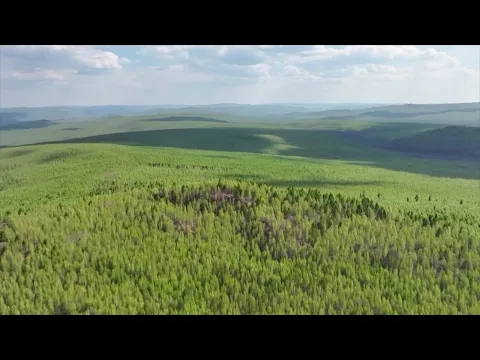

In Africa, the Great Green Wall was conceived as an initiative to combat soil degradation and desertification, and is now described by international organizations as a broader effort for landscape restoration, with environmental and social goals.
Instead of being limited to a continuous strip of trees, the proposal has been presented as a set of interventions, restoring different ecosystems, incentivizing sustainable practices, and encouraging community participation, even though it faces challenges in funding and coordination.
Projects associated with the African corridor have also drawn attention for emphasizing species diversity and integrated productive solutions, such as agroforestry systems, identified by some initiatives as a way to reconcile restoration, income, and farmers’ livelihoods in the field.
If the Chinese experience shows the risk of transforming an environmental response into a water dispute, what kind of rules should apply to prevent new “green walls” from being planned without first measuring, above all, how much water they will take from those who already live on the edge?





A escassez de recursos hídricos pode ser vista como resultado de um conjunto de fatores naturais (como secas e mudanças climáticas) e, principalmente, humanos, incluindo o consumo excessivo (agrícola, industrial e urbano), desperdício, poluição de corpos d’água e má gestão dos recursos hídricos.
Principais causas associadas à escassez hídrica:
Ação Humana e Gestão: Poluição de rios e lençóis freáticos, uso indiscriminado de fertilizantes/agrotóxicos, desmatamento e ineficiência na infraestrutura de captação e tratamento.
Consumo Elevado: A agricultura é o maior consumidor, representando cerca de 73% do uso, seguido por atividades industriais (21%) e consumo doméstico (6%).
Fatores Climáticos: Mudanças climáticas, aquecimento global e diminuição do nível de chuvas.
Distribuição Desigual: A falta de água é frequentemente um problema de qualidade (água disponível, mas não utilizável) e má distribuição, mais do que apenas a quantidade física total.
(em 2012 na 8 série fiz uma apresentação discutindo o tema mais não tinha conhecimento do reflorestamento do deserto da china . estatística baseada em notícias na internet no ano eu e meu grupo “falamos em hipótese que em 150 anos ou menos o mundo estaria em guerra por causa de água doce com o Brasil no centro do conflito” mais pelo andar do tempo talvez seja mais curto.)
Florestar sim isso auxilia a impedir a desertificação, porém tem que ter estratégia como fazer círculos de um metro de profundidade e 3 de largurae espasso de 3 metros entre eles para receber agua da chuva e conte-la no sub solo está estrutura de contenção idraulica tem que ser feita em todo território e as arvores devem ser plantadas dentro destes círculos e em volta deles, assim elas não roubarão as águas de nascentes,rios e subsolo.
O nordeste do Brasil poderia ser um exemplo de adaptação vegetal com vegetação de menor porte e de deferentes ciclos begetativos