





 Portuguese
  English
  Spanish
  4 min of reading
  4 comments


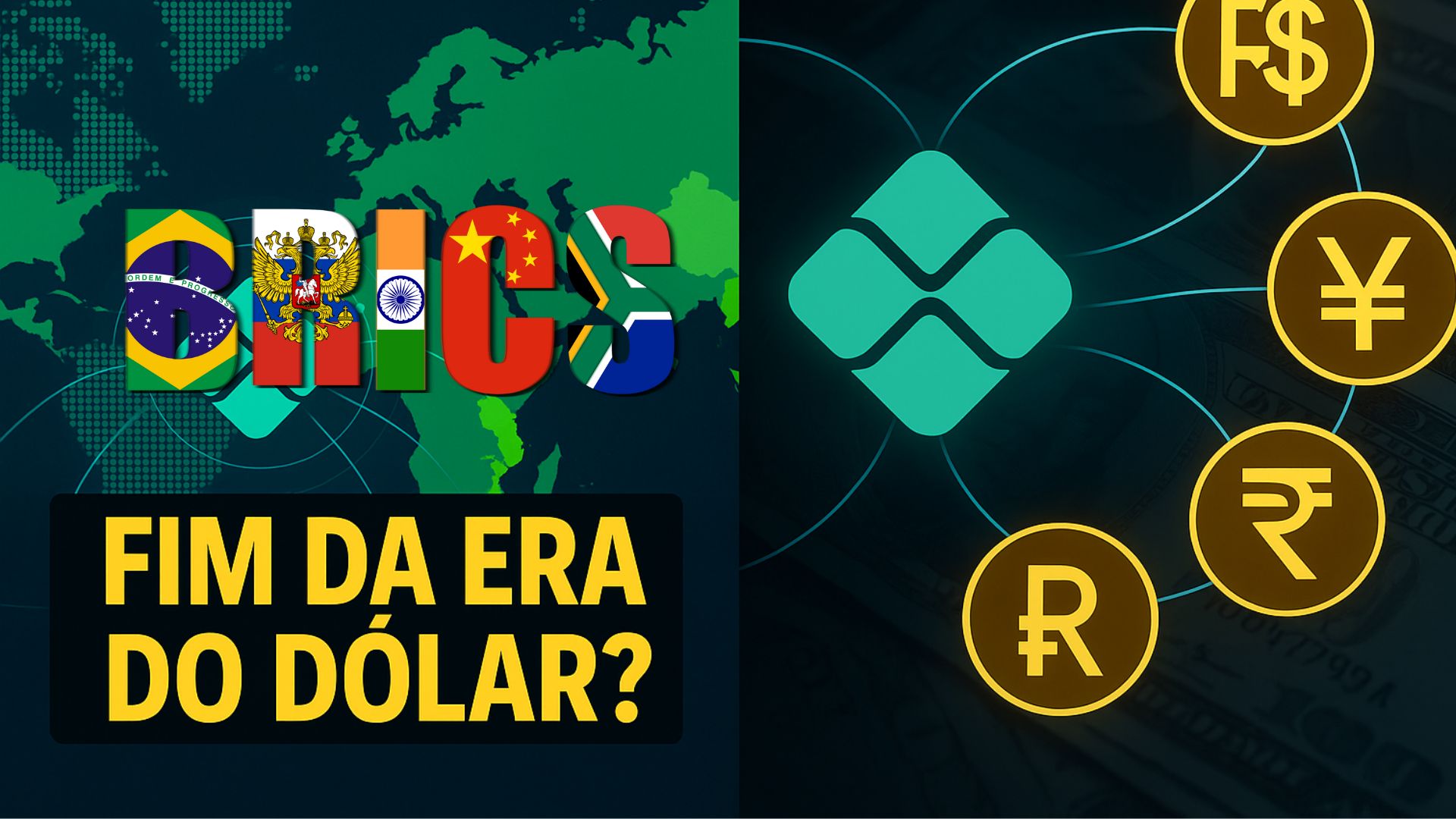


BRICS Is Preparing To Launch A Unique Payment Platform Promising To Integrate National Systems Like Pix, Reduce Dependence On The Dollar, And Facilitate Direct Transactions Between Local Currencies, Expanding Trade And International Cooperation.
BRICS plans to put into operation, still in September 2025, Brics Pay, a payment platform designed to enable transfers between countries in the bloc directly in local currencies, without going through the dollar.
The project is based on DCMS, a decentralized model of financial messaging developed by the University of Saint Petersburg, and promises to operate with infrastructure distinct from SWIFT.
How Brics Pay Would Work
According to its developers, the proposal is to create a messaging “hub” that connects the national payment systems of each country, with automatic routing and end-to-end encryption.
-
Inflation in March reaches 0.88% according to IBGE and pressures the Brazilian economy, impacting family budgets and requiring more strategic decisions to maintain financial control.

-
In Paraná, distributor Pacto connects 100% of the load in Coronel Vivida to batteries: a BES of 10 MW and 20 MWh costs just over R$ 30 million and lowers the local tariff now.

-
With a dependence of up to 80% on gas imported from the United States, Mexico is responding with a robust energy strategy, betting on shale gas, creating a scientific committee, and preparing to expand natural gas production to reduce vulnerability and strengthen its energy security in the coming years.

-
The United States proposes to Brazil a critical minerals agreement with a minimum price to combat Chinese dumping and priority for investment, but the Planalto is blocking the signing out of fear of upsetting China and due to electoral calculations in a year of competition.

Instead of a central chamber, the network operates through nodes distributed, which, in theory, reduces single points of control and failures.
The University of Saint Petersburg describes the DCMS as a solution aimed at the exchange of financial messages between banks and regulators in different jurisdictions.
The platform would bring together already existing technologies.
Among them is SBP, the Russian instant payment system that allows transfers using a phone number and currently has over 200 connected banks.
The mechanism operates 24 hours a day and is used for transfers between people and payments to merchants via QR Code.
In Brazil, the expectation is for interoperability with Pix.
Project materials indicate the intention to cooperate with national systems and “build bridges” between domestic and cross-border arrangements.
Authorities and specialized media have mentioned the possibility of integration with platforms like Pix, UPI (India), and PayShap (South Africa), but the technical and operational connection with Pix has not yet been formally detailed.
What Changes In Remittances And Trade


The main promise is to reduce costs and timelines of international transfers within the bloc.
Instead of converting local currencies to dollars and then to the destination currency, operations would be settled directly in the currencies of each country, with local exchange rates and compliance trails defined by each regulator.
In public statements, authorities from Russia, India, and Brazil have stated that the priority is to increase the use of national currencies and make cross-border payments more agile.
Economist Adenauer Rockenmeyer, delegate of Corecon-SP, assesses that the model may strengthen the international use of Pix and expand intra-bloc exchanges.
For him, the initiative represents a challenge to the supremacy of the dollar: “The system operates with infrastructure independent of SWIFT, based on decentralized technology, which makes control and the application of sanctions difficult. Each transaction outside the traditional system reduces the dollar’s influence on international trade,” he stated.
Launch And Scope: What Is Already Confirmed
The launch schedule for September 2025 has been mentioned by representatives linked to the project and by industry publications, although BRICS countries have not yet released a joint technical statement with detailed rules, adherence, and deadlines.
In 2024, for example, Russian President Vladimir Putin stated that the group, at that moment, would not create a completely new system alternative to SWIFT, but would instead use the existing infrastructure of the central banks of the bloc—signaling that the strategy may combine domestic platforms with new layers of messaging.
For the operation to gain scale, Brics Pay will need to certify integrations with banks, local arrangements, and wallets in each country, as well as address standards for compliance, anti-money laundering, and cybersecurity.
The distributed design of the DCMS provides for encryption and data control by jurisdiction, but concrete implementation will depend on bilateral and multilateral regulatory agreements.
Pix “Outside Of Home”: What It Would Mean For The User
If the integration materializes, Brazilian consumers and companies could initiate payments abroad using Pix keys or compatible QR Codes.
Charges and conversion into reais would occur at the origin, with settlement in the currency of the destination country.
The experience would be similar to a domestic Pix, but with fees and exchange rates defined by the provider and the local partner arrangement, under the supervision of the involved regulators.
For now, this is a declared goal of the project, still without a public manual for interoperability with Pix.
Geopolitical Impacts And Limits Of The Project
The “de-dollarization” agenda has motivated solutions that reduce the need for dollars in trade.
Experts note, however, that infrastructure is only part of the problem.
The acceptance of local currencies by exporters, the availability of liquidity, and the management of exchange risks remain central conditioning factors.
In parallel, BRICS members report progress in the use of national currencies and the construction of cross-payment arrangements, even though not all details are public.
China Inaugurates Bridge With The Largest Span In The World
On September 9, 2025, China inaugurated the Changzhou–Taizhou Bridge (also called Changtai), which crosses the Yangtze River in Jiangsu province.
The structure has a length of 10.3 kilometers and a main span of 1,208 meters, the largest among suspension bridges already opened to traffic.
The project connects highway, urban road, and intercity railway at two levels, reducing travel time between Changzhou and Taizhou from about 80 to 20 minutes.
In addition to the record open span, the structure was designed to integrate transportation in the Yangtze delta and support regional logistics corridors.
Reports from the Chinese and international press highlight that construction took approximately six years, with completion in 2025, and employed large-scale engineering solutions for cables, metal decks, and structural monitoring.
With the possibility of Pix gaining international reach via Brics Pay and China debuting a new infrastructure milestone, one question remains: what other economic and technological integration movements will BRICS implement in the coming months?









Excepcional. Todos contra o imperialismo dos eua. Basta
Excelente! Que tudo de certo e que o BRICs prospere cada vez mais.
Imagina como será a fiscalização, qualquer coisa que venha do BRICS é para explorar a população dos próprios países, países vergonhosos que empobrecem a própria população.