





 Portuguese
  English
  Spanish
  4 min of reading
  0 comments


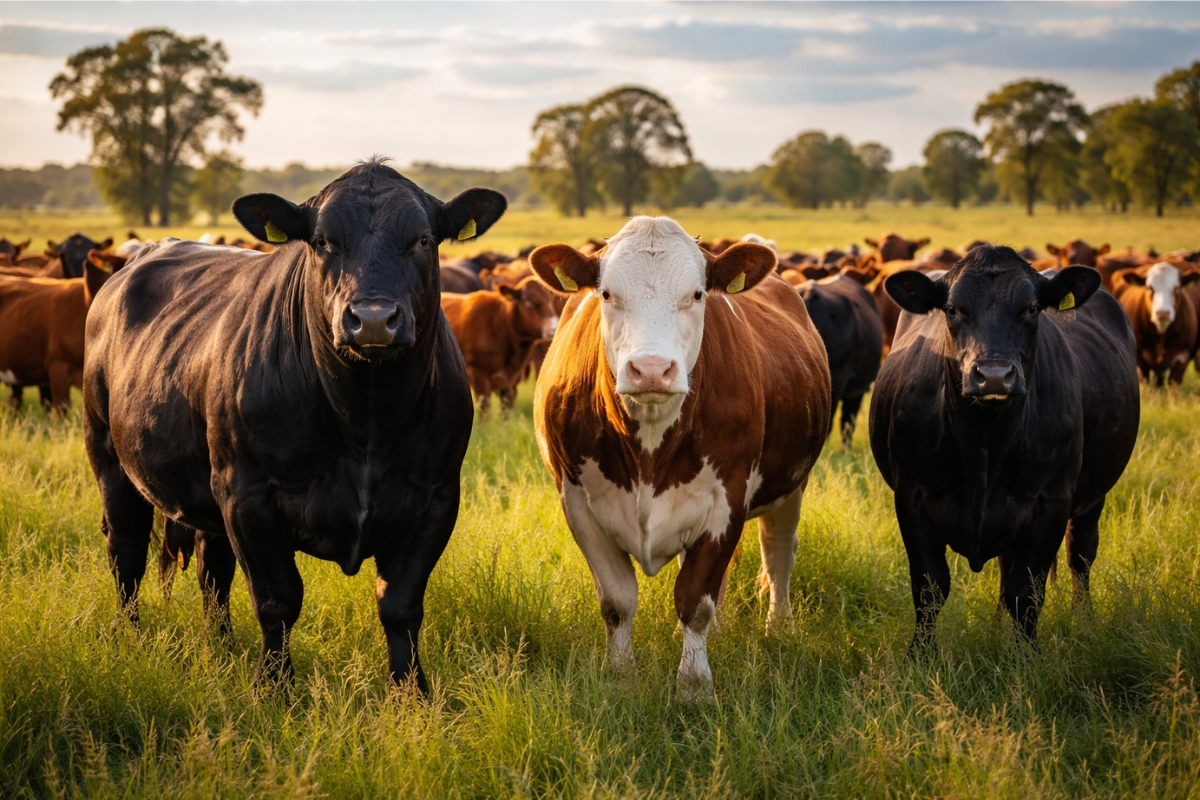
Argentina Stands Out with Premium Beef by Combining Pasture-Raised Breeding, Extensive Management, and Breeds Like Angus, Elevating Tenderness, Standards, and Influence in Global Trade
Beef produced in Argentina is considered among the highest quality in the world due to a combination of factors ranging from the intense use of pasture-based production systems to the selection of high-performance cattle genetics, focused on meat quality, environmental adaptation, and productivity.
One of the country’s main advantages is the vast expanse of natural pastures, especially in the Argentinian Pampas, which allows for the raising of cattle with predominantly natural feeding. This diet directly influences the texture, flavor, and fat profile of the meat, making it juicier and recognized in premium markets.
British Breeds Dominate Beef Production Due to the Quality of Their Genetics
Breeds of British origin play a central role in Argentine beef cattle due to their ability to produce high-quality meat with good muscle conformation and adequate marbling.
-
The sugar-energy sector advances with agricultural technology, but agricultural productivity still raises concerns.

-
The eggshell that almost everyone throws away is made up of about 95% calcium carbonate and can help enrich the soil when crushed, slowly releasing nutrients and being reused in home gardens and vegetable patches.

-
This farm in the United States does not use sunlight, does not use soil, and produces 500 times more food per square meter than traditional agriculture: the secret lies in 42,000 LEDs, hydroponics, and a system that recycles even the heat from the lamps.

-
The water that almost everyone throws away after cooking potatoes carries nutrients released during the preparation and can be reused to help in the development of plants when used correctly at the base of gardens and pots, at no additional cost and without changing the routine.


The Aberdeen Angus is cited as the most widespread breed throughout the country, forming the basis of a large part of the herds, both pure and crossbred.
The advantage of this breed is its ability to produce meat with tender texture and balanced flavor, essential attributes for the gourmet market and exports seeking consistent standards and high acceptability by sensory experience.
Hereford and Angus Dominate Temperate Areas and Fuel Exports

The Angus and Hereford breeds are often cited as the main contributors to the reputation of Argentine beef abroad. Both have muscle conformation and meat yield regarded as excellent and adapt very well to pasture-based breeding.
Hereford stands out for its vigor and hardiness, with good performance on natural pastures and efficient feeding behavior, while Angus, in turn, is often chosen for its superior marbling, which reflects in cuts appreciated by discerning consumers.
Crossbreeding with Brahman Creates Breeds Adapted to Extreme Climates
In addition to British breeds, the use of genetic crossbreeding with Brahman, a breed originating in tropical environments, has resulted in cattle with better adaptation to hotter regions without compromising meat quality.
Two of the most commonly used synthetic breeds in this regard are Braford and Brangus. They combine characteristics of Angus or Hereford with the hardiness brought by Brahman.
These crossbreeds are widely used in areas such as northern and northeastern Argentina, where climatic conditions are more challenging and require heat tolerance, resistance to parasites, and adaptability to native pasture.
The Braford breed, for example, has grown in importance due to its ability to thrive in different environmental conditions, from subtropical regions to the drier areas of the Pampas.

Other Breeds and Crossbreeds Complement the Genetic Repertoire
In addition to those already mentioned, other breeds participate in production in specific niches or in genetic improvement programs:
The Limangus is a crossbreed developed in Argentina itself, combining the advantages of Angus with greater musculature and carcass yield, along with good adaptation to different raising conditions.
Continental breeds such as Limousin bring a meat profile with high lean cut yield, and their presence in the Argentine fields contributes both to direct production and to crossbreeds that increase carcass yield without compromising quality.
Reproductive Management and Genetics at the Center of Competitiveness
Genetic improvement, using tools like artificial insemination and careful selection of breeders, is part of Argentina’s production planning. This not only allows for an increase in meat quality but also optimizes productivity in predominantly pasture-based systems.
The adaptation of breeds to Argentina’s natural pastoral system, which prioritizes pasture-based feeding, gives the meat specific characteristics appreciated in the international market, including healthy fat profile, more pronounced flavor, and balanced texture.
What This Represents for the Argentine Product in the Global Market
The strategy of utilizing high-performance genetic breeds, combined with the traditional pull of pasture-raising, positions Argentine beef in a premium segment in terms of sensory quality. Demanding markets for beef quality see in Argentine products a balance between texture, flavor, and cut yield.
This competitive differential is reflected not only in the preference for Angus and Hereford cuts in exports but also in the search for meats with specific characteristics in sophisticated gastronomic niches around the world.
Furthermore, the intelligent use of adaptive crossbreeding expands the presence of cattle ranching in areas with different climatic challenges, demonstrating that the Argentine model combines genetic heritage with efficient productive response.










-

-

-

-

-

-

14 pessoas reagiram a isso.