





 Portuguese
  English
  Spanish
  6 min of reading
  0 comments


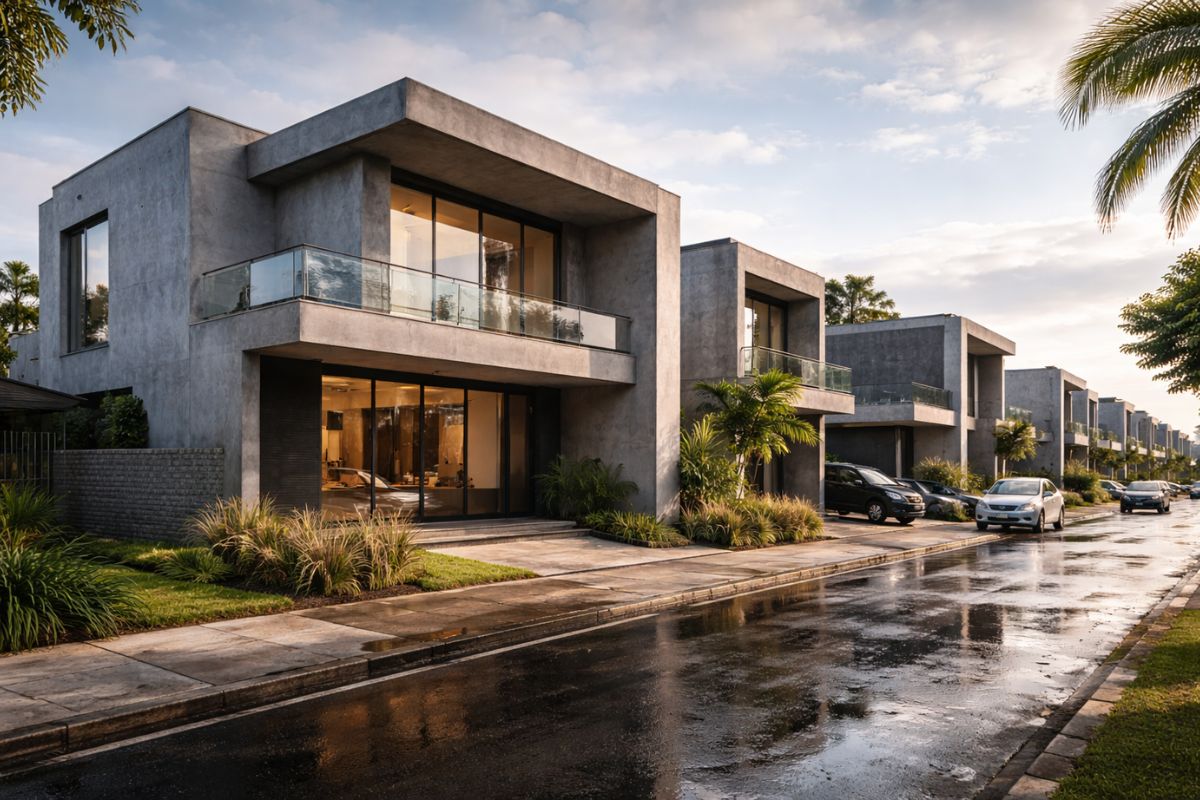
In The Last Two Decades, Modern Brazilian Houses With Box Shape, Cement Walls, Flat Roofs, And Huge Windows Have Dominated New Neighborhoods And Condominiums, Even With Issues Of Excessive Heat, Humidity, And Maintenance. Lower Construction Costs, Minimalist Aesthetics, And Maximized Land Use Help Explain This Preference.
Modern Brazilian houses with gray concrete box appearance have become one of the most common images in newly built neighborhoods and gated communities in Brazil. Flat roofs, giant windows, and simple brick walls with cement plaster form an architectural pattern that many immediately associate with modernity.
Despite this popularity, these houses often face practical problems, such as excessive heat in the summer, heat loss in the winter, and humidity in the interior walls. Nevertheless, they continue to be built on a large scale. The explanation involves a combination of cost, aesthetics, real estate market, and adaptation to the size of urban plots.
The Rise Of Modern Brazilian Houses In New Neighborhoods

The presence of modern Brazilian houses has increased significantly over the past two decades, especially in recent subdivisions and planned condominiums. In many of these areas, up to 90% or 95% of the constructions follow the same format, featuring square volumes, smooth walls, and neutral colors.
-
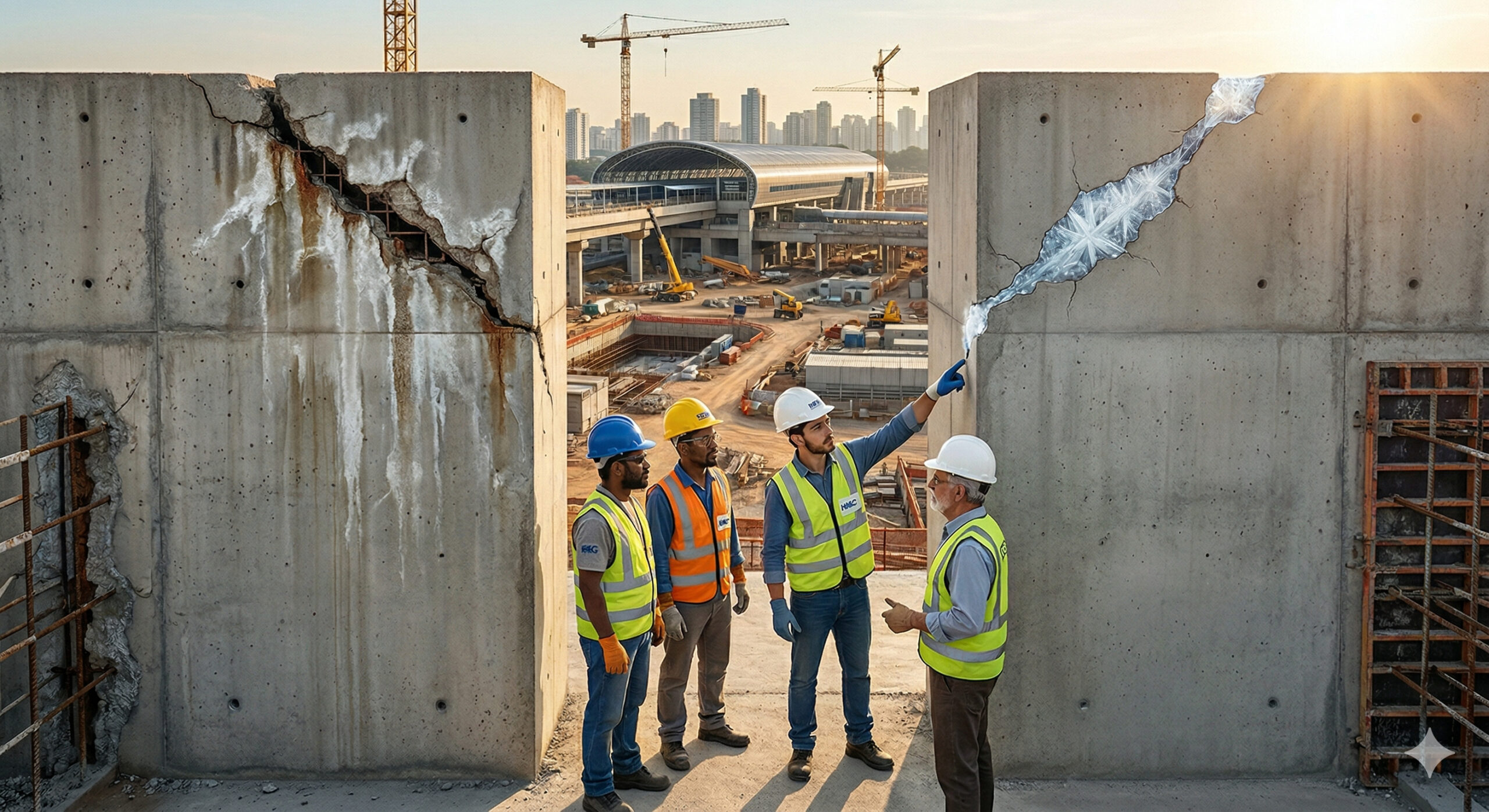
With a lifespan of up to 60 years and a cost up to 30% higher than conventional concrete, self-healing concrete is already being used in Brazil to eliminate leaks, reduce maintenance, and is changing the real cost of construction projects.
-
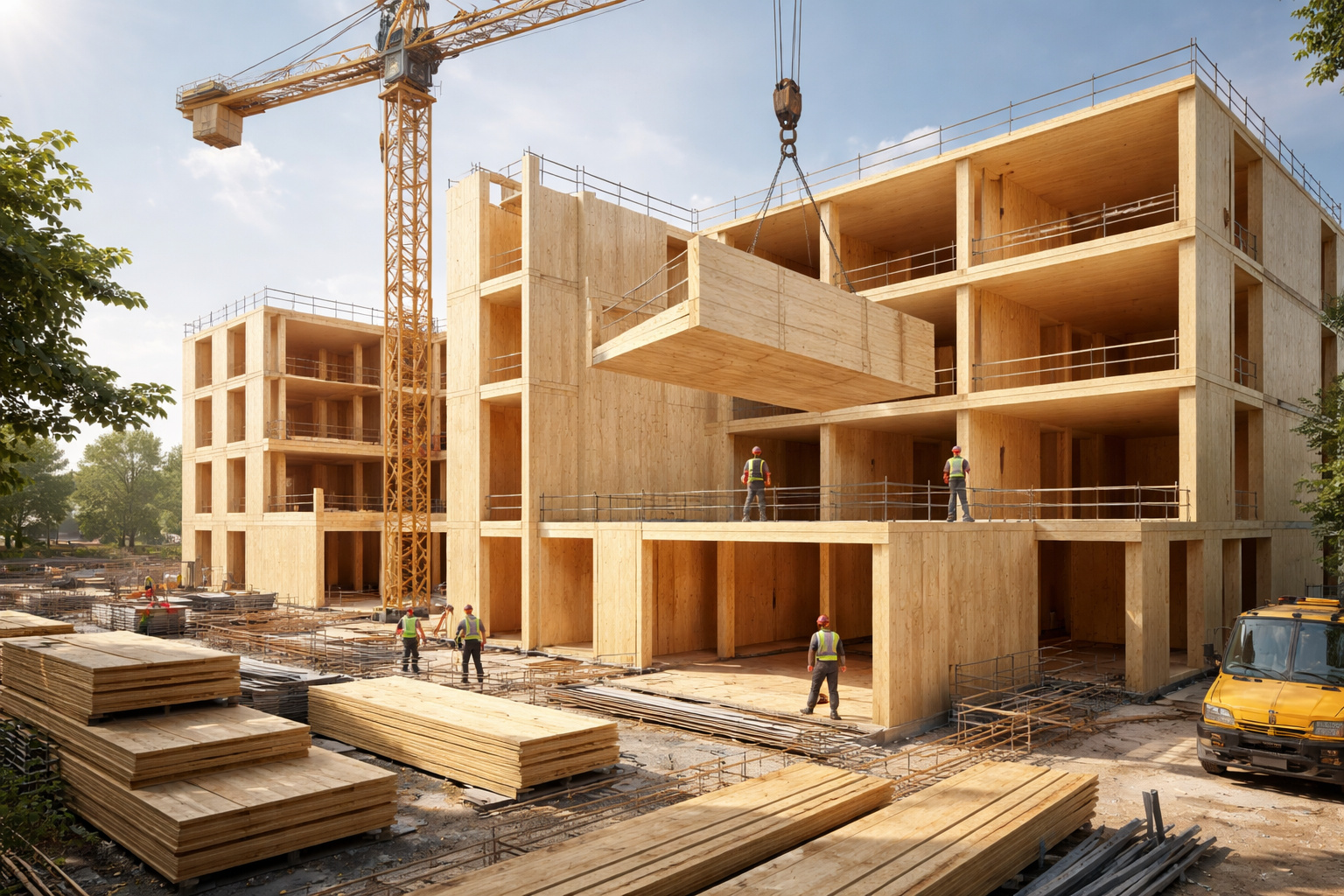
Engineered wood CLT challenges steel and concrete and promises construction that is up to 2x faster with a lower environmental impact in modern civil engineering.
-
Video: Retiree builds 26-meter Roman castle in his backyard with pieces from dozens of countries, ornamental grates from Libya, and a dragon made of recycled metal.

-
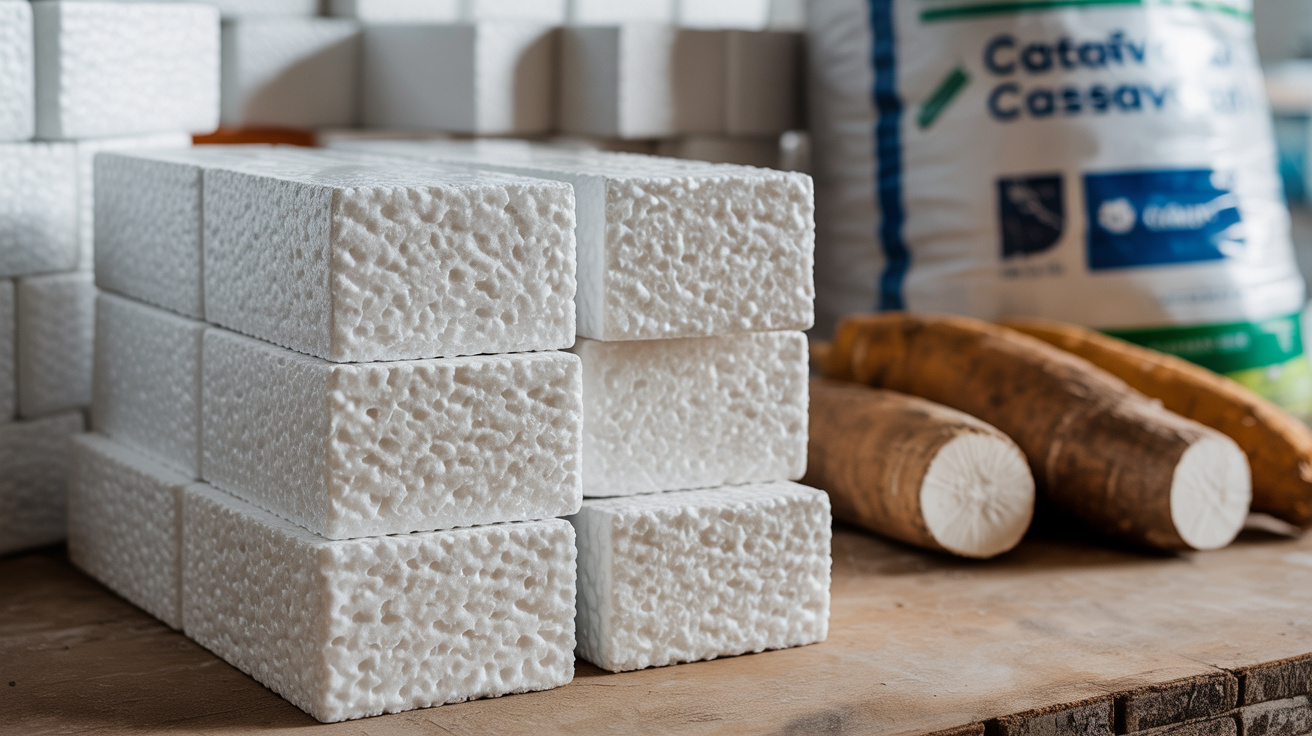
Bricks made with recycled Styrofoam and cassava glue cost R$ 0.40 and insulate walls, reducing internal temperature by 6°C using a technique that produces 50 units with just one 50 kg bag of cement.

This architectural pattern draws attention because it contrasts with older homes found in traditional neighborhoods. Residences built decades ago tend to have sloping roofs, wide eaves, and smaller windows, characteristics that help protect against rain, intense sun, and temperature variations.
In the new urbanized areas, however, minimalist aesthetics have become dominant. The box-shaped house has come to be seen as synonymous with modern design, even when the construction method is quite simple.
How Modern Brazilian Houses Are Built

A large portion of modern Brazilian houses is built using a very common structural system in the country. The walls are made of hollow bricks, reinforced by concrete columns and beams. They are then plastered on the exterior and interior, finished with paint.
This type of wall is relatively quick to build and uses widely available materials. Sand, cement, lime, and bricks are easily found in any region, reducing logistical costs and simplifying the construction process.
However, this system has significant thermal limitations. Since the walls have no cavity with insulation between layers, the heat absorbed by the cement during the day is slowly released into the interior of the house, raising the internal temperature.
In winter, the opposite effect occurs. Cold easily penetrates the walls, causing residents to use electric heating or air conditioning to maintain a comfortable environment.
The Problem Of Heat And Humidity In Walls


One of the most frequent criticisms of modern Brazilian houses relates to the thermal performance of cement walls. During sunny days, the external plaster absorbs a significant amount of heat.
This heat accumulates and is slowly transferred to the interior of the residence, creating warm indoor environments even after sunset. In regions where summer is intense, the constant use of air conditioning becomes almost inevitable.
In more humid areas, especially in southern Brazil, another problem arises. Sudden temperature changes can cause condensation on the interior walls. When warm air comes into contact with the still-cold cement, moisture forms and runs down the surfaces, a phenomenon that many residents describe as “crying” walls.
This process favors the emergence of mold on furniture against the walls, such as wardrobes and cabinets.
Flat Roofs And Lack Of Insulation
Another typical element of modern Brazilian houses is the flat concrete roof. The structure generally follows the same principle as the walls: concrete beams, hollow bricks between them, and a layer of plaster.
Although this system simplifies construction, it eliminates a component present in many traditional houses: the attic or space between the roof and ceiling.
This space acts as a natural thermal barrier. Without this layer of intermediate air, heat from the roof is transmitted directly inside the house, further increasing the internal temperature.
Additionally, sloped roofs often have eaves that shade the walls. In modern Brazilian houses, the absence of these elements allows sun and rain to hit the exterior surfaces directly.
Over time, this can cause cracks in the plaster and peeling paint, requiring periodic maintenance.
Huge Windows And The Challenges Of Privacy And Efficiency
Modern Brazilian houses also stand out for their large windows that often extend from floor to ceiling. This architectural feature creates imposing facades and increases the influx of natural light.
However, there are side effects. Large glass surfaces reduce thermal insulation, especially when using single-pane glass, still common in many residential constructions.
This allows the cold air from the air conditioning to escape easily during the summer, raising energy consumption.
Another aspect involves privacy. In neighborhoods where houses are built on smaller lots close to the street, people passing by can easily see inside the residence.
To resolve the issue, many residents end up using curtains, blinds, or reflective films. In practice, this reduces the very light entry that the large windows should provide.
The Economic Factor Behind Modern Brazilian Houses
Despite thermal and structural problems, the main reason for the popularity of modern Brazilian houses remains the construction cost.
Building a residence with simple brick walls and a flat roof usually costs less than erecting a house with a sloping roof, wooden structures, or more sophisticated insulation systems.
Moreover, this type of project requires less specialized labor. Most bricklayers and builders are familiar with basic masonry techniques, which facilitates the execution of the work and reduces timelines.
Another important factor is land use. The square shape allows for the utilization of virtually the entire area available on the lot, something valued in neighborhoods with smaller lots.
Modern Aesthetics And Perception Of Value
Even with lower costs, modern Brazilian houses have come to be associated with a contemporary architectural standard.
Many buyers and builders view this style as something sophisticated or high-end, influenced by architectural references seen in international mansions or luxury projects.
In many cases, the minimalist shape conveys a visual sense of modernity, even when the internal structure employs simple construction methods.
This perception also influences the real estate market. Houses in this style are often presented as modern and valued properties, which reinforces their popularity in new developments.
Why This Model Continues To Dominate Entire Neighborhoods
The combination of lower cost, contemporary aesthetics, and efficient land use explains why modern Brazilian houses continue to dominate entire neighborhoods.
For many homeowners, the immediate financial benefits during construction weigh more than potential future costs related to maintenance or energy consumption.
Additionally, architectural standardization facilitates the development of condominiums and subdivisions, where several properties follow the same style.
Thus, even with criticisms regarding heat, humidity, and energy efficiency, the model continues to spread across the country, shaping the appearance of entire neighborhoods built over the last decades.
Modern Brazilian houses have become an architectural phenomenon visible throughout the country. The combination of reduced cost, minimalist aesthetics, and maximum land use explains why this model has spread so rapidly.
At the same time, challenges such as excessive heat, humidity in the walls, and frequent maintenance raise debates about efficiency and comfort in residential buildings.
In light of this, an interesting question arises for those observing this urban trend: Do modern Brazilian houses truly represent architectural evolution, or are they merely a practical and cheap solution that has become the standard? What do you think of this trend?









-

-

-

4 pessoas reagiram a isso.