





 Portuguese
  English
  Spanish
  5 min of reading
  0 comments



The Advancement of Chinese Companies in the Northeast Shifts the Historical Capital Axis from the Southeast to Combine Lower Costs, Renewable Energy, and Direct Access to the Atlantic. With Solar Parks, Transmission Lines, Factories, and Data Centers, Chinese Companies Structure a Lasting Presence in the Region.
The Chinese companies are transforming Brazil’s investment map since 2016, with over 50 projects announced or completed and evident acceleration in the last four years. The strategy combines energy infrastructure, port logistics, and industrial production to reduce costs and achieve scale, putting the Southeast in the background for the first time in a decade.
The movement of Chinese companies is not limited to commodity purchases. The thesis is to build a complete ecosystem of generation, transmission, manufacturing, and distribution in the Northeast, bringing factories closer to renewable sources and ports, and creating dedicated corridors for export and internal distribution.
The Shift of the Capital Axis and the New Cost Rationale
The historical concentration of foreign capital in the Rio São Paulo axis is losing traction in light of a combination that the Northeast offers to its advantage.
-
China alone accounts for 70% of trade within the BRICS, while Brazil establishes itself as an essential supplier of food and minerals: understand how the group, which already represents nearly 40% of the world’s GDP, is changing the game.
-
Starting in May, those who do not have registered biometrics will not be able to apply for Bolsa Família, sickness benefits, or unemployment insurance: understand the new rule that changes access to benefits for millions of Brazilians.

-
A new law being voted on in Brazil proposes a minimum fare of R$ 10 per trip and R$ 2.50 per kilometer for Uber and 99 drivers, and promises to ensure they earn as well as taxi drivers did during the golden age of taxis in the country.

-
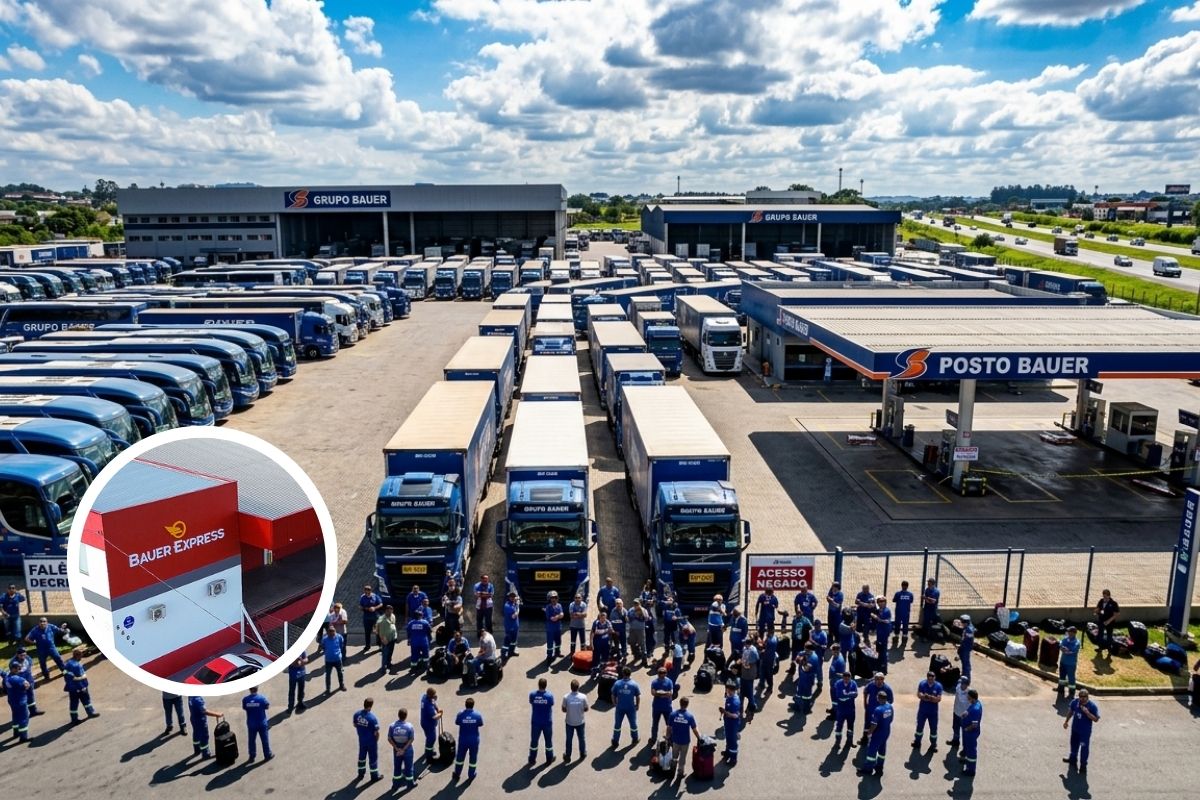
Bauer Group collapses after failed judicial recovery: 25 years, 800 vehicles, and a network of gas stations leave a debt of R$ 50 million and 100 layoffs, exposing costs, tight margins, and expensive credit in Brazil.

Abundant wind and solar energy, cheaper labor, and state governments competing for investments with competitive incentives form the tripod of attraction for Chinese companies.
In addition to cost, geography matters.
The northeastern coast opens short routes to the Atlantic and facilitates simultaneous service to the Brazilian market and exports.
For Chinese companies, producing in the Northeast today approaches the cost environment of China two decades ago, but within the largest consumer market in Latin America.
Who Invests, Where, and With What Objectives
The presence of Chinese companies covers a network of states and sectors.
In Bahia, an automotive complex in Camaçari receives around R$ 3 billion for electric vehicles, chassis, and batteries, while the Salvador Itaparica bridge progresses with a budget between R$ 10 and 11 billion, designed to reconfigure regional access.
In Maranhão, a transmission line with 1,468 km and a capacity to carry 5,000 MW connects energy from the Northeast to the rest of the country.
In Ceará, a solar complex in Russas totals approximately R$ 1 billion, with partnerships for green hydrogen and the installation of a data center estimated between R$ 50 and 55 billion in the metropolitan region of Fortaleza, anchored in renewable energy.
Clean Energy as the Anchor of Industrialization
The bet of Chinese companies is clear. Producing renewable energy at scale and tying it to industrial and digital contracts creates cost stability and long-term predictability.
In Piauí, a large solar park received R$ 1.5 billion and is part of a hub plan that combines solar, wind, and storage with an additional R$ 3 billion.
This energy anchoring fuels manufacturing and digital services.
Factories of electric mobility, data centers, and component chains gravitate around firm renewable sources and high-capacity transmission lines, consolidating the Northeast as the country’s energy transition hub.
The Construction of Own Logistical Corridors
The logistical strategy of Chinese companies involves ports, roads, and industrial bases close to the coast, shortening distances and reducing operational risks.
With integrated production, storage, and shipping, the flows can go directly to ships on routes that the partner network itself enables, reducing bottlenecks and freight costs.
This logic also reduces dependence on saturated axes in the Southeast, distributing the load through new corridors and increasing resilience for exports and internal distribution.
The practical result is shorter door-to-door times and better cost predictability.
Technology, Mining, and Science in the Interior of the Map
The reach of Chinese companies goes beyond the coastal strip.
In Alagoas, a copper operation received around R$ 2.4 billion, inserting the Agreste into the global industrial metals chain.
In Paraíba, a radio telescope with around R$ 35 million connects the hinterland to international frontier research networks.
These projects show capillarity and diversification.
Energy, industry, data, and science reinforce the multiplier effect on technical training, specialized services, and new local suppliers’ chains, elevating the regional economic complexity.
Why Now and Why in the Northeast
Four vectors explain the timing of Chinese companies. First, rising industrial costs in China stimulate the search for cheaper markets.
Second, geopolitical competition accelerates the formation of markets in the Global South. Third, demand for clean energy favors regions with abundant sun and wind.
Fourth, state incentives and more agile local frameworks unlock investment cycles.
Overall, the Northeast offers scale, resources, and pragmatic governance.
By combining financing, engineering, and long-term contracts, Chinese companies turn isolated projects into permanent productive corridors.
Impacts, Counterparties, and Points of Attention
The entry of capital opens jobs, revenue, and technical training, but demands environmental planning and regulatory capacity.
Transmission lines, renewable parks, ports, and data centers require territorial management, diligent licensing, and pacts with communities.
Without coordination, the risk is to multiply urban bottlenecks, pressures on services, and regional asymmetries.
On the business side, the lesson is governance and transparency. Clear rules on local content, workforce qualification, and environmental mitigation enhance the effects of chain-linking and reduce social resistance, ensuring that the presence of Chinese companies translates into sustainable regional productivity.
What Comes Next on the Competitive Board


If the timelines hold, the aggregate of investments already exceeds R$ 90 billion, consolidating the Northeast as a dynamically axis of Sino-Brazilian cooperation in energy, digital, and industry.
The next step tends to be integration between renewables, electric mobility, storage, and port logistics, raising the technological density of the hubs.
For Brazil, diversifying the productive matrix outside the Southeast and structuring long-term policies will be crucial to capture productivity gains and avoid asymmetric dependencies.
The quality of agreements and the capacity for public execution will define the depth of this new cycle.
In your opinion, is the advancement of Chinese companies in the Northeast already raising local productivity and income at the expected pace, or are there gaps in qualification, innovation, and urban infrastructure?









-

Uma pessoa reagiu a isso.