





 Portuguese
  English
  Spanish
  4 min of reading
  0 comments


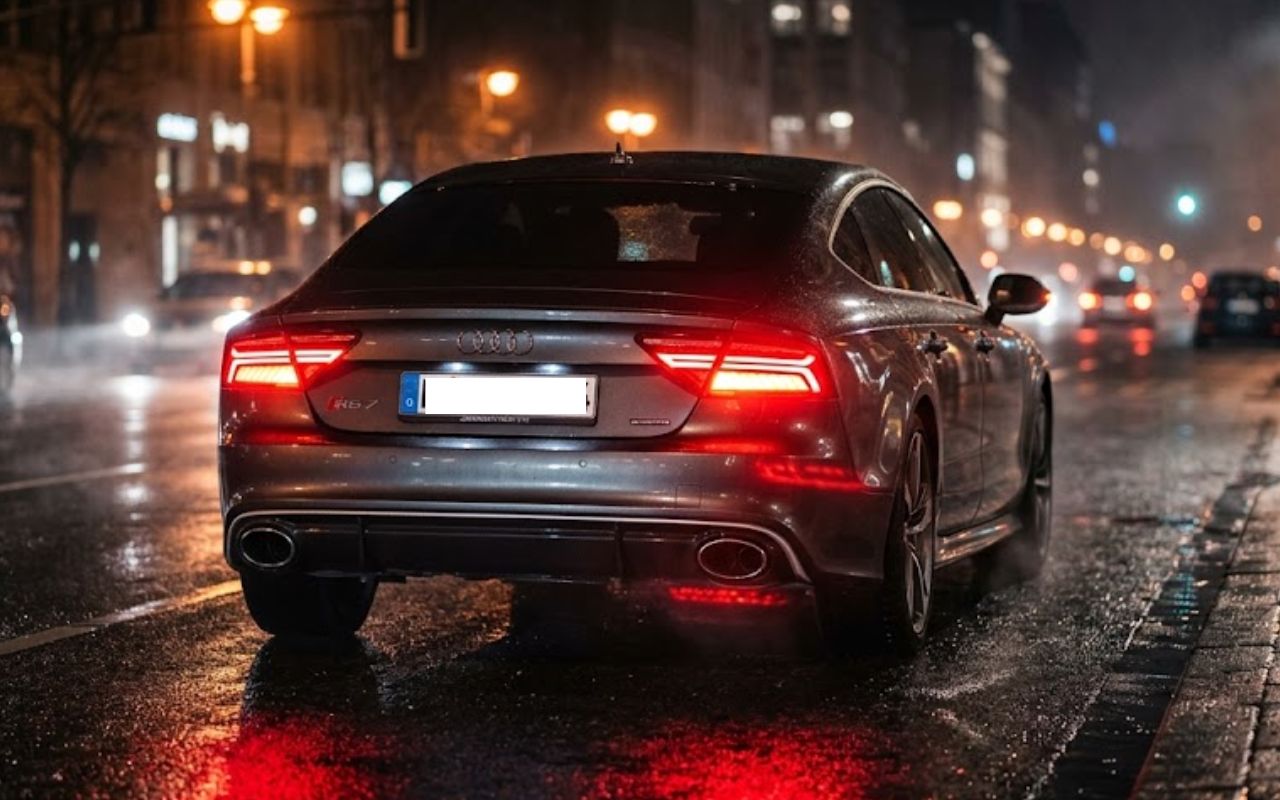
Understand Why Turn Signals In The USA Are Red Like Brake Lights, What American Laws Say And How This Choice Influences Safety And Costs.
In several cars sold in the United States, the rear turn signals have the same color as the brake lights. For drivers from other countries, this often causes strangeness and even raises questions about safety. The question why are turn signals in the USA red, like brake lights, has an explanation mainly linked to the country’s legislation and the economic decisions of the automotive industry.
American regulations allow the rear turn signals to be red or amber. This means that manufacturers have the freedom to choose which system to use in their vehicle designs.
As a result, many cars produced for the North American market adopt a system in which the brake and turn signal share the same rear light.
-
With a façade that resembles a giant zipper, the building in Milan creates a sense of strangeness, featuring lighting that transforms engineering and attracts the attention of residents and tourists.

-
The Brazilian city has 319 crooked buildings built on sandy soil without proper deep foundations, houses the largest beach garden in the world, with over 5 km, and is still considered the birthplace of surfing — meet Santos, in São Paulo.

-
New Zealand builds a shimmering building that vibrates, featuring a 62-seat cinema, moving sculptures, and an environment where sound, light, and energy are felt in the body.
-
Two colored cubes of 2.5 m transform a public bathroom into a selfie spot in Western Australia, costing up to 75% less than traditional construction and helping to reduce vandalism in public spaces.

Why Are Turn Signals In The USA Red Like Brake Lights?
Despite being permitted by law, this standard generates debate among traffic safety experts. Research indicates that the color used to indicate a turn can influence drivers’ reactions.
A study conducted in 2008 by the National Highway Traffic Safety Administration of the United States indicated that vehicles with red turn signals are about 22% more likely to be involved in rear-end collisions than those with amber signals.
The explanation lies in visual perception. The red light is already associated with braking, while amber is often quickly interpreted as a warning of a direction change.
In situations of heavy traffic or low visibility, this difference may cause the driver behind to take a bit longer to understand the maneuver of the vehicle ahead.
Simple System Emerged Decades Ago
The origin of this pattern dates back to the 1960s. At that time, many manufacturers began adopting a system that uses only one rear bulb for different functions.
In this type of setup, the taillight has a bulb with two filaments. One of them produces a softer light, used as rear position lighting.
The second filament is more powerful and serves two functions: it lights up when the driver steps on the brake and blinks when the turn signal is activated.
This simple system has become common in many cars sold in the American market.
Economics Explain Why Turn Signals In The USA Are Red Like Brake Lights
In addition to the permissive legislation, the economic factor also helps explain why turn signals in the USA are red like brake lights.
By using a single bulb for multiple functions, the vehicle’s optical assembly becomes less complex.
This reduces the number of necessary components and simplifies the electrical installation.
As a result, the production cost decreases. For manufacturers that produce millions of vehicles per year, small savings on each unit can make a big difference in the final budget.
This logic has helped maintain this system in many cars over the decades.
Europe Requires A Different Standard
While American legislation allows two colors for turn signals, European rules follow a stricter approach.
In Europe, rear turn signals must necessarily be amber. This requirement was created specifically to avoid confusion between the brake light and the direction change signal.
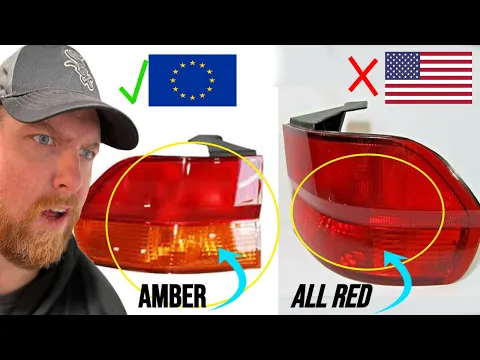

Therefore, cars originally manufactured for the United States often need their rear lights modified before being sold in European countries.
This adaptation is common when vehicles are exported or imported between the two markets.
LED Technology May Change This Trend
In recent years, the advancement of LED lamps has slowly started to alter this scenario.
LEDs offer greater freedom in light design and allow for easy separation of brake and turn signal functions without significantly increasing production costs.
For this reason, some manufacturers have begun to adopt amber turn signals even in models sold in the United States.
Moreover, many current cars are developed to be marketed in multiple markets at the same time, which encourages the adoption of standards compatible with different legislations.
Changes Depend On Country Rules
Despite discussions about safety, federal legislation in the United States still does not require rear turn signals to be amber.
As long as this rule continues to allow both options, many manufacturers are likely to maintain the simpler and more economical system.
Thus, understanding why turn signals in the USA are red like brake lights involves a combination of historical, regulatory, and financial factors that have shaped the design of many cars sold in the country.
Information from Xataka







Seja o primeiro a reagir!