





 Portuguese
  English
  Spanish
  5 min of reading
  64 comments


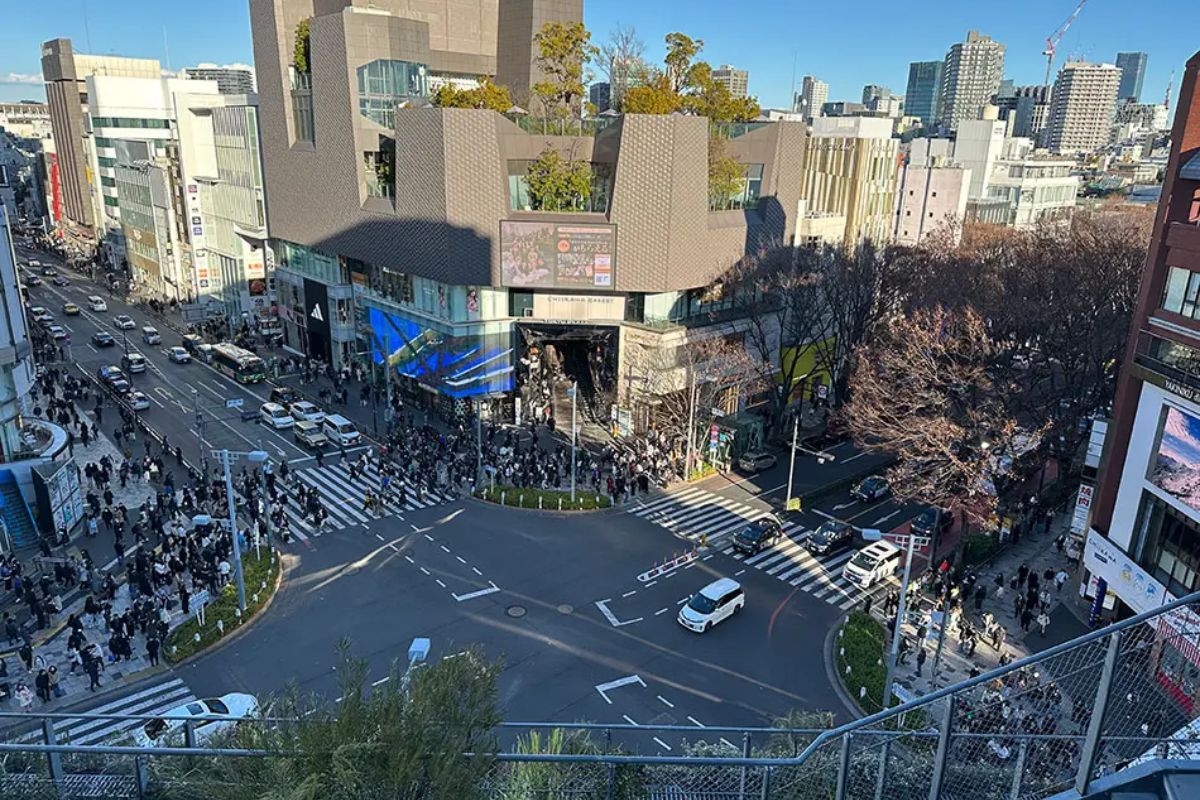


In Japan, Cleaning Has Turned Into A Collective Discipline: Residents Avoid Eating On The Go, Take Waste Home, And Accept Few Trash Cans On The Streets. With Mass Tourism, Visitors Walk Kilometers With Packages In Their Hands, Face Local Rules, Culture Shocks, Public Costs, And Security Memories That Continue To Shape Cities To This Day.
In Japan, the scarcity of public trash cans did not arise from urban neglect, but from a combination of everyday culture, social etiquette, and management of common space. The central idea is simple yet demanding: each person is responsible for their own waste, without automatically transferring that task to the street.
When tens of millions of tourists enter this same circuit with different consumption habits, the friction appears almost immediately. What is an invisible routine for residents becomes a practical obstacle for visitors, creating the feeling that perfect cleanliness depends on constant individual effort and, often, discomfort.
Cleaning As Individual Responsibility, Not As Invisible Service
The logic of cleaning in Japan has been built over decades with a strong collective component. Instead of relying solely on overt infrastructure, the system relies on predictable social behavior: dirtying less, discarding in the appropriate place, and avoiding turning the street into an extension of daily eating. The urban order begins with habit, not with the trash can on the corner.
-
A Brazilian island charges R$ 0.50 to receive visitors and prohibits any new residents.
-
Why was the Great Wall of China built? The truth that many are unaware of!
-
At 73.8 meters tall, the world’s tallest teapot-shaped building has 15 floors, ensures stability, and impresses with an internal space of 28,000 cubic meters.
-
Ambev has planted over 3 million trees and restored an area equivalent to the coastline from São Paulo to Natal, and the result after 15 years of silent investment has finally appeared for all of Brazil to see.
This perspective also explains why there are garbage collection championships on the streets, treated as civic and competitive practice. The act of picking up waste does not appear as social punishment, but as proof of belonging to the public space. Cleaning ceases to be just an aesthetic result and becomes a shared value.
In daily life, this pattern reinforces itself in small decisions. Those who buy drinks from vending machines or snacks from konbini often already foresee where they will discard the packaging later. Domestic disposal or at specific points in their routine replaces the expectation of finding a container on any block.
For this reason, the absence of trash cans in many places is not necessarily an “operational flaw” for those living in the country. It is part of a social design in which the street remains clean because waste does not stay there for long, even without abundant immediate disposal points.
When Mass Tourism Alters The Everyday Equation

The shock intensifies with large-scale international tourism. Visitors move through central areas, consume popular street products, document experiences for social media, and keep walking. A few minutes later, the impasse arises: where to discard cups, bottles, and packaging without breaking local rules?
The practical answer for many is to carry their own waste over long distances. Thus, the image of “human trash cans” arises: pockets, backpacks, and makeshift bags become temporary deposits until a possible disposal point appears. This behavior, besides being inconvenient, alters the perception of the trip and of hospitality.
Official research cited in this debate points to the lack of trash cans as a central logistical problem for visitors, surpassing barriers such as language and crowds. This helps explain why the topic has ceased to be a detail and has begun to occupy discussions about tourist experience, mobility, and cultural coexistence.
There is also an etiquette component involved. In part of Japan, eating on the go is frowned upon and, in some cities, outright prohibited. Tourists from countries where consumption on the move is common tend to repeat this pattern without realizing that, there, the social norm is different. It is not just a lack of infrastructure; it is a conflict of expectation.
Safety, Costs, And The Memory Of 1995 In Public Space Management
The removal of trash cans in Japan cannot be viewed solely through a cultural lens. There is a historically relevant safety component: after the sarin gas attack on the Tokyo subway in 1995, many disposal points were eliminated due to fears of misuse for hiding dangerous materials.
This institutional trauma influenced urban decisions for years. Even where trash cans remained, the use of transparent bags became common, a strategy associated with quick visual inspection and risk reduction. The cleaning policy, in this context, is also a prevention policy.
There is also a financial and regulatory layer. Maintaining public trash cans requires frequent collection, oversight, replenishment, and waste treatment in high-traffic areas. In cities pressured by tourist flow, these costs increase, and strict municipal regulations on public space occupancy limit improvised solutions.
The result is an urban landscape deliberately lean on disposal containers, even with the increase in visitors. In technical terms, this is a model that worked with high internal cultural adherence but began to face stress when the profile of space usage changed rapidly.
Recent Adjustments, Spot Solutions, And Limits Of Adaptation
With the ongoing pressure from tourism, some cities have begun to test adjustments without completely abandoning the traditional model. International reports, such as those from the Wall Street Journal, document the rise of “smart” trash cans in saturated areas, including central neighborhoods of Tokyo and high-traffic historical parks.
These devices may display messages in English, feature sensors, and compaction systems, attempting to reduce overflow and increase operational efficiency. In terms of urban management, the strategy seeks to balance two difficult goals: preserving local cleanliness standards and responding to an international flow with distinct habits.
Other initiatives are even more unusual for first-time visitors, such as students carrying trash cans on their backs to collect waste in exchange for donations or advertising. It is short-range creativity for a long-term structural problem.
Ultimately, these measures do not nullify the cultural shock; they merely manage it. Japan has not abandoned its central idea of cleanliness; it has begun to negotiate this idea with a world that arrives en masse, consumes differently, and expects a different type of immediate urban service.
The case of trash cans in Japan reveals a crucial point about global cities: visible infrastructure is not always the heart of the system. Often, what sustains order is a set of social rules, historical memory, and individual responsibility that works very well internally but comes under tension in the face of large-scale tourism.
The discussion, therefore, is not just about “having or not having trash cans”. It is about who bears the cost of disposal, where this cost appears in everyday life, and how different cultures negotiate coexistence in the same public space.
In your opinion, if you visited a place like this, would you change your street consumption habits or advocate for more trash cans even with strict cleanliness and safety rules?






Quem faz as regras da casa são os donos da casa, a visita apenas segue as regras.
Quem vai visitar um país tem que se informar sobre as regras do local e se adequar a elas.
era só o que faltava querer que um país se adeque ao comportamento dos seus visitantes.
Acho muito é bom, eu já faço isso aqui no Brasil, se não acho lixeira levo pra casa pra jogar, porque tem gente que não joga na lixeira, aqui no Brasil deveria ser assim, porque o lixo da lixeira vai para na rua do mesmo jeito, senão pelos ****, pelas próprias pessoas! Se cada um cuidada se do seu lixo não haveria tanto lixo nas ruas .
Quem fez essa matéria deve ser bem **** pra dizer que o esforço coletivo gera incomodo se cada um fizessem como eles o mundo estaria v8vemso em glórias