





 Portuguese
  English
  Spanish
  4 min of reading
  14 comments


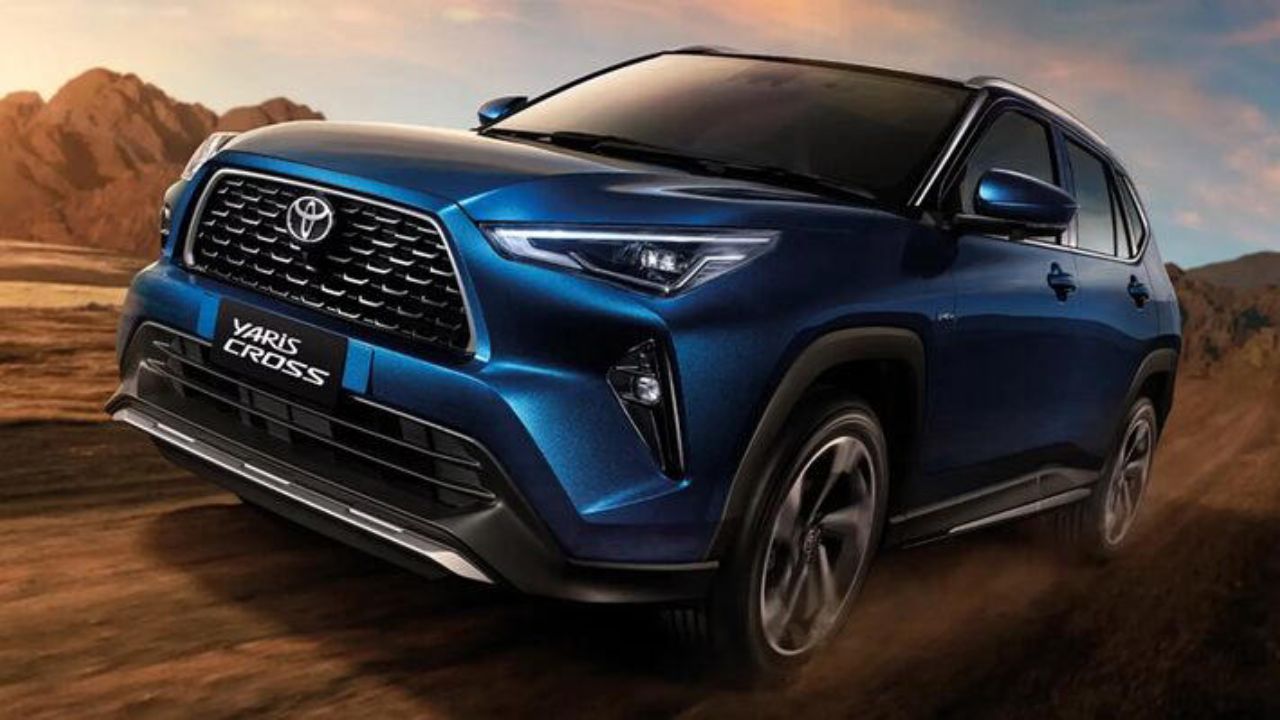


The Brazilian Toyota Yaris Cross Will Be Different From The European. Discover The Main Differences Between Size, Engine, Transmission, And Finish Of The Two SUVs.
The Brazilian Toyota Yaris Cross will soon begin production in the country and promises to compete in the compact SUV market. However, the car that will reach national dealerships will not be the same as the European Toyota Yaris Cross.
While the version sold on the European continent bets on greater technological sophistication and mechanical refinement, the model intended for Brazil will be adapted to reduce costs and increase interior space.
This choice by Toyota raises a natural question: after all, what changes between the two versions and why will the Brazilian consumer receive a different configuration?
-
With a price almost R$ 100 thousand lower, the Haval H9 surpasses the SW4 for the first time in March, but Toyota still leads in the accumulated total for 2026; the Chinese SUV bets on technology and premium finishing to compete at the top.
-
6 used cars that cost less than a new Honda CG 160 Titan and still provide trunk space, four seats, and comfort that many new motorcycles cannot offer.
-
Caoa Chery Tiggo 5X skyrockets in sales in Brazil: a 2,318% increase and waiting lists of up to 4 months to acquire the model.
-
Goodbye falls: Singaporean company Omoway begins production of a motorcycle that doesn’t fall and surprises the market by offering automatic balance technology that reduces accidents and transforms the urban riding experience.


The answer lies in the brand’s global strategy and the needs of each market.
Brazilian Toyota Yaris Cross: Greater Size And Focus On Cost-Benefit
The Brazilian Toyota Yaris Cross will be produced with the DNGA-B platform, derived from Daihatsu, the entry-level division of the brand.
This architecture was designed to reduce costs without giving up modern features, including the possibility of electrification.
Although it is technically simpler than the TNGA-B used in the European Yaris Cross, the national model has an advantage in one important aspect: its dimensions.
It is larger than the European model, measuring 4.31 meters in length, 1.77 m in width, and 2.62 m in wheelbase, sizes close to the Corolla Cross.
Additionally, it will have a ground clearance of 21 cm, ensuring better performance on bumpy streets and classifying the vehicle as an SUV under Inmetro regulations.
This feature can be a great attraction for families looking for interior space without sacrificing a compact design.
European Toyota Yaris Cross: Sophistication And Technology
The European Toyota Yaris Cross, manufactured in Japan and sold in countries like France and Germany, has a more refined proposal.
It uses the modern TNGA-B platform, which also serves as the basis for the brand’s more sophisticated compact models.
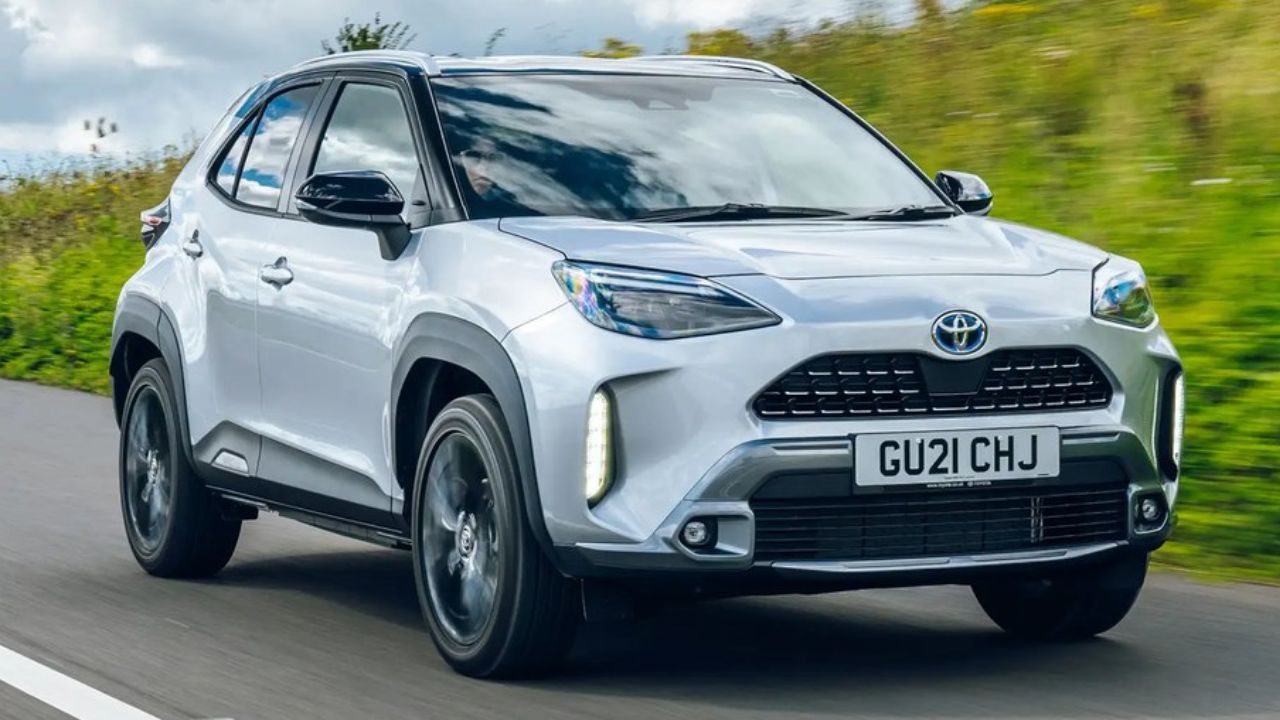
Its dimensions are smaller: 4.18 m in length, 1.76 m in width, and 2.56 m in wheelbase.
In practice, this means less interior space but a more rational urban footprint, a characteristic valued by the European public, who tend to prefer compact cars due to narrow streets and limited parking spaces.
Additionally, the European model offers even an all-wheel drive version, equipped with an extra electric motor on the rear axle, designed for cold regions with snow.
Engine Differences: Brazil Bets On Tradition, Europe On Innovation
In terms of engine, the difference between the Brazilian Yaris Cross and the European Yaris Cross is striking.
The European model features a 1.5 three-cylinder engine from the Dynamic Force family, delivering 120 hp.
It uses a high compression ratio and direct injection combined with multi-point, ensuring greater energy efficiency and better fuel utilization.
On the other hand, the Brazilian Toyota Yaris Cross will use the 1.5 naturally aspirated four-cylinder 2NR, already known for equipping the Etios and the current Yaris. Although less advanced, the engine has the advantage of proven reliability, a factor highly valued by those seeking durability.
In hybrid versions, both use an 80 hp electric motor in conjunction with the 1.5 combustion engine, achieving similar performance: about 91 combined horsepower.
The big difference, however, is that the European model can consume less fuel thanks to the thermal efficiency of 41% of the three-cylinder engine.
Transmission: Refinement In The European, Tradition In The Brazilian
The transmission also marks divergences. The European Yaris Cross is equipped with the modern CVT K120 Direct Shift, the same used in the Corolla, with a physical gear that improves response during acceleration.
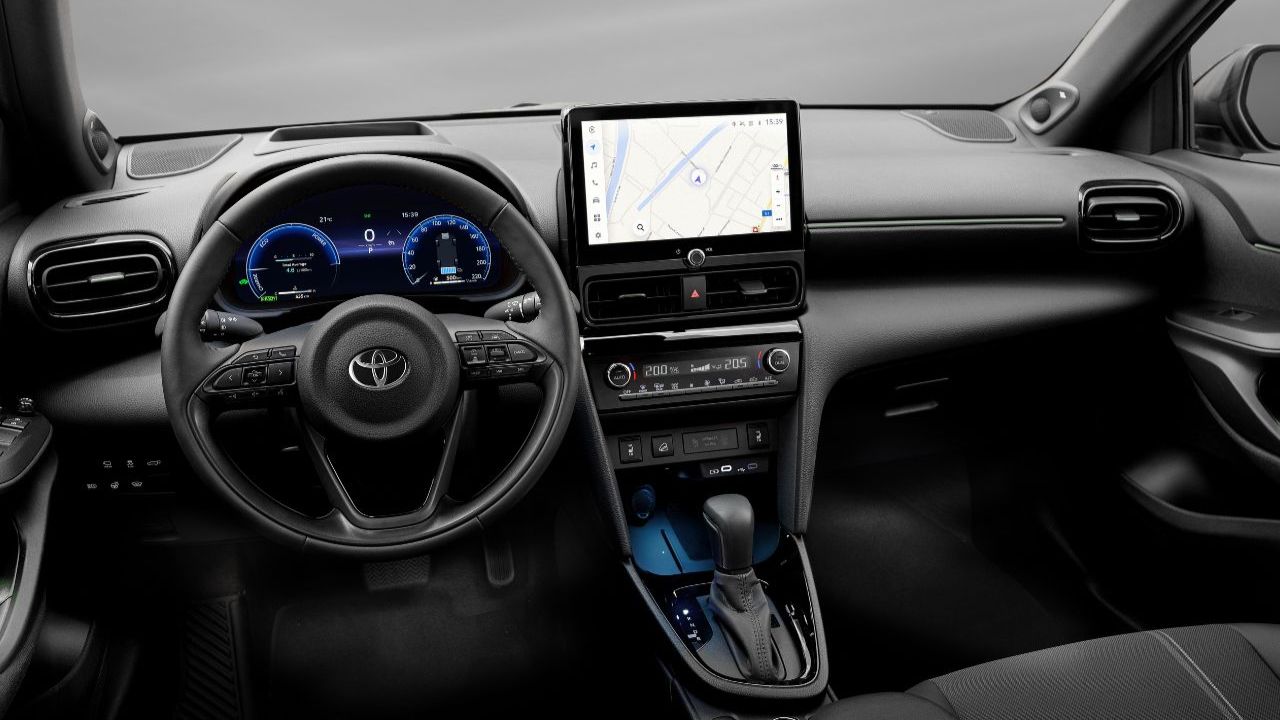
The Brazilian Yaris Cross, on the other hand, will have a simpler CVT transmission, suitable for the 2NR engine.
This decision prioritizes reliability and lower maintenance costs, even if it means losing out on modernity.
Finishing And Equipment: No Big Differences
Despite the difference in platforms and engines, the Brazilian Toyota Yaris Cross and the European do not differ much in finishing. Both use hard plastics on the dashboard and fabric only on the front doors.
To disguise the low-cost proposal, the national model will feature vinyl appliqués on part of the dashboard.
As for the equipment list, both offer similar features: digital dashboard, electronic parking brake, and ADAS driver assistance package.
Why Did Brazil Get The Simpler Version?
Toyota’s choice to offer the Brazilian Yaris Cross based on the DNGA-B platform was not by chance. The national market values larger, more spacious, and reliable cars.
Moreover, the brand needed to deliver a competitively priced SUV to compete against rivals like Jeep Renegade, Volkswagen T-Cross, and the Chinese BYD and GWM.
Thus, the strategy was to bring a more affordable model, with generous dimensions and a well-known mechanic, even if it meant giving up the refinement offered in the European Yaris Cross.
Which Toyota Yaris Cross Is More Worth It?
If in Europe the priority is efficiency and sophistication, in Brazil the proposal is to offer more space and reliability.
The Brazilian Toyota Yaris Cross may not have the modernity of the European version, but it is likely to better meet the profile of the national consumer, who seeks durability, SUV size, and simplified maintenance.
Meanwhile, the European Toyota Yaris Cross will continue to be the option for those who value technological innovation, more efficient engines, and cutting-edge solutions.









Na Realidade essas algumas montadoras que aqui estão há algum tempo estão viciadas em vender produto ultrapassado com margem de lucro exorbitante, isso devido a iguinoracia do consumidor, talvez com a chegada dos Chineses as coisas começaram a mudar
Suspeitei desde o princípio. Carro feito pensando no Brasil. Mentira. É o vendido na Tailândia. Não virá com as tecnologias dos vendidos na Europa. Mas o preço é padrão Europeu. Somos tratados como sub mesmo. Lembrando a música do Leandro da Sapucaí. Tudo sub.
Basicamente as montadoras empurram lixo a preços abusivos e extorsivos no Brasil pq os brasileiros aceitam e pagam, pq na hora q deixarem de comprar e preferirem a concorrência, rapidinho criam **** e procuram respeitar o consumidor brasileiro, afinal, não é só a Toyota que faz isso, praticamente todas as outras tem versões tops na Europa, states e países de origem e uma versão capada e cara pra k7 pro Brasil, por isso tão **** com as montadoras chinesas, que tão trazendo coisas mto boas e com precinho justo e em conta, msm a maioria sendo importada e pagando um absurdo de imposto, ainda assim conseguem ter um preço baixo e mto mais atraente pro consumidor, basta ver a diferença gritante entre um Dolphin mini e um onix hatch, a única coisa q o onix leva vantagem é no espaço do porta-malas e por ter estepe, fora isso é uma bomba desgraçada de 120k, já o Dolphin mini é top e entrega um pacote mto bom msm sendo de entrada, conforto, tecnologia e aguenta bastante o tranco, tanto q tem se tornado o queridinho dos motoristas de app.