





 Portuguese
  English
  Spanish
  4 min of reading
  0 comments


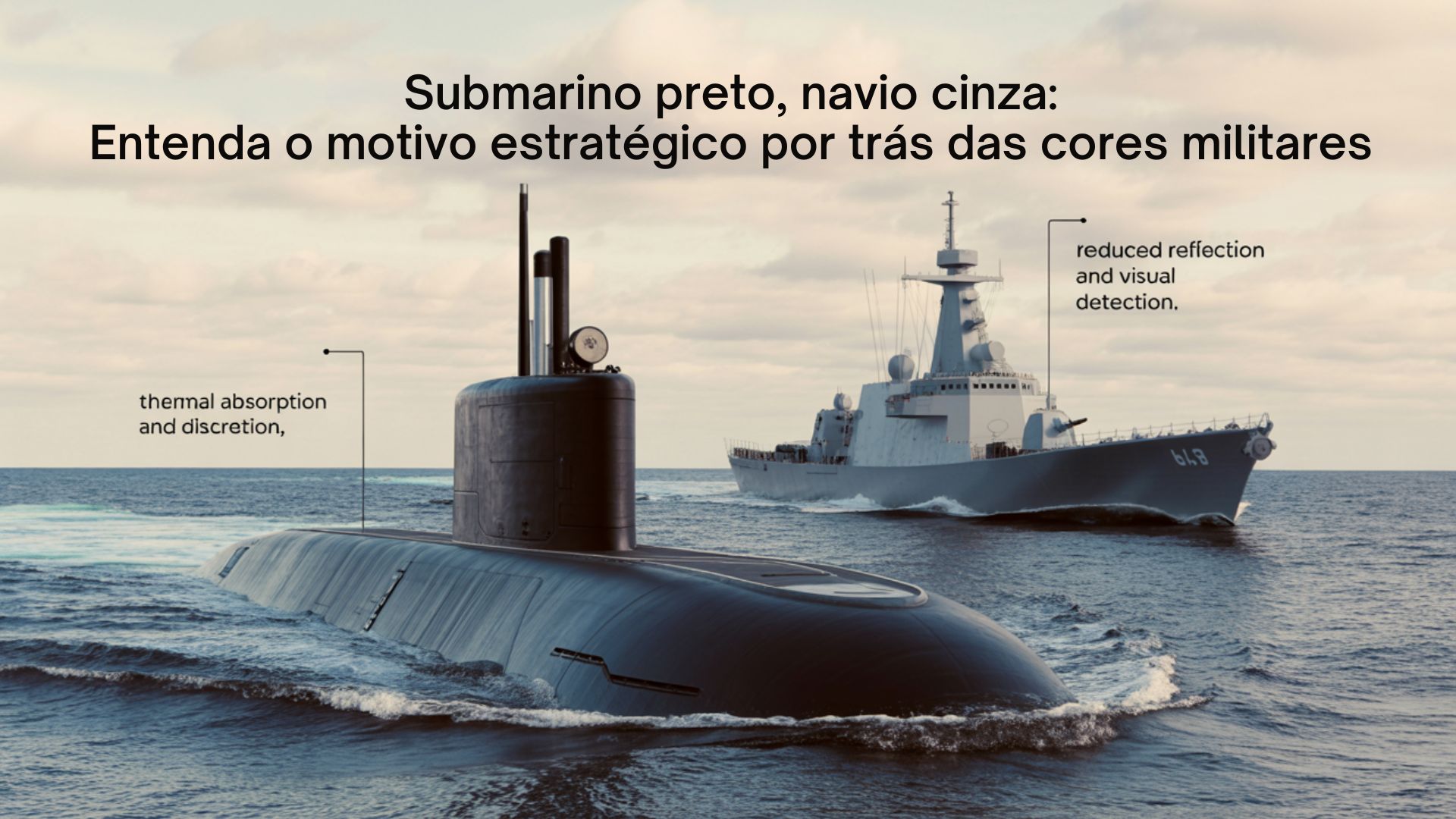
Far Beyond Camouflage, The Color Of Submarines And Warships Follows Technical And Historical Criteria That Influence Visibility, Maintenance, And Efficiency In Military Missions At Sea.
The colors used on military vessels are not chosen at random. The color of submarines and the color of warships follow technical, operational, and historical criteria that directly influence the performance of these vessels in naval missions. The choice goes far beyond aesthetics or visual camouflage. Factors such as light absorption, maintenance, visibility, and the type of mission help explain why submarines are black and warships are gray.
Submarines Are Black Because Of Stealth
Black is the predominant color on modern military submarines. The reason relates to the need to reduce the visibility of the vessel both on the surface and during submerged operations. Naval military paint in dark tones aims to hinder visual detection of the submarine, especially during nighttime missions or when it is in shallow diving, close to the surface.
At greater depths, sunlight has little penetration, and the environment is naturally dark. In this scenario, the dark color of submarines reinforces stealth since the hull does not reflect the little ambient light and blends with the ocean floor. Black also helps disguise oil stains, rust, and dirt, which are common factors in vessels that spend long periods at sea.
-
How a 131-ton, 11-meter propeller supports 90% of global trade and transforms the largest container ships on the planet.

-
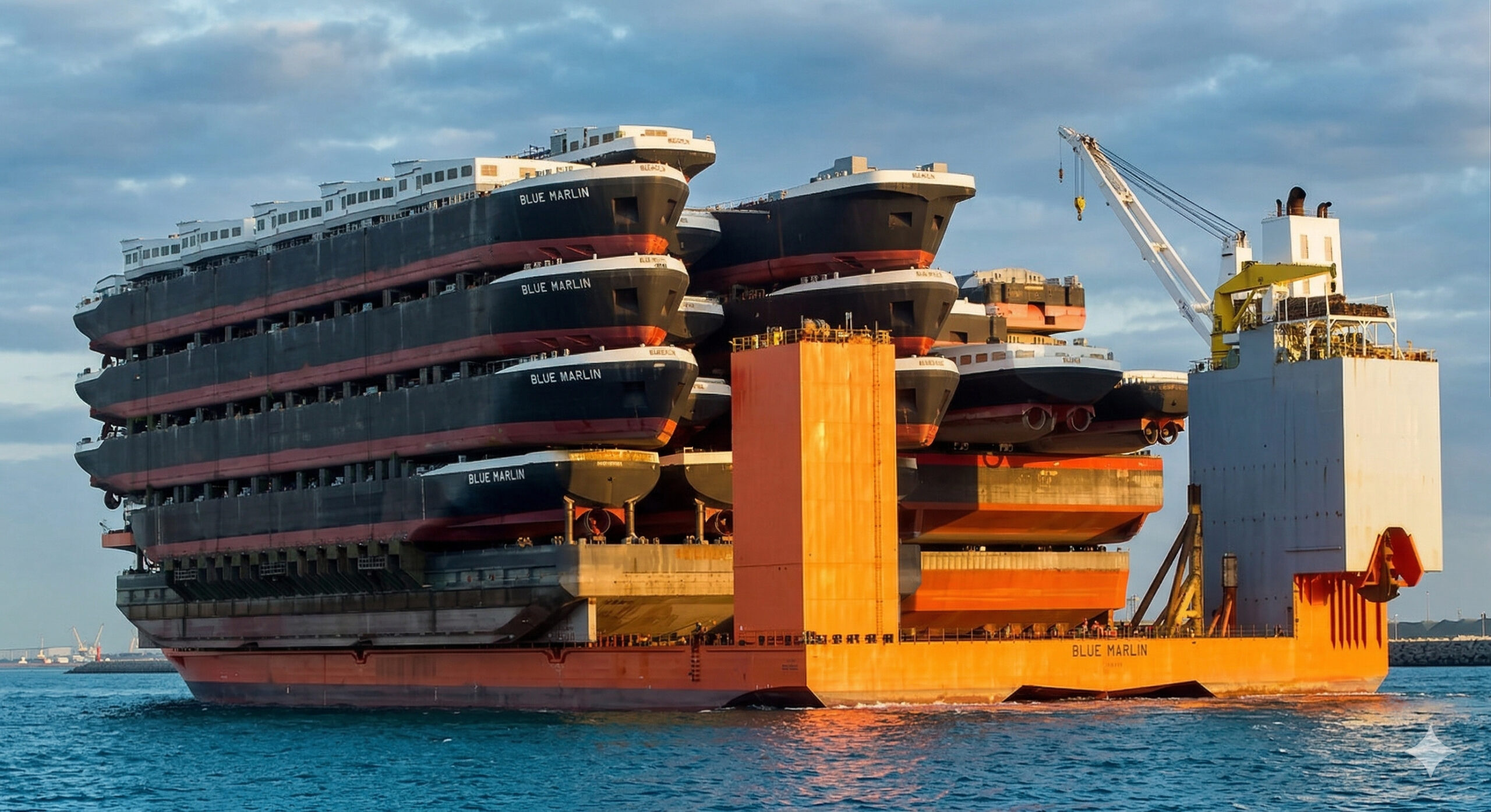
With a length of 225 meters and a capacity of 76 thousand tons, this ship “sinks” its own deck down to 28 meters deep to accommodate war destroyers, oil platforms, and giant radars floating above, and then emerges with everything intact on top like a colossal tray crossing oceans.
-
A 100-meter platform without a motor, without a keel, and operating upside down rotates 90 degrees in the ocean, sinks 75 meters, and drifts around Antarctica for two years driven by the planet’s most powerful current to study the largest carbon sink on Earth, still poorly understood by science for accurate climate modeling.

-
With a length of 108 meters and a giant spoon shape, the FLIP was the only ship in the world capable of rotating 90 degrees in the ocean and remaining vertical, with 91 meters submerged, operating for 60 years until it was retired and sent to the scrapyard in 2023.


Although some countries use dark gray or navy blue tones, the choice of black is dominant, especially in attack submarines. The use of color is directly linked to the goal of keeping the submarine invisible to the human eye and making it difficult to locate by aircraft or satellites.


Warships Are Gray For Camouflage On The Horizon
The color of warships is generally a matte light gray. The choice is associated with camouflage against the sky and the sea, especially on the horizon line. The shade of gray used does not reflect light intensely and hinders the vessel’s visibility from long distances, whether by direct observation or optical systems.
Gray is considered the best shade to confuse the ship’s silhouette amid fog, cloudy skies, and variations in light in the maritime environment. Naval military paint in this tone has standardized among various navies worldwide and is used on both escort ships and aircraft carriers and frigates.
Another reason for using gray is practicality. The color hides dust, saltwater marks, paint wear, and rust, which contributes to a more uniform appearance during prolonged operations. The constant maintenance of vessels is simpler with the adoption of neutral colors.

Naval Paint Involves Technical And Historical Criteria
The definition of the color of submarines and the color of warships also takes into account aspects of engineering and military tradition. Throughout history, the colors of naval vessels have evolved in accordance with advancements in detection technologies, such as radars and thermal sensors.
During World War II, experiments with different shades showed that gray was more effective for concealment in open waters. Submarines adopted black as a standard after observations showed that lighter tones reflected more sunlight, increasing the risk of detection.
The naval military paint also considers heat. Although black absorbs more light and can warm the hull more, this factor is not so relevant for submarines, as they spend most of their time submerged in cold waters. For warships, matte gray helps reduce heating caused by solar radiation.
Operational Factors Influence The Choice Of Color
The color adopted for each type of military vessel is directly related to its operational use. Submarines are built to operate discreetly, avoiding any type of detection, whether visual, thermal, or acoustic. In this context, the dark color helps reinforce stealth.
Warships, on the other hand, are surface vessels, often involved in patrolling, escorting, and combat. The gray color of warships aims to make their identification at long distances more difficult and reduce visual exposure during missions in open waters.
These color choices are replicated across navies worldwide, with minimal variations in shade. Standardization facilitates allied recognition and prevents visual details from revealing the vessel’s nationality, which can be a strategic advantage in tense or conflict situations.
Navy Colors Are Part Of Military Doctrine
The definition of the colors used on military vessels is part of the visual doctrine of each naval force. The choice of the color of submarines and the color of warships integrates a set of technical decisions involving performance, camouflage, and maintenance.
These guidelines are documented by engineers, naval warfare specialists, and military strategists. The application of naval military paint follows strict standards and aims to ensure operational efficiency and the durability of materials exposed to hostile environments like the ocean.
Even with advancements in detection technologies and electronic warfare, visual standards remain a relevant resource in the composition of naval defenses. The correct color can delay precious seconds in the detection of a vessel — time that, in wartime contexts, can be decisive.









-

-

2 pessoas reagiram a isso.