





 English
  Francês
  Alemão
  Italiano
  Japonês
  Norueguês
  Portuguese
  Spanish
  3 min of reading


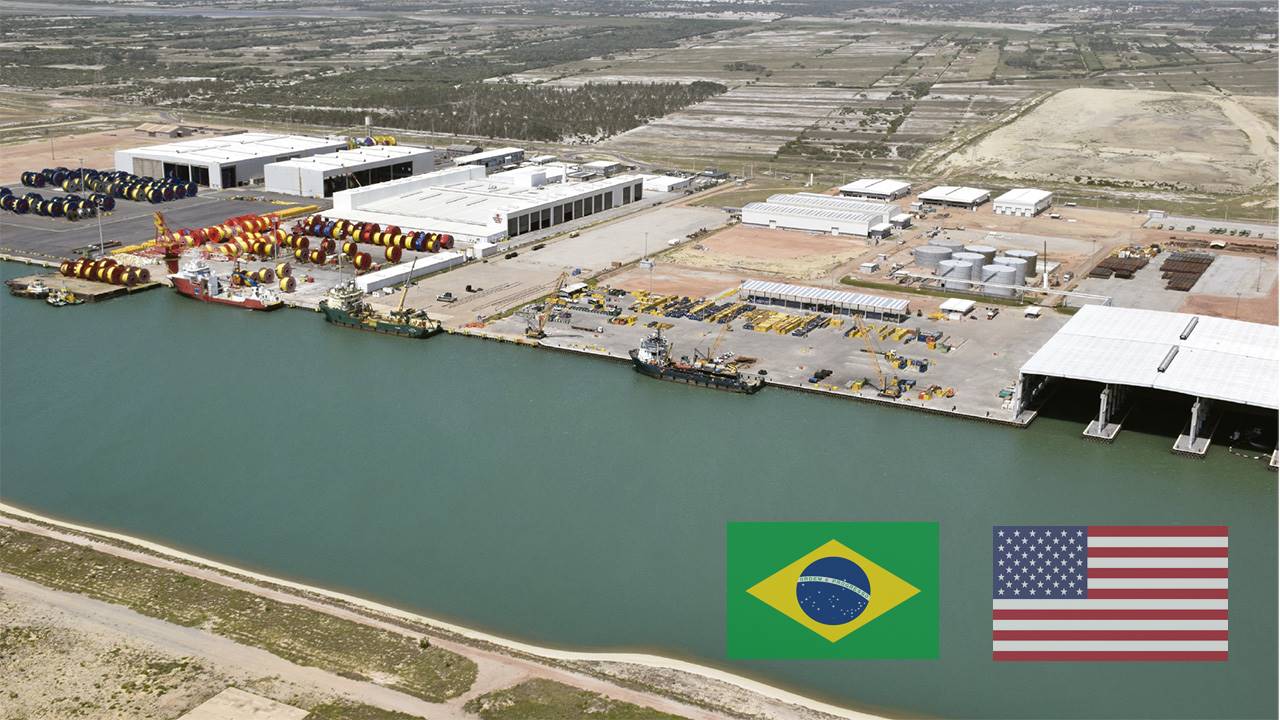
The Rio Oil and Gas Event Begins to Bear Good Fruit for Brazil, American Executives and the Port of Açu Sign Commitment for a New Cycle of Prosperity Between the Two Nations for Export Activities
The Port of Açu, which is actually a port complex, is already starting the Rio Oil and Gas event by collecting good fruit and taking advantage of its mega structure that literally dazzles any player on the planet, both for merchant activities and for the oil segment, and is on its way to becoming the most complete in Brazil, if not the world.
On the first day of the event, the Port of Houston signed a collaboration agreement with the Port of Açu to strengthen relations and increase the exchange of exports of products between Brazil and the United States, which will include bulk and inputs from the oil and gas market.
-
Government unlocks R$ 554 million for a highway that has been requested for decades and accelerates the duplication of BR.
-
Without bricks, without cement, and without endless construction: the cardboard house that is assembled in modules and can be moved.

-
Billions of barrels on the equatorial margin could lead Amapá to double its oil production in Brazil — the state aims to enter the route of companies in the Campos Basin, attract investments, and boost jobs and businesses in the oil and gas sector.
-
Without bricks, without cement, and without endless construction: the cardboard house that is assembled in modules and can be moved.

This cooperation agreement comes at a very good time and is extremely strategic for Prumo Logística, says the company’s president in Brazil, José Magella.
Projects at the Port of Açu Underway
In addition to the GNA I Power Plant that is currently under construction at the port complex and will be operational in 2021, GNA II will begin its works in 2019 and is scheduled to operate in 2023. Magella mentions that the peak of employment in the construction of the two power plants will reach 4,500 workers and with a total investment of 8 billion reais, becoming the largest electricity generator from power plants in Latin America with its incredible capacity of 3GW.
Additionally, a regasification terminal will be installed to handle gas production from the Santos and Campos Basins, along with its processing and utilization within the complex. The existing pipelines will be connected to this HUB, also facilitating the trade of the product for domestic use and export.
Executives are keeping an eye on the offshore unit maintenance market, such as drill ships/drilling rigs and vessels. Currently, the Port of Açu has the West Catarina rig at one of its terminals in warm stacking and is watching the Brazilian market for manufacturing and assembly of platform modules. Repairs of underwater equipment and decommissioning are also within the intended service portfolio.
The construction of a railway network between Rio and Vitória is also another significant leap in the development of internal logistics, this will significantly reduce logistics costs, facilitating the transportation of cargo and bulk of all types. It is worth noting that 60% of the costs of products of this nature are related to transportation.
There will also be the construction of a helipad in the complex and many companies are interested in participating in the project. The goal is to support logistical operations for people to offshore platforms and materials, dividing operations in the Campos Basin with Macaé, and perhaps even eliminating these types of operations.





Seja o primeiro a reagir!