





 Portuguese
  English
  Spanish
  8 min of reading
  0 comments


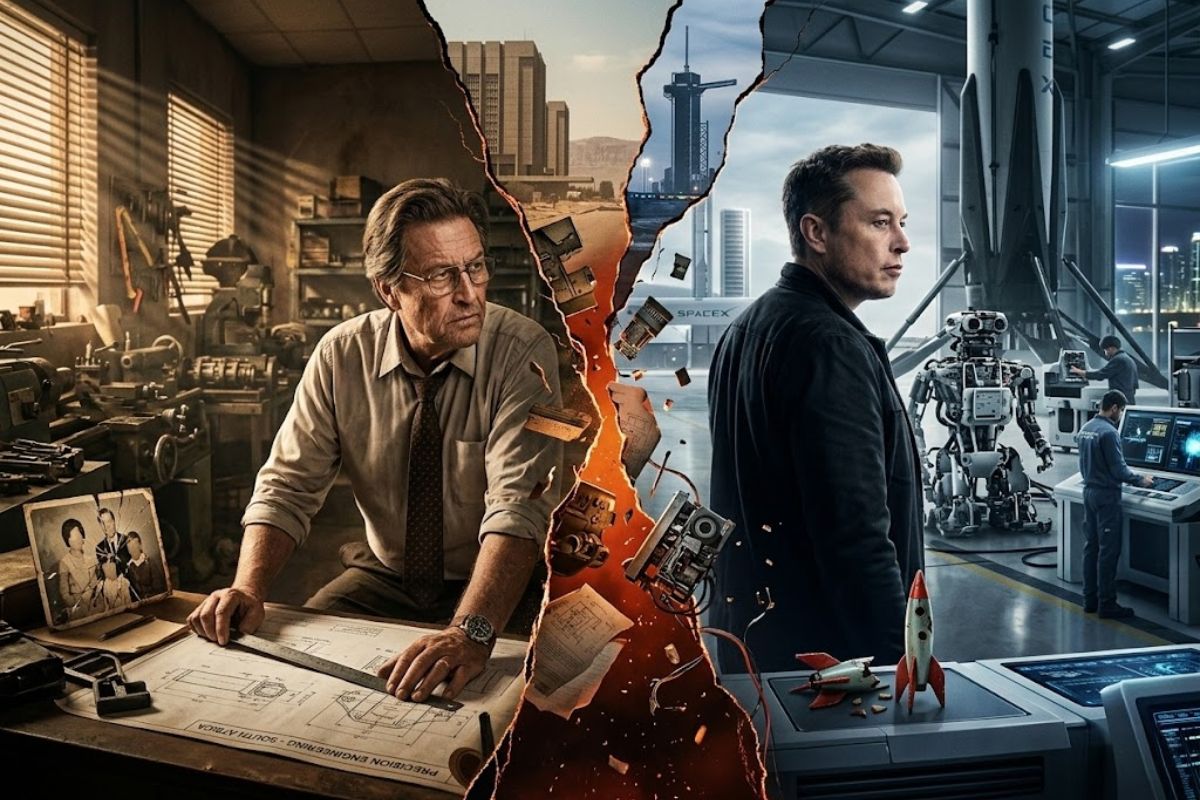
Elon Musk’s Father, South African Engineer Errol Musk, Has Once Again Aroused Curiosity Following Reports of a Family Life Surrounded by Allegations of Abuse, Humiliation, Public Disputes, and Mutual Accusations, Composing a Portrait in Which Technical Talent, Fortune, and Emotional Destruction Appear Side by Side Over Decades
The father of Elon Musk has once again drawn attention because his story helps to shed light on a part of the billionaire’s life that he rarely exposes in detail. Behind the public image of a businessman obsessed with technology, rockets, and electric cars lies a family past that he describes as deeply painful.
This trajectory involves a talented engineer, a contentious separation, serious allegations of abuse, and a relationship that never found stability. It’s not merely a fight between two famous individuals, but rather an ancient conflict where childhood, power, humiliation, and resentment are difficult to disentangle.
Who Is Errol Musk and Why Does His Figure Still Intrigue?
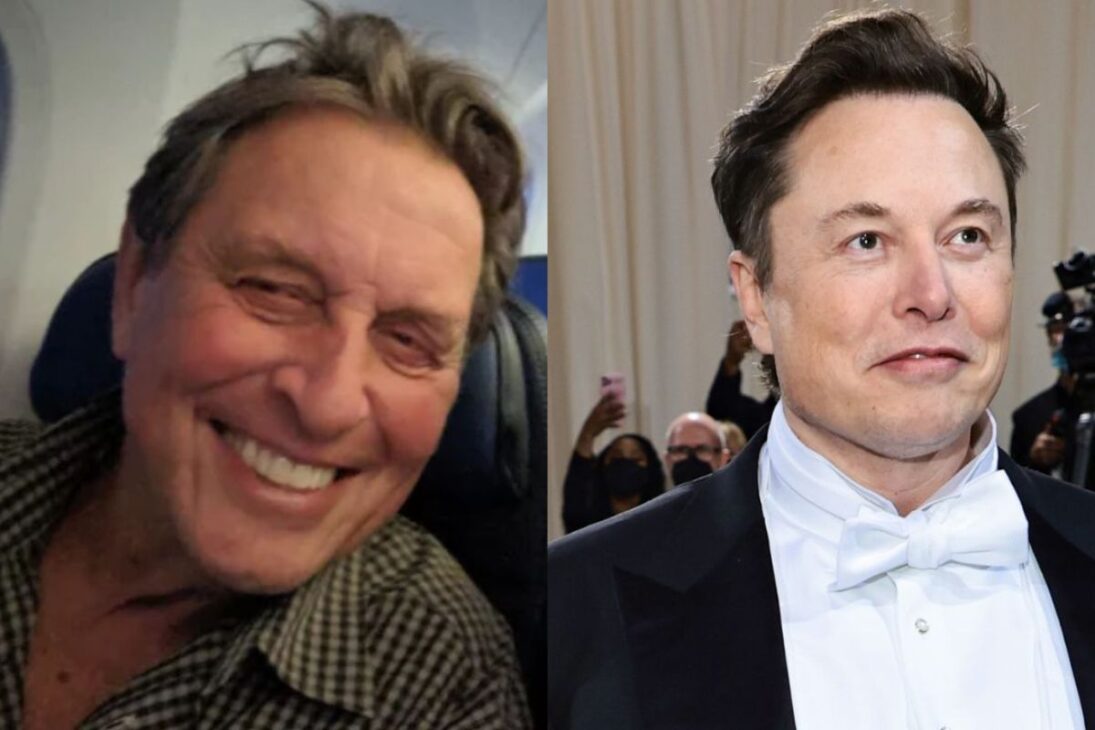
The father of Elon Musk was born in Pretoria, South Africa, in 1946, to Walter Henry James Musk and Cora Amelia Robinson.
-
For decades, a 50-kilometer ring structure in the middle of the Sahara has puzzled scientists: visible from space, it reveals layers of millions of years and turns the desert in Africa into a geological mystery.

-
With an unusual prize, Japan transforms office chairs into a resistance race on the streets, the ISU-1 Grand Prix grows, fills events, and pays 90 kilograms of rice.
-
With a façade that resembles a giant zipper, the building in Milan creates a sense of strangeness, featuring lighting that transforms engineering and attracts the attention of residents and tourists.
-
The Brazilian city has 319 crooked buildings built on sandy soil without proper deep foundations, houses the largest beach garden in the world, with over 5 km, and is still considered the birthplace of surfing — meet Santos, in São Paulo.


Throughout his life, he built the image of a brilliant engineer, investor, businessman, pilot, and sailor, surrounded by signs of material comfort and a reputation for unusual intelligence.
In some accounts, he was even noted as the youngest qualified engineering professional in his country.
This part of the story matters because it helps to understand the central contradiction. Elon Musk has never denied his father’s intellectual capacity.
On the contrary, the evidence presented shows that he acknowledges this genius. The issue, according to the billionaire himself, has never been a lack of admiration for Errol’s intelligence but for the person he became within the family.
It is precisely this combination that makes the case so disturbing.
The father of Elon Musk does not emerge as an irrelevant or failed figure, but as someone who accumulated technical prestige, money, and influence while being described by his children and ex-wife as a source of fear, tension, and suffering.
This is why the curiosity surrounding Errol grows so much.
The question is not only who he was professionally, but how a man seen as brilliant became, at home, a character surrounded by such harsh accusations and such intense public rejection from his own son.
The Marriage to Maye and the Childhood Surrounded by Reports of Violence
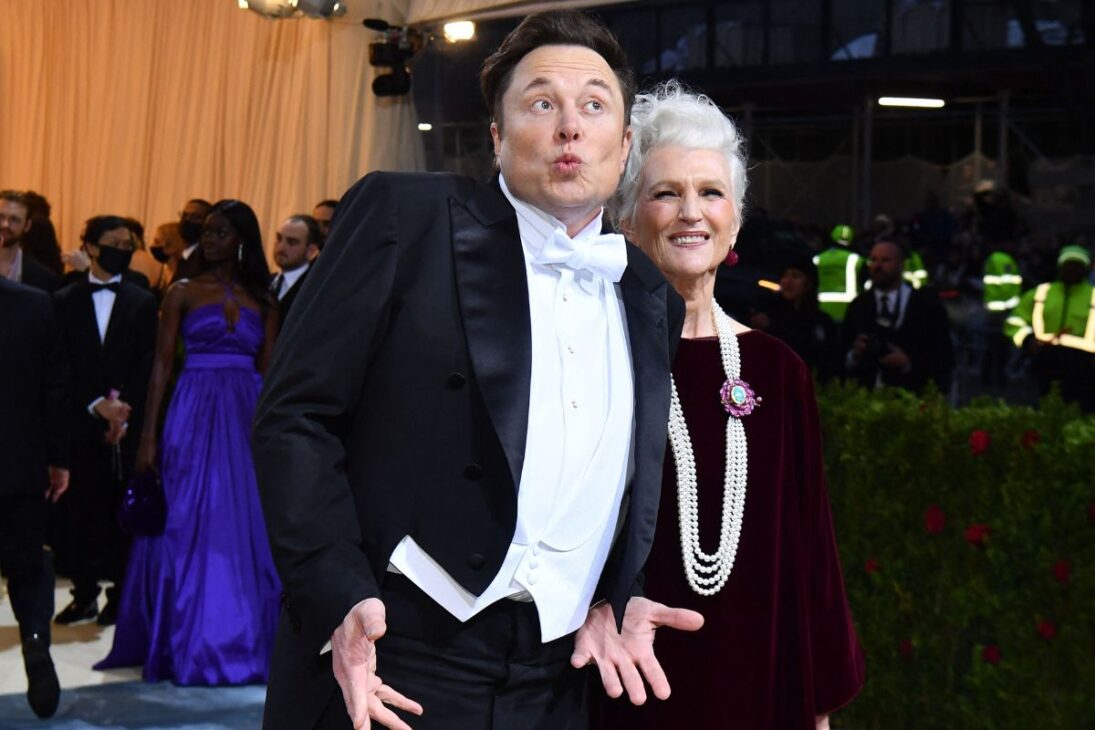
A large part of the darker portrait of the father of Elon Musk emerges from the book by Maye Musk, Elon’s mother.
According to her account, the relationship began while they were still in high school and continued through their youth, but it was already marked by episodes of infidelity and violence.
At one point, after refusing a marriage proposal, she was taken aback by a situation where the family mistakenly believed that the union was already arranged.
Maye describes the marriage as a period of almost constant fear. According to her version, the violence began early and extended throughout the entire relationship, from the honeymoon to the divorce.
She recounts humiliations, control, prohibition of contact with family members, and aggression witnessed by small children.
This point helps to understand why the theme does not appear as a simple domestic dispute, but as a family structure marked by abuse and intimidation.
In the accounts presented, Elon, as a child, was already trying to react. Maye recalls situations where he, at five years old, would hit behind his father’s knees to try to make him stop during assaults.
This completely alters the reading of the businessman’s childhood, which ceases to appear merely eccentric or intellectually precocious and takes on a dimension of helplessness and daily tension.
The father of Elon Musk appears, in this part of the story, not only as a difficult man but as the center of a domestic environment in which fear and instability seemed normal.
When Elon states in adulthood that he had a miserable childhood, this backdrop helps to explain why the phrase does not sound like emotional exaggeration but a raw summary of a much heavier coexistence than the public image of wealth would suggest.
The Decision to Live with His Father and the Deepening of the Break
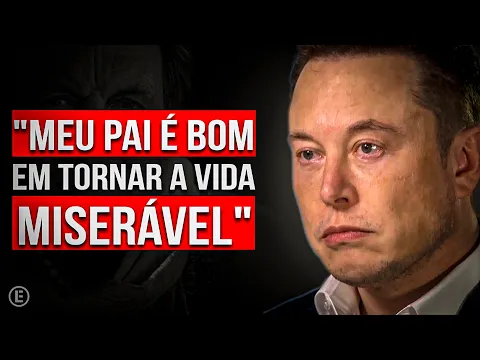

After the divorce, Elon made a decision he would later consider a mistake: at age 10, he moved in to live with the father of Elon Musk because he felt sorry for him living alone.
At the time, according to the businessman himself, he did not fully understand what kind of person his father was. He would later summarize this directly by saying that “it was not a good idea.”
Adolescence, according to accounts compiled in the biography written by Ashlee Vance and in an interview with Rolling Stone, deepened this perception.
Elon claimed he suffered emotional abuse and described his father as someone good at making life miserable.
He also stated that almost every imaginable crime had been committed by him, although at this point, the statement appears as an extremely harsh emotional accusation rather than a documented enumeration of facts.
The weight of these declarations became even greater because they were made with a strong emotional charge. Interviewer Neil Strauss recorded that Elon even cried while talking about the father of Elon Musk, and the description suggests not only anger but exhaustion.
This is not a performative family feud.
It’s a trauma that continues to emerge even when the son has become one of the most well-known men in the world.
This experience helps to explain another important movement: Elon’s departure from South Africa at age 17. When he moved to Canada, he was not only seeking opportunity.
He was also cutting a bond that, according to his own accounts, seemed suffocating.
In this sense, the rupture with his father was not an isolated episode but part of a broader attempt at personal reconstruction.
Errol’s Public Defense and the Dispute of Versions
However, the story does not exist in a linear fashion. The father of Elon Musk publicly reacted to the allegations and challenged parts of what his son said.
In interviews, he tried to diminish the weight of the accounts, called Elon spoiled at times, and suggested that the businessman spoke out of emotional fragility and personal conflicts.
Errol also sought to relativize more severe episodes. When commenting on his reputation, he mentioned having been accused of manslaughter after shooting three intruders at his home but claimed he was acquitted on the grounds of self-defense.
For him, this would perhaps be the only action that could be read as “terrible” and that the son could be using as a reference.
Errol’s defense attempts to frame the crisis more as emotional exaggeration than as a faithful portrait of his conduct.
Additionally, the father of Elon Musk insisted that he encouraged his son’s intelligence from an early age and cited, for example, a computer course he helped pay for when Elon was still a child.
In his narrative, the businessman’s genius did not flourish despite the paternal figure but also with some encouragement coming from it.
This dispute of versions does not resolve the conflict, but it helps to understand why the story remains so loaded. On one side are Maye’s accounts, Elon’s statements, and an accumulation of resentments.
On the other side, there is a father who rejects the demonized image and tries to reposition his biography as that of a hard man but one who decisively shaped his children’s lives. The clash between these versions keeps the wound open.
The Family, the Stepdaughter, and the Intensification of Repulsion
The rejection of the father of Elon Musk did not remain confined to old memories. According to the evidence presented, the episode that re-ignited the repulsion among the children occurred when Errol revealed he had a child with his stepdaughter, forty years younger than him.
Jana Bezuidenhout was only four years old when he became involved with her mother, which turned the news into an additional factor of rupture within the family.
Errol tried to defend himself by saying he did not truly consider her a stepdaughter, as she had grown up away from family interactions for most of the time.
But this explanation, it seems, did not diminish the rejection. For the children, this episode seems to have solidified the perception that their father’s ethical boundaries have always been displaced, even after decades of prior conflicts.
This point helps to understand why the relationship remains described as full of ups and downs but without any real pacification. The father of Elon Musk continues to be an uncomfortable presence in the businessman’s biography because he does not merely represent a difficult figure from the past. He continues to produce new facts that reactivate old tensions and keep alive the feeling of shame, rupture, and repulsion.
Amid all this, there is a harsh contrast. Maye and Errol’s three children have become successful adults in very different fields.
Elon built a business empire, Kimbal developed businesses in the food sector, and Tosca pursued a career in audiovisual.
The success of the children has not erased the emotional disaster of the family. It has only made it more visible.
What This Story Reveals Behind the Myth of the Billionaire Genius
The story of the father of Elon Musk helps to dismantle a simplistic reading of the billionaire’s trajectory as merely the rise of a self-driven genius.
There lies a childhood marked by a lack of stability, reports of violence, emotional disputes, and a coexistence described as miserable by someone who would later become a global symbol of technological ambition.
This does not automatically transform trauma into a total explanation for success, but it prevents the biography from being read too cleanly.
The businessman who today talks about Mars, artificial intelligence, and electric cars also carries a disorganized, violent, and deeply resentful family origin.
And perhaps it is precisely for this reason that the subject continues to be avoided by him with such discomfort.
In the end, the father of Elon Musk intrigues not only for being the parent of a famous billionaire. He intrigues because he concentrates, in a single figure, intelligence, wealth, alleged brutality, family pride, and intimate destruction.
He is a character that makes it impossible to easily separate talent from character.
The big question that remains is not just what Errol Musk did or did not do, but why certain figures are recognized as brilliant in public and devastating in private at the same time.
In your view, does the extraordinary success of the children weaken or reinforce the weight of this troubled family history?






-

-

2 pessoas reagiram a isso.