





 Portuguese
  English
  Spanish
  4 min of reading
  2 comments


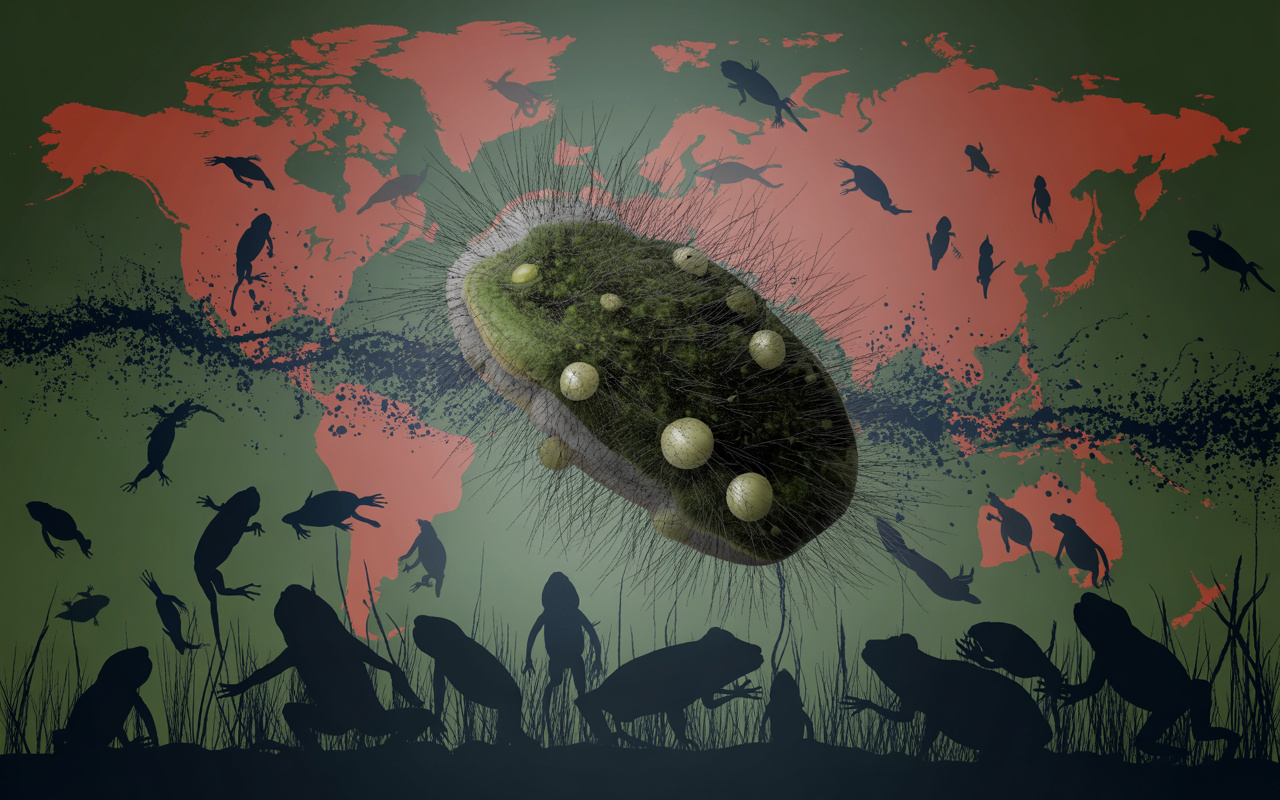


Chytrid Fungus Batrachochytrium dendrobatidis Has Already Eliminated Hundreds of Amphibian Species Worldwide and Is Considered the Greatest Biological Crisis Ever Recorded Among Vertebrates.
Few people know, but while deforestation and global warming dominate the environmental debate, a mass extinction is happening almost under the radar. It doesn’t involve explosions or direct predatory hunting. The agent is invisible to the naked eye, lives on the skin of frogs, toads, and salamanders, and acts in a devastating manner. The fungus Batrachochytrium dendrobatidis, known as Bd, is already considered by biologists and international institutions as one of the greatest biological threats ever faced by vertebrates in modern history.
Since the end of the 20th century, entire amphibian populations have begun to disappear at an alarming rate, even in protected areas that appear untouched. The pattern repeated itself across different continents, raising an unsettling question: how were isolated species in preserved environments collapsing at the same time?
What Is Batrachochytrium dendrobatidis and How Does It Kill Amphibians
The Batrachochytrium dendrobatidis is a microscopic chytrid fungus that exclusively infects the skin of amphibians. This may seem minor until it is understood that the skin of these animals is not just an external barrier. It functions as a vital organ for respiration, water balance, and electrolyte exchange.
-
HONOR X80i arrives with a massive 7,000 mAh battery, a 120 Hz AMOLED display with a brightness of 6,500 nits, and the new Dimensity 6500 Elite chip, promising up to 22 hours of video playback and impressive performance in casual gaming.

-
Xiaomi TV Stick HD 2 is announced with Google TV and dual-band Wi-Fi, offering 38% superior performance, HDR10+, Dolby Atmos, a quad-core chip, Mali-G31 GPU, 1 GB RAM, and support for 1080p at 60 Hz.

-
Brazil joins the select group of countries by producing a supersonic fighter that reaches 2,400 km/h with advanced electronic warfare technology, US$ 4 billion in investments, 36 units planned, 350 trained engineers, and unprecedented national production by 2032.

-
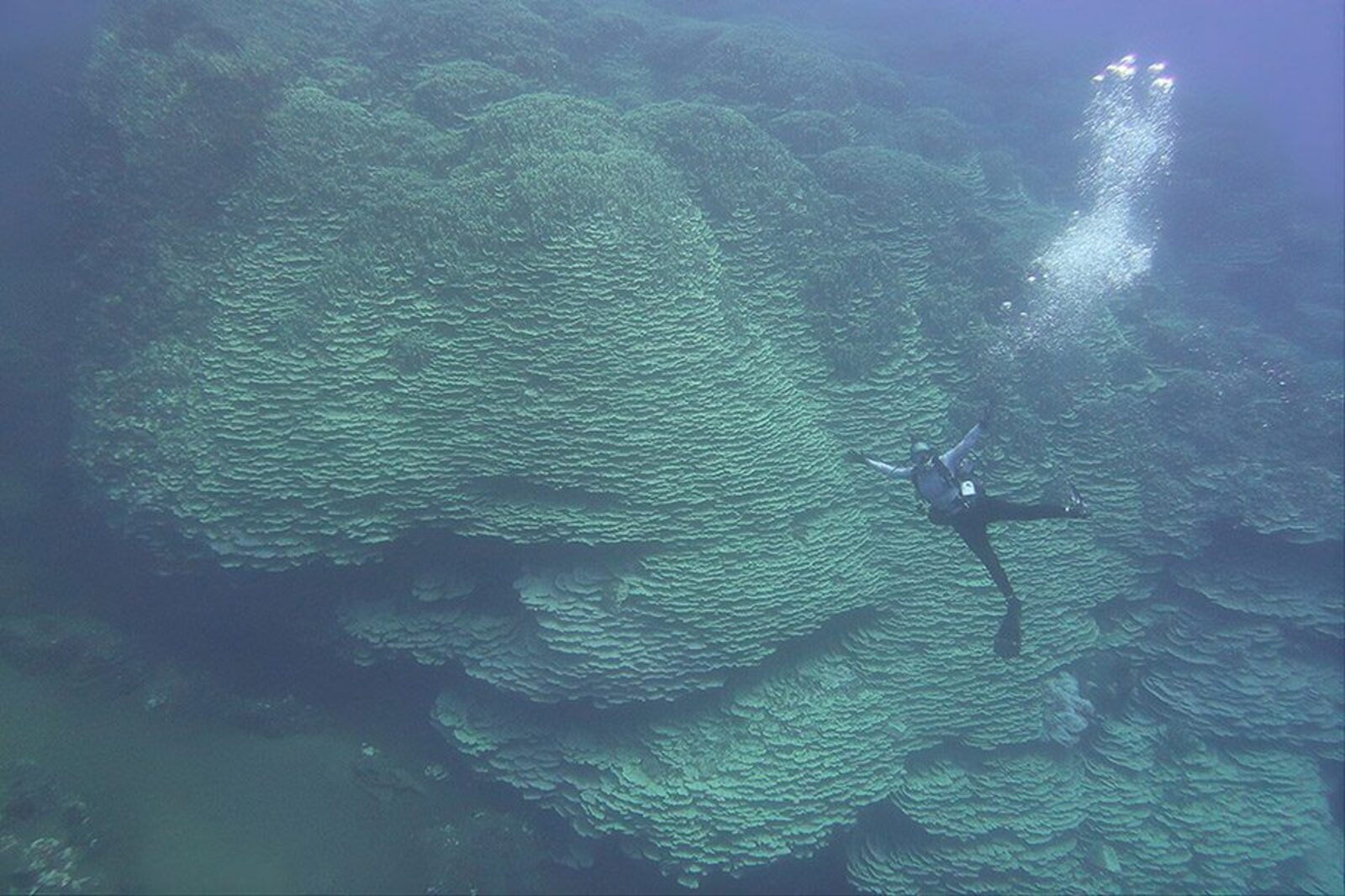
At the bottom of the sea, scientists have found a true underwater cathedral measuring 62 meters at the base, 31 meters at the top, and 1,347 square meters of giant coral in the Maug Islands, estimated to be 2,050 years old.



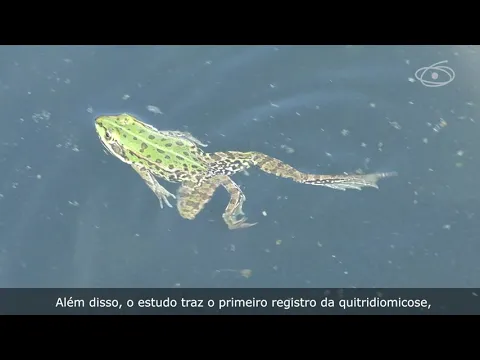
By colonizing the skin, the Bd causes the disease known as chytridiomycosis. The infection thickens the epidermis, interferes with the absorption of water and minerals, and leads to severe electrolyte imbalance. In many cases, the outcome is cardiac arrest. The animal may appear healthy for days and then die suddenly, without clear external signs.
The most disturbing aspect is that death does not require large amounts of the pathogen. Small fungal loads are enough to collapse the organisms of sensitive species.
A Global Crisis Documented by Science, Nature, and IUCN
Studies published in journals such as Science and Nature show that Bd has already been associated with population declines of more than 500 amphibian species across all continents where these animals exist. At least dozens of species are considered extinct or functionally extinct due to the fungus.
The International Union for Conservation of Nature (IUCN) classifies Batrachochytrium dendrobatidis as one of the most destructive invasive species ever recorded. No other known pathogen has caused such a broad and rapid impact on an entire group of vertebrates.
The collapse has been especially severe in Central America, South America, and Australia—regions that concentrated high diversity of endemic amphibians, many of which are restricted to small and highly specialized areas.
Asian Origin and Global Trade-Driven Spread
Genetic analyses indicate that the most aggressive lineage of Bd likely originated in East Asia. Studies with wild populations in South Korea revealed amphibians carrying the fungus without signs of illness, suggesting a long evolutionary coexistence.
The problem began when the fungus started circulating globally. The main identified vector was the international trade of amphibians, both for food and for the aquarium industry and scientific research.
Species such as the American bullfrog, farmed on an industrial scale, acted as asymptomatic reservoirs, spreading the fungus to natural environments around the world.
Once introduced into an ecosystem, Bd spreads rapidly through water, moist soil, and direct contact between individuals.
Why Do Some Species Disappear While Others Survive
Not all amphibians respond the same way to infection. Some species experience population collapse within a few months, while others can survive as chronic carriers.
Research shows that factors such as skin microbiota composition, environmental temperature, and evolutionary history influence resistance to the fungus. Cold, humid environments favor Bd growth, explaining severe outbreaks in mountainous regions and cloud forests.

Even so, the presence of resistant species does not solve the problem. They function as permanent reservoirs, keeping the fungus active in the environment and preventing the recovery of the more sensitive species.
Ecological Impact That Goes Beyond Amphibians
The mass extinction of amphibians generates cascading effects in ecosystems. Frogs and toads are natural predators of insects and also important prey for birds, reptiles, and mammals. Their loss alters entire food chains.
In some regions of Central America, the disappearance of amphibians has been associated with increased aquatic insects and changes in the composition of algae and microorganisms in rivers. These indirect effects show that the crisis caused by Bd is not just a tragedy for amphibians but a systemic problem for entire ecosystems.
Is There a Solution to Contain Batrachochytrium dendrobatidis?
To date, there is no viable solution to eradicate Bd from nature. Antifungal treatments only work in controlled environments, such as zoos and conservation centers. In the wild, the scale of the problem makes any direct intervention practically impossible.
Current strategies focus on preventing new introductions, controlling the international trade of amphibians, and creating “genetic ark” in captivity for threatened species. In some cases, entire populations today survive only in human facilities, awaiting a safer future scenario.
Bd remains active, silent, and widely distributed. Its story has left a clear warning for science and society: the next great extinction may not come from large predators but from invisible organisms, driven by an increasingly connected world.
The question that remains is unsettling: how many other similar biological crises are already underway without most people even realizing?







Excellent article. 😊👍
That being said, please avoid trumptalk, like “few people know”, in the future. 😁
Estamos Haciendo ⚽️⚽️El Planeta sin q’nadie, a Execpción de Los Ing Dedicados al Tema Se Preocupe; es muy raro lo q’está Sucediendo y lo Más Grave es Q’por el Momento No Tenemos Otro Sitio Para Vivir!!!..🙇♂️🤦♂️🤷♂️🙋♂️