





 Portuguese
  English
  Spanish
  3 min of reading
  7 comments


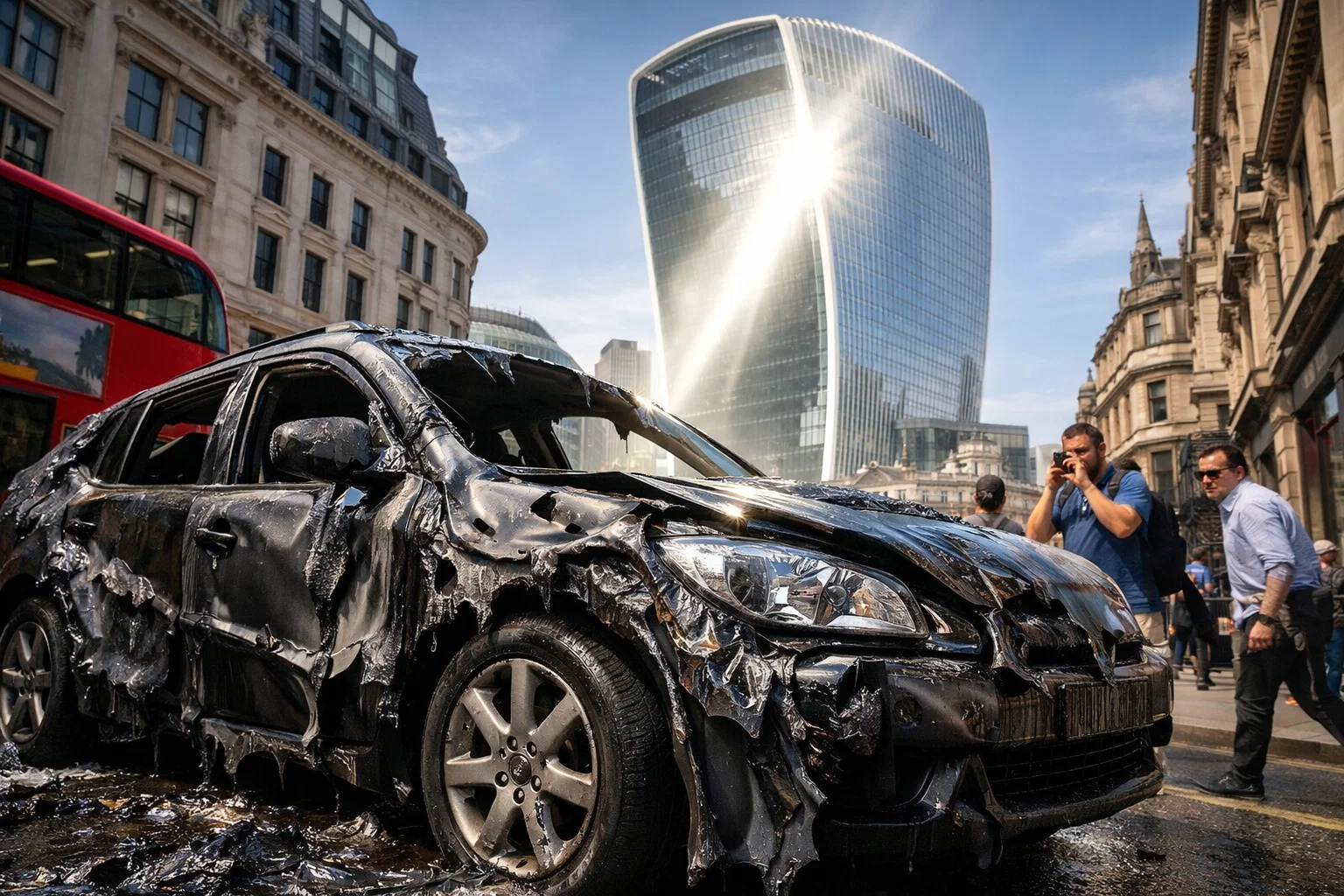


20 Fenchurch Street, Known as Walkie Talkie and the Building That Melted Cars, Concentrated Solar Energy Like a Giant Lens, Damaging Vehicles in the Financial District and Forced Technical Construction Changes That Today Influence High-End Projects
Few people comment today, but the building that melted cars is still there, imposing in the center of London. 20 Fenchurch Street, nicknamed Walkie Talkie because of its shape, made international headlines by concentrating sunlight with enough intensity to damage parked vehicles on the street and forced technical construction changes that today influence the engineering of glass facades and high-end projects.
The most curious thing is not the incident itself. It’s what happened afterward.
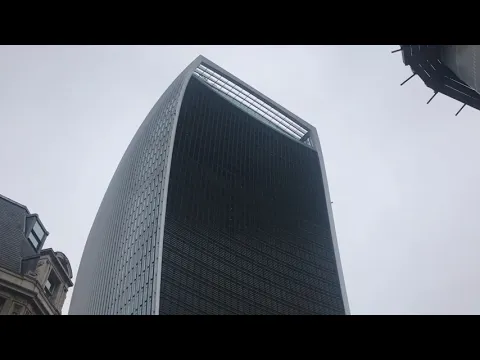

When a Corporate Skyscraper Transformed Into a Solar Energy Concentrator in the Financial District
The glass facade has a concave shape. This architectural detail, designed to give the building identity, acted as a lens on an urban scale.
-
A promise made to their father led three men to unearth a forgotten house that had been swallowed by time for over 70 years, in a story of memory, abandonment, and reconstruction that seems straight out of a movie.

-
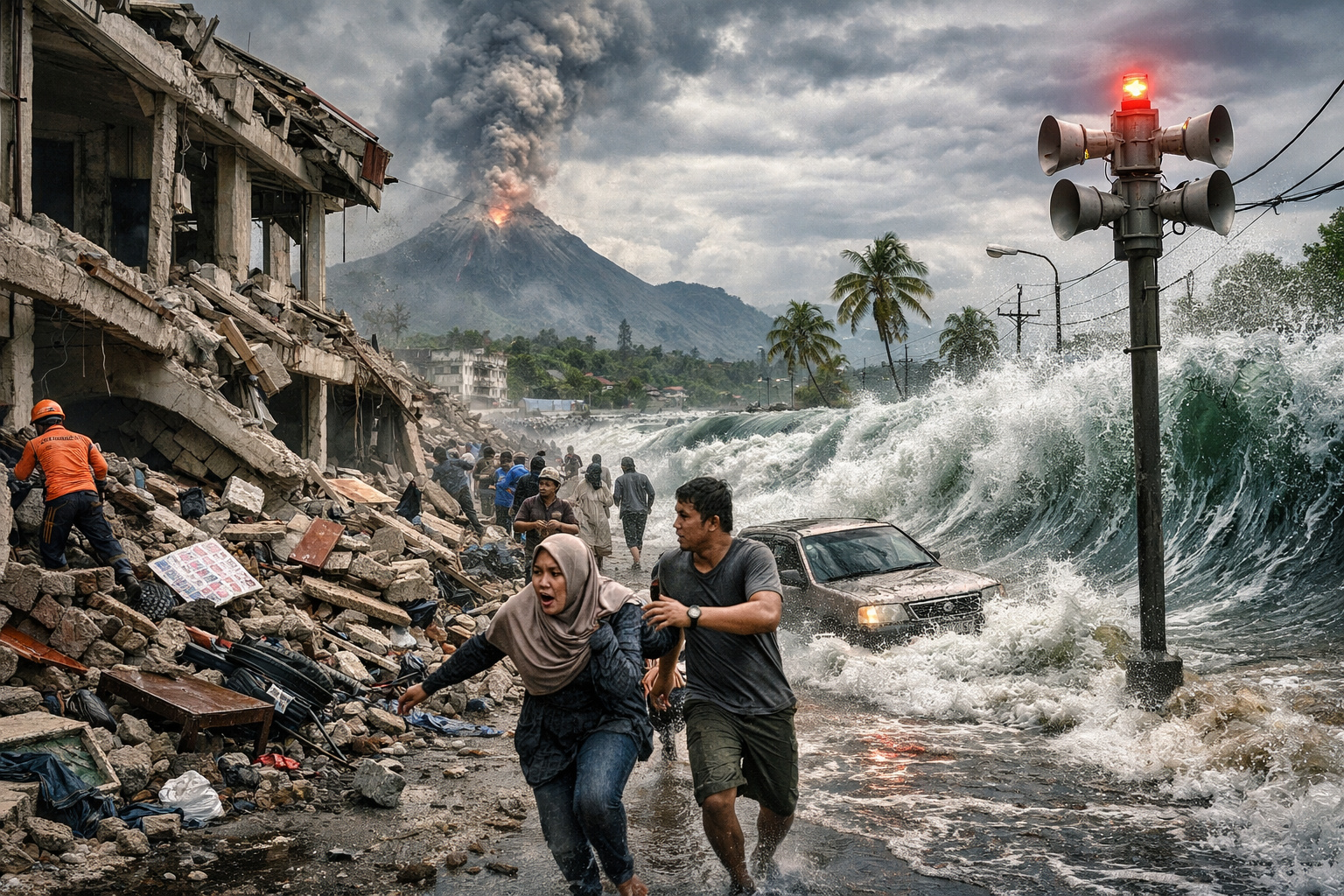
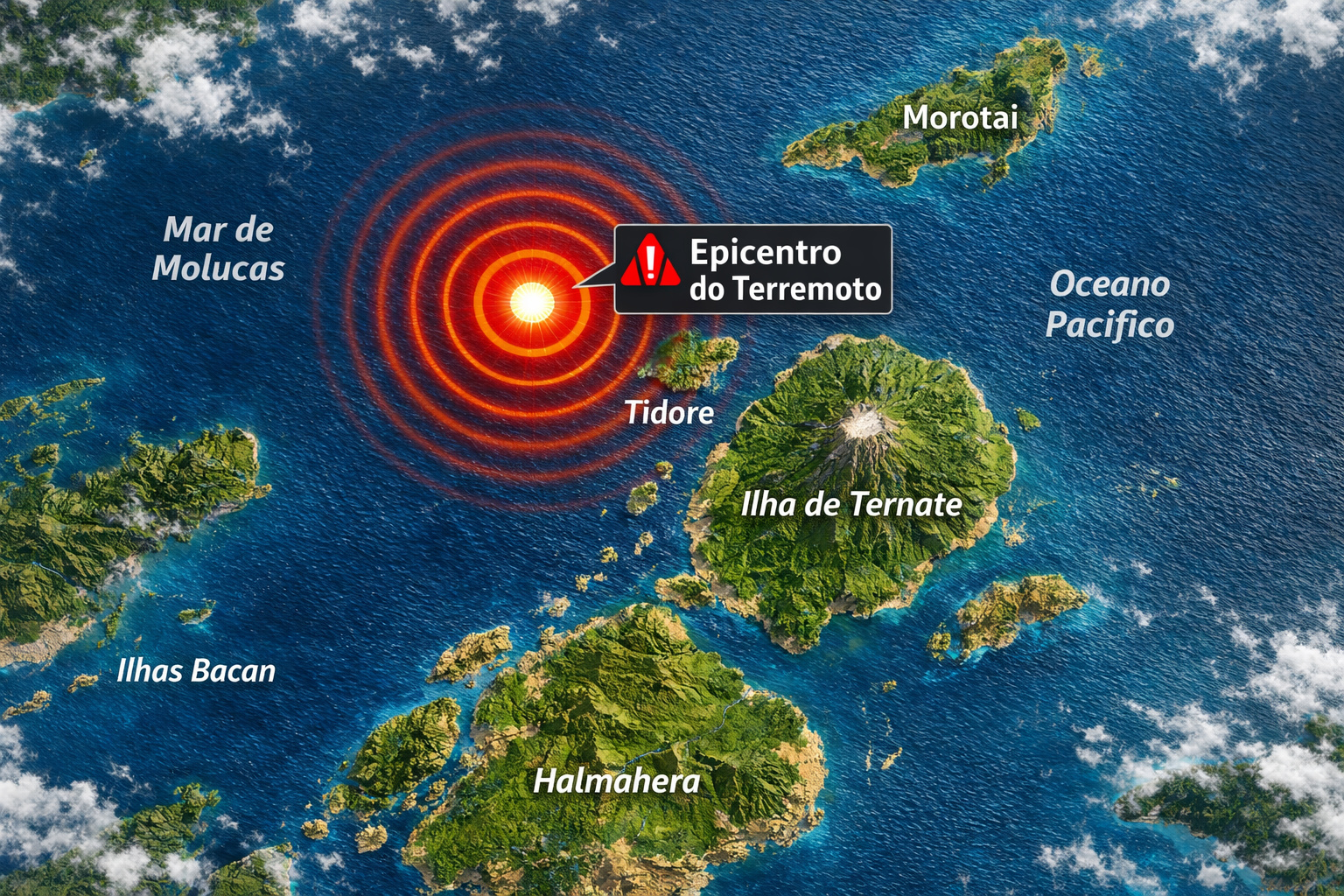
A strong earthquake in Indonesia affects houses and schools, causes panic, triggers a tsunami alert, and records a rise in sea level of up to 30 centimeters in some areas.
-
The Argentine government celebrates the lowest poverty rate in 7 years, but experts warn that the methodology has changed, real wages have fallen, unemployment has risen, and the number of people on the streets of Buenos Aires has increased by 57% since Milei took office.

-
7.8 magnitude earthquake in Indonesia frightens the population, triggers tsunami alert, and hits an island with over 200,000 inhabitants this Thursday.

At certain times, the solar incidence was reflected to a specific point on the street. The concentrated heat deformed mirrors and plastic parts of cars.
According to experts, curved and highly reflective surfaces can intensify solar radiation depending on the position of the sun and structural design. In the case of the Walkie Talkie, the effect was stronger than anticipated.
The episode gained global attention because it practically demonstrated the raw power of solar energy when concentrated uncontrollably.

The Correction That Few Mention and That Changed the Way of Construction and How Large Glass Towers Are Designed
After the reported damages, shading elements were installed to reduce the concentration of reflected light.
These structures began to disperse part of the radiation, eliminating the critical heat point on the street. The building was not demolished, did not lose its function, and continued to operate.
The technical solution applied became a reference. Projects with curved facades began to require more detailed solar simulations, considering different times of the year and extreme angles of incidence.
Estimates suggest that the case reinforced the adoption of advanced thermal modeling in large-scale developments, especially in dense urban centers.
Solar Energy Out of Control: What the Case Reveals for the Construction, Energy, and Urban Technology Sectors
What happened in London is an uncomfortable reminder. The same energy that powers solar plants can generate unwanted effects when reflected in a concentrated manner.
At a time when cities invest in sustainability, smart facades, and energy efficiency, the balance between aesthetics and physics becomes even more sensitive.
The construction sector moves billions globally. A calculation error in a project of this magnitude not only affects the urban landscape but also the technical reputation of the companies involved.
The discussion goes beyond an unusual building. It is, therefore, about technical responsibility, thermal planning, and the interaction between large structures and public space.
The Building Is Still There, But the Question That Resonated in Modern Engineering
The Walkie Talkie remains part of the London skyline. Tourists take photos, executives come and go, and life goes on.
But the episode left a silent mark on the industry. Each new glass tower with bold design now carries an implicit question: was the solar simulation truly exhaustive?
Few remember the day cars began to show damage under the reflection of a skyscraper. However, within engineering and architecture offices, the case continues to be discussed as a technical warning.
And you, do you believe that the pursuit of increasingly iconic buildings can exceed invisible technical limits? The discussion is open in the comments.






Quando falam que Arquimedes usou espelhos para queimar barcos a distância em Siracusa muitos duvidaram, taí a experiência.
Creio seja uma oportunidade para estudar o ângulo e utilizar a benesse para captar energia solar de uma forma otimizada. Erros as vezes acontecem e podemos tirar proveito deles, como no caso da Penicilina.
Esses carros eram feito de manteiga?