





 Portuguese
  English
  Spanish
  3 min of reading


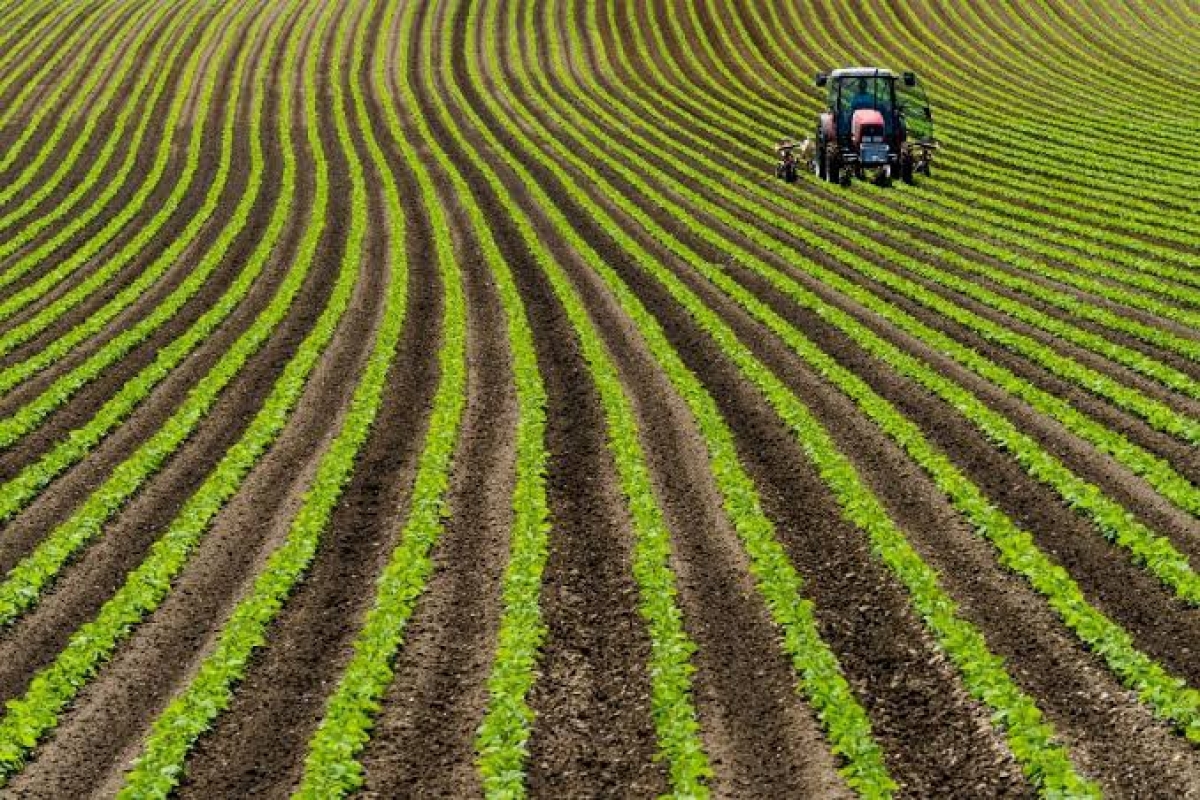
Pedro Lupion (PP-PR), federal deputy, will take office this Wednesday for his second term in the Chamber of Deputies and will also assume the presidency of the Parliamentary Front for Agriculture, a group that includes more than 300 parliamentarians. In an interview with EXAME, Pedro Lupion discussed his main difficulties and challenges in his management and emphasized the relationship of agriculture with tax reform.
“We have no objection to a tax reform. On the contrary, we believe it is extremely necessary,” he highlights. “What we cannot accept in any way is the taxation of agriculture. We will not accept that, we will not let that pass.”
According to him, any revision of the Kandir Law and the possibility of exempting agriculture exports would create a “serious problem for the country” economically speaking. “We cannot accept that. We are facing competitors and global players who have very strong incentives, things we do not have. If we still have to pay the bill, it becomes more complicated,” he states.
The deputy also said that the relationship of the FPA – and of all of agriculture – with this new government is “tense,” characterized by an “ideological” rift with the Ministries of Agrarian Development and Environment, which, according to him, their actions regarding agriculture are being scrutinized. “The government has shown a difficult stance towards us in agriculture, except for Minister Carlos Fávaro, with whom we have a good relationship,” he affirms.
-
Unemployment rises again to 5.8% at the beginning of 2026, raising alarms about the end of temporary positions and its impact on the Brazilian job market.

-
Document organization can cut invisible costs in small businesses, a simple step that prevents waste, rework, and losses in daily operations.

-
While Russia dominates the global wheat market, Brazil emerges as an unexpected competitor in the Cerrado, offering grain available in July and August when stocks in the Northern Hemisphere are at their lowest point of the year.

-
China returned almost 20 Brazilian ships with soybeans, but now everything could change: the country that buys 80% of the grain is considering relaxing regulations after impurities held up shipments of thousands of tons and caused million-dollar losses.

According to Lupion, these demonstrations of “attacks” are a new configuration of the ministries, with the transfer of the National Supply Company (Conab) and Family Agriculture to the MDA, as well as the transfer of the National Rural Environmental Registry (CAR) from the Agriculture ministry to the MMA.
Regarding the future, Lupion assesses that greater integration with the next president of the Senate will be necessary, where various agricultural issues are stalled. “I believe we will be able to have an easier time with our issues in the Senate,” he asserts. “We will be able to advance, yes, on issues that are stalled there. Important issues such as environmental licensing, land regularization, pesticide law.”
Taxation of Agriculture, Lula’s Tax Reform, A New Era for Corn in Brazil


According to indigenous issues, he also refers to the judgment in the Supreme Federal Court (STF) on an extraordinary appeal. This case discusses whether the date of the promulgation of the Federal Constitution (10/5/1988) should be adopted as a temporal benchmark for this definition of the traditional occupation of lands by indigenous people. “This temporal benchmark creates a precedent that will not only affect rural producers but various areas,” affirms Lupion.
According to him, the possible approval of PL 490 will also make it “clear that the legislation provides for the temporal benchmark of 1988.” “What we want is for the indigenous people to have autonomy, so they can produce. Brazilian indigenous people can have a good life, have conditions for subsistence, work, raise their children, respecting their culture, their origins, and the lands. It’s a war of narratives,” he concluded.









Seja o primeiro a reagir!