Portuguese
  Spanish




The biotech made an announcement this Friday (27) about raising between R$10 million. The funds MOV and Baraúna Venture Capital will participate in the first round of investments.
“Symbiomics aims to create solutions to tackle one of the biggest current challenges in agriculture, which is to sustainably increase productivity while generating a lower environmental impact. The company’s proposal is to develop next-generation biological products, containing new microorganisms and disruptive technologies. The raised funds will leverage the development of these solutions,” comments CEO Rafael de Souza.
According to MOV, manager of impact investment funds and one of the investors, this sustainable increase in food production to meet the urgent demands of a growing population remains one of the main challenges of the next decade.
For Baraúna Venture Capital, another investor, the expectations are that Symbiomics establishes itself as one of the main references in applied sciences in agribusiness.
-
At 14 years old, she worked in a factory in Hong Kong, studied economics abroad, and then entered the Chinese real estate market, which helped change the landscape of Beijing.

-
While NATO secured more than $10 billion in missiles and space surveillance at a single forum, Brazil still spends 1.1% of its GDP on defense and is stalling its own anti-aircraft system.

-
Producer receives news and had to cull almost the entire herd, bounced back with the help of compensation, and is now producing 450 liters of milk per day in SC.

-
Corn ethanol attracts R$ 23 billion in 21 new plants and prepares for a nearly 50% jump in Brazilian production by 2027, even with high interest rates.


“Symbiomics is capable of combining a range of technical knowledge and academic training with business vision and management capacity. The adoption of this type of product is increasing, and we believe it to be a strong and lasting trend as it combines productivity with sustainability,” says Baraúna CEO Paulo Ciampolini.
What Symbiomics Does:
Founded in 2011, this company develops high-performance products to achieve agricultural productivity increases in a more sustainable way, with lower environmental impact. These products also contain microorganisms used for various applications, such as plant nutrition, biocontrol, bio-stimulants, and carbon sequestration.
The company’s Research & Development department has been working with the most advanced technologies in genomics, microbiomes, and data analysis to increase agricultural productivity through various means, such as enhancing resilience to environmental stresses, biological control, and even biofertilizers.
Symbiomics also explores the country’s natural environments in search of more microorganisms with potential technological applications.
“Microorganisms from these environments hold enormous potential for use as biofertilizers, biostimulants, and biocontrol agents. The Amazon, for example, is rich in biodiversity, particularly microbial diversity, and will certainly provide microorganisms that support our thesis and generate local wealth and jobs,” says biotech COO Jaderson Armanhi.
According to him, Symbiomics will bring a true revolution to large-scale farming with products that provide significant production gains while drastically reducing the damage still caused to the environment.
How The Funding Will Be Used:
The biotech expects to inaugurate a laboratory located in Florianópolis in two months.
Furthermore, the company is already negotiating the licensing of products with multinationals operating in Brazil, Latin America, Europe, and the USA.
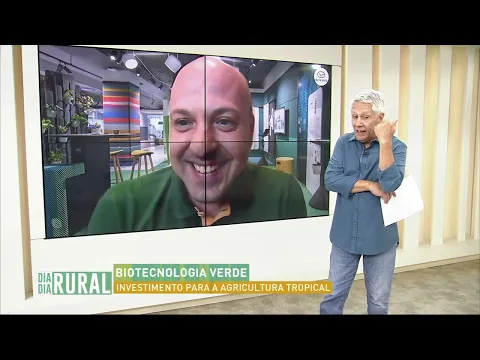
Green Biotechnology: Investment for Tropical Agriculture