Portuguese
 Spanish




Brazilian oil company advances in its acquisition of the Peregrino and Pitangola fields off Rio de Janeiro, where it already controls 80% of the assets and operates offshore infrastructure capable of processing 110,000 barrels of oil per day.
A multibillion-dollar deal announced in May 2025 is closer to completion in the Campos Basin. On Tuesday (November 24, 2026), PRIO received approval from the Administrative Council for Economic Defense (Cade), Brazil’s competition authority, to buy Equinor’s remaining 20% stakes in blocks BM-C-7 and BM-C-47, which contain the Peregrino and Pitangola fields.
The acquisition will be carried out by subsidiary PRIO Tigris and will give the Brazilian oil company a 100% stake in the assets. PRIO currently holds 80% of the economic rights and is already responsible for operating the facilities.
The transaction is part of a $3.35 billion agreement with the Norwegian company. Of that total, approximately $1.12 billion corresponds to the remaining stake, based on the financial structure of the deal before the adjustments set out in the contracts.
-
Sirius adopts Brazilian magnetic resonance technology to probe microscopic structures in oil-bearing rocks, map hydrocarbon flow and expand research into geological CO₂ storage

-
Petrobras sheds the equivalent of R$204 billion in 20 days as shares fall 25% in dollar terms, worst performer among 17 oil companies

-
Brazil may receive 62% less gas from Bolivia by 2030, pressuring the use of a pipeline with a daily capacity of 30 million m³
-
Brazil’s ANP challenges Petrobras over Sergipe gas megaproject, seeks explanations and insists approved plan doesn’t include exports


PRIO could gain an additional share of oil production without necessarily installing new platforms or drilling additional wells. Once the acquisition is completed, the economic rights to all barrels produced by the fields will belong to the company.
Cade’s approval, however, does not mean the definitive transfer has taken place. The parties must still meet the contractual and regulatory conditions applicable to the deal.
Deal with Equinor began in 2025 and was divided into two stages
The purchase of the remaining 20% of Peregrino and Pitangola is part of a deal announced on May 1, 2025. At the time, PRIO issued a material disclosure announcing the signing of contracts to acquire Equinor’s 60% stake.
Because the Brazilian oil company already owned 40% of the assets, the agreement cleared the way for it to take full control of both fields. The companies, however, chose to split the transfer into two stages.
The first stage involved the acquisition of an additional 40% and the transfer of responsibility for operating the facilities. It was completed on November 11, 2025, raising PRIO’s stake to 80%.
Since then, Equinor has retained the other 20%, the stake covered by the antitrust approval announced in November 2026.
The $3.35 billion base price covers both stages of the deal. The contracts also set out financial adjustment mechanisms that could change the buyer’s final payment.
Between the signing of a deal of this size and its completion, the fields continue producing oil, generating revenue and incurring operating costs. Some of these financial flows may affect the amounts agreed between the companies, depending on the contractual terms.
For that reason, the initially announced price should not be confused with the final amount to be paid when the transaction closes.
Peregrino field has produced oil since 2011 and has three fixed platforms

The scale of the infrastructure installed at Peregrino helps explain PRIO’s interest in the project. Located about 85 kilometers off the Brazilian coast, the field began producing oil in 2011 under Equinor’s operation.
Over the years, the project has received investments in platforms, wells and processing systems. The current setup includes three fixed platforms and one FPSO, or floating production, storage and offloading unit.
The FPSO can process approximately 110,000 barrels of oil per day. That figure represents installed capacity, not necessarily the volume produced each day.
In 2022, Peregrino entered a second development phase, with an expansion of the infrastructure used to tap its reserves.
Equinor’s official information says the second development phase of the Peregrino field added approximately 300 million barrels to the project’s potential and opened up production prospects through 2040.

Developing the field required engineering solutions suited to the characteristics of the oil found in the region. Commercial production from this type of reservoir depends on equipment capable of handling the oil’s properties and the field’s operating conditions.
For PRIO, acquiring a project with this infrastructure means adding an asset that has already passed through the discovery, development and installation of its main production systems.
This reduces some of the uncertainties associated with exploration projects, although it does not eliminate the technical and financial risks of oil production.
Buying the remaining 20% could boost PRIO’s attributable production from the assets by 25%
Although the acquisition involves an additional 20-percentage-point stake, its proportional effect on the economic rights PRIO currently holds will be greater.
By increasing its stake from 80% to 100%, the company will expand its relative share of production from the Peregrino and Pitangola fields by 25%.
To understand the difference, consider hypothetical production of 100,000 barrels per day. With its current 80% stake, PRIO would be entitled to the economic rights to 80,000 barrels. After the purchase is completed, it would hold the rights to all 100,000 barrels.
In this example, the oil company would add 20,000 barrels without any need to increase the project’s physical output.
The acquisition could increase the volume of oil attributed to PRIO without requiring an immediate expansion of the fields’ production capacity.
However, the company will also assume full responsibility for the costs and economic obligations tied to the assets. Maintenance expenses, well interventions and future investments will no longer be shared with Equinor.
The financial outcome will depend on factors such as international oil prices, facility efficiency and reservoir performance.
Cade approval does not mean the acquisition has been completed
The authorization announced in November 2026 marks an important step in the deal, but does not automatically bring the acquisition process to a close.
The Administrative Council for Economic Defense (Cade), Brazil’s antitrust agency, reviews business transactions for their potential impact on competition. Its role is to identify possible effects of mergers and acquisitions on the structure of Brazilian markets.
In early November 2026, specialized media had already reported on the Cade review of PRIO’s acquisition of the remaining 20% of Peregrino, following publication in Brazil’s Official Gazette.
In the oil sector, transfers of interests in exploration and production contracts are also subject to requirements set by the National Agency of Petroleum, Natural Gas and Biofuels (ANP), Brazil’s oil and gas regulator.
The two institutions have distinct responsibilities. Cade assesses competition issues, while the ANP exercises regulatory authority over the oil and natural gas industry.
In addition to applicable approvals, transactions of this kind may depend on the fulfillment of financial obligations and other conditions set by the buyer and seller.
In its financial information for the third quarter of 2026, PRIO said it expected to complete the acquisition of the remaining stake by the end of that year.
The progress announced in November brings the company closer to that goal. Still, confirmation of the final transfer will depend on completion of the remaining steps.
PRIO expands strategy of buying oil fields already in production
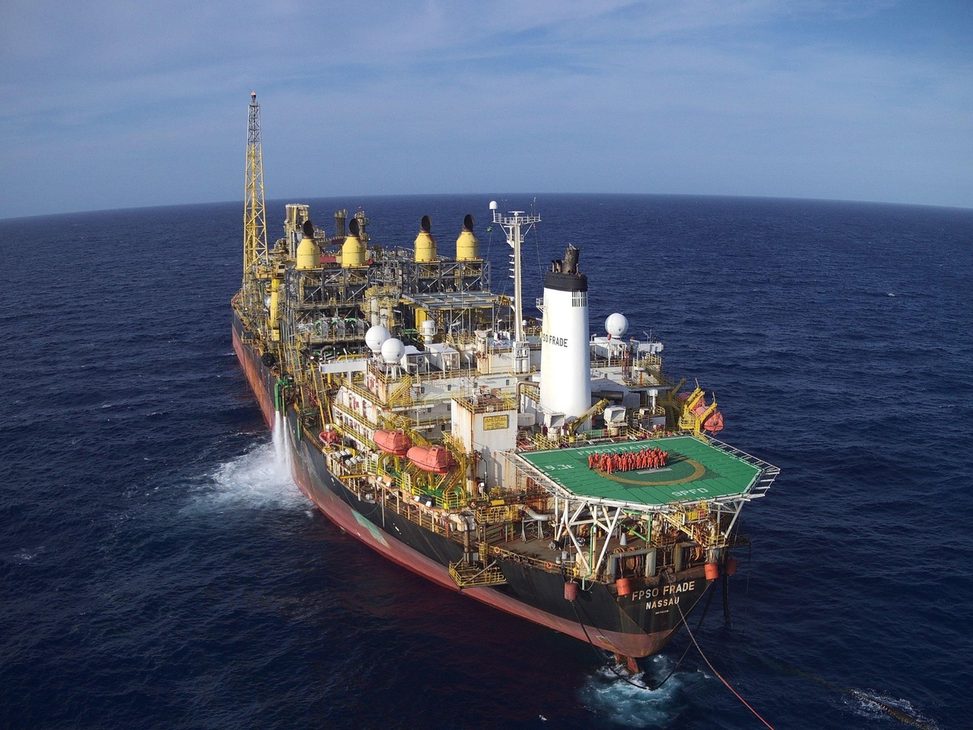
The acquisition of Peregrino and Pitangola follows a strategy that has characterized PRIO’s expansion in Brazil’s oil market: buying developed assets and seeking opportunities to improve their operating performance.
Unlike an exploration campaign, which can consume resources without resulting in a commercial discovery, a producing field has a known production history.
This information helps the company estimate reservoir behavior, identify maintenance needs and assess potential investments in additional oil recovery.
Existing infrastructure can also reduce the need to build new facilities from scratch. However, equipment that has been in operation for many years requires constant monitoring and investment to preserve its integrity.
In November 2025, when it announced the completion of its acquisition of a 40% stake and operatorship of the Peregrino field, PRIO highlighted the potential to reduce costs and capture operating synergies.
At the time, the company estimated that adding the stake would increase its production by approximately 40,000 barrels per day.
The purchase of the remaining 20% complements that move and increases the oil producer’s exposure to the project’s results.
In addition to Peregrino and Pitangola, the company’s portfolio includes other assets in the Campos Basin, such as Frade, Polvo, Tubarão Martelo and Albacora Leste.
The geographic proximity of different operations can facilitate the sharing of specialized services, logistics resources and offshore support facilities.
Equinor could end its stake in Peregrino after more than a decade of production
For Equinor, the sale represents a change in the makeup of its investments in Brazil. Peregrino has played an important role in the Norwegian company’s history since commercial production began in 2011.
During that time, the company invested in developing the reservoir and expanding the offshore infrastructure. The project’s second phase, launched in 2022, expanded the potential for oil recovery.
With the transfer of its remaining stake, Equinor will end its economic rights in the assets covered by the agreement.
The sale, however, does not mean the company is leaving Brazil’s oil and natural gas market.
The company retains other interests in the country, including the Bacalhau and Raia projects, as well as a stake in the Roncador field, operated by Petrobras.
As Equinor explained in its announcement on the transfer of Peregrino’s operations to PRIO, the divestment is part of a reorganization of its international portfolio.
In the oil industry, companies frequently sell stakes in certain ventures to direct resources toward projects they consider better aligned with their investment priorities.
For the buyer, those same assets can offer growth opportunities through a different operating strategy.
Campos Basin continues to attract billion-dollar investments even as pre-salt production expands

The deal between PRIO and Equinor is taking place in a region that helped make Brazil a major offshore oil producer.
For decades, the Campos Basin was home to exploration and production projects that drove the development of subsea engineering, marine logistics and specialized services along the coast of Rio de Janeiro state.
The expansion of pre-salt production changed the distribution of national output, but did not eliminate the economic potential of fields developed earlier.
Revitalization projects, well interventions and facility upgrades can allow certain ventures to keep producing longer than initially expected.
That possibility is especially attractive to companies seeking to grow by acquiring mature fields.
In Peregrino’s case, the large-scale infrastructure and production history give PRIO a basis for evaluating new investments.
Cade’s approval, however, is not an announcement of plans to build platforms, create jobs or hire new offshore services.
Those developments will depend on the company’s operational decisions and future investments.
For now, the concrete development is that PRIO has advanced in a US$3.35 billion deal and is closer to consolidating full economic rights to Peregrino and Pitangola.
As independent oil companies invest billions in already-developed fields, could revitalizing mature assets usher in a new cycle of investment and job opportunities in the Campos Basin?