





 Portuguese
  English
  Spanish
  3 min of reading
  0 comments


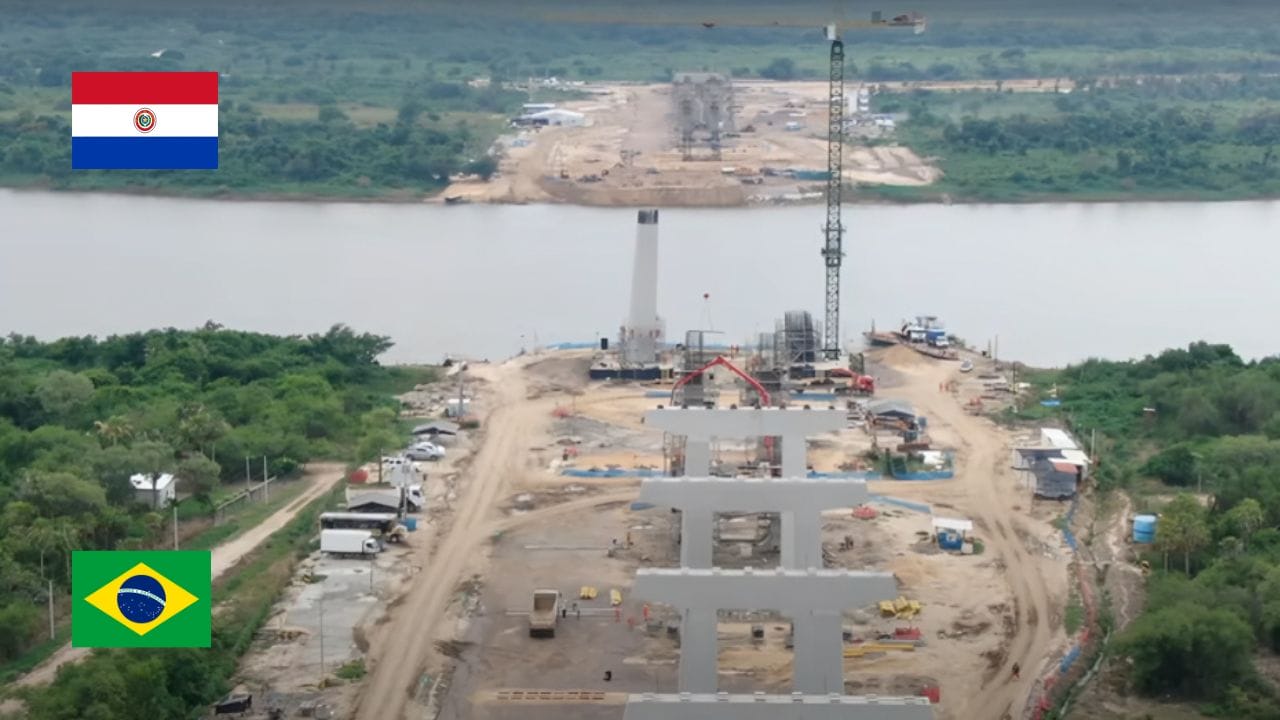
The Construction of the Bioceanic Bridge, a Landmark in South American Infrastructure Connecting Brazil and Paraguay, Reached a New Level with the Assembly of the Deck. This Work, Essential for the Bioceanic Route, Promises to Strengthen Trade Relations and Regional Interconnection.
With 38% of the execution already completed, the construction of the Bioceanic Bridge is making rapid progress. This crucial project not only connects Brazil and Paraguay, but is also an integral part of the Bioceanic Route, a vital trade corridor involving Brazil, Argentina, Paraguay, and Chile. The bridge will facilitate transportation and trade, especially for the central-west region of Brazil, and provide Paraguay with a more direct access to Asian markets.
The Bioceanic Bridge has a total length of 1,294 meters, with a cable-stayed section of 630 meters over the Paraguay River. This segment includes a free span of 350 meters, ensuring the continuity of navigation on the river. The project is similar to the Integration Bridge, another important connection between Brazil and Paraguay, and uses similar construction methods with precast components and post-tensioned beams.
Construction and Financing


The consortium responsible for the project is PYBRA, formed by the companies Tecnoedil, Paulitec, and Construtora Cidade. The project is estimated to cost 85 million dollars, financed by the Paraguayan side of Itaipu Binacional as a counterparty to the Brazilian financing of the Integration Bridge.
-
With 74% of companies facing difficulties in hiring, technicians and engineers in renewable energy are becoming scarce in Brazil and are essential to support the expansion of solar, wind, and green hydrogen projects.

-
The lack of welders, electricians, and operators becomes a structural threat in 2025, with the construction industry and manufacturing already suffering from delays, cost pressures, and labor shortages in Brazil.
-
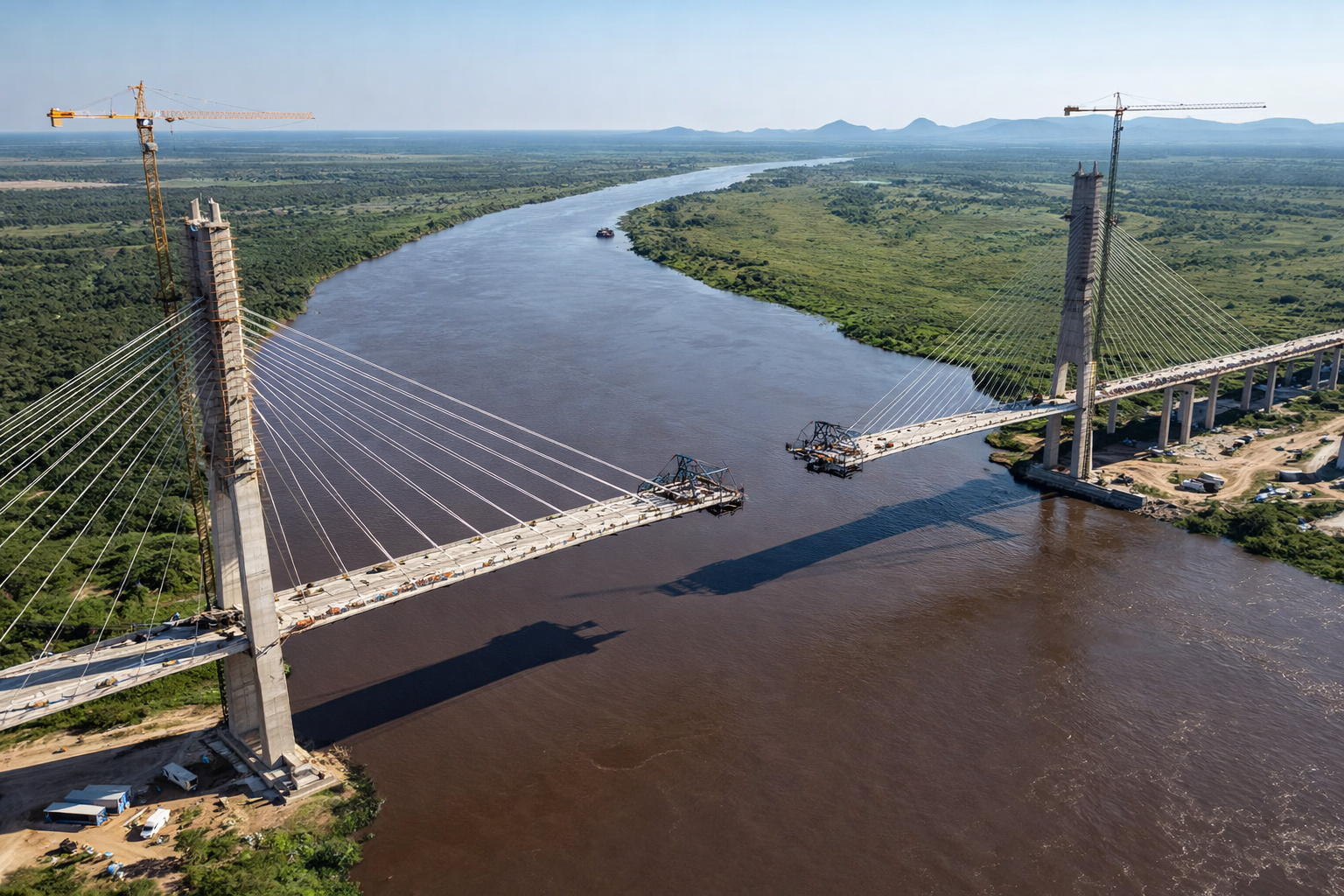
Brazil and Paraguay are just 46 meters away from a historic union on the bioceanic bridge that promises to revolutionize trade between the Atlantic and the Pacific.
-
With 55 km over the sea, a cost of US$ 20 billion, and enough steel to build 60 Eiffel Towers, China’s largest project has connected Hong Kong, Zhuhai, and Macau in a colossal bridge that defies the logic of engineering.

The assembly of the precast slabs for the deck has already begun in the first two spans, and the construction of the longitudinal beams continues in the following spans. On the Brazilian side, in Porto Murtinho, Mato Grosso do Sul, three pillars are already completed with their support structures. The forecast is that the work will be completed by the end of 2025.
Regional Impact
This bridge is more than a physical connection between two countries; it symbolizes the economic and infrastructural integration of South America. By facilitating transportation and trade between the Mercosur countries and beyond, the Bioceanic Bridge promises to boost economic development and regional cooperation.
The construction of the Bioceanic Bridge is an impressive example of engineering and international cooperation. With its completion, it is expected to play a crucial role in transforming the commercial and logistical landscape of South America, directly benefiting Brazil, Paraguay, and neighboring countries.
Bioceanic Railway
In addition to the Bioceanic Bridge, there is also the project for the construction of the Bioceanic Railway, another integration line to facilitate trade and logistics among South American countries. This project will cost around 30 million dollars, nearly 50 million dollars less than the highway with the same purpose. Of course, there are new possibilities and other objectives; one project does not negate the other.









Seja o primeiro a reagir!