





 Portuguese
  English
  Spanish
 3 min of reading
  21 comments


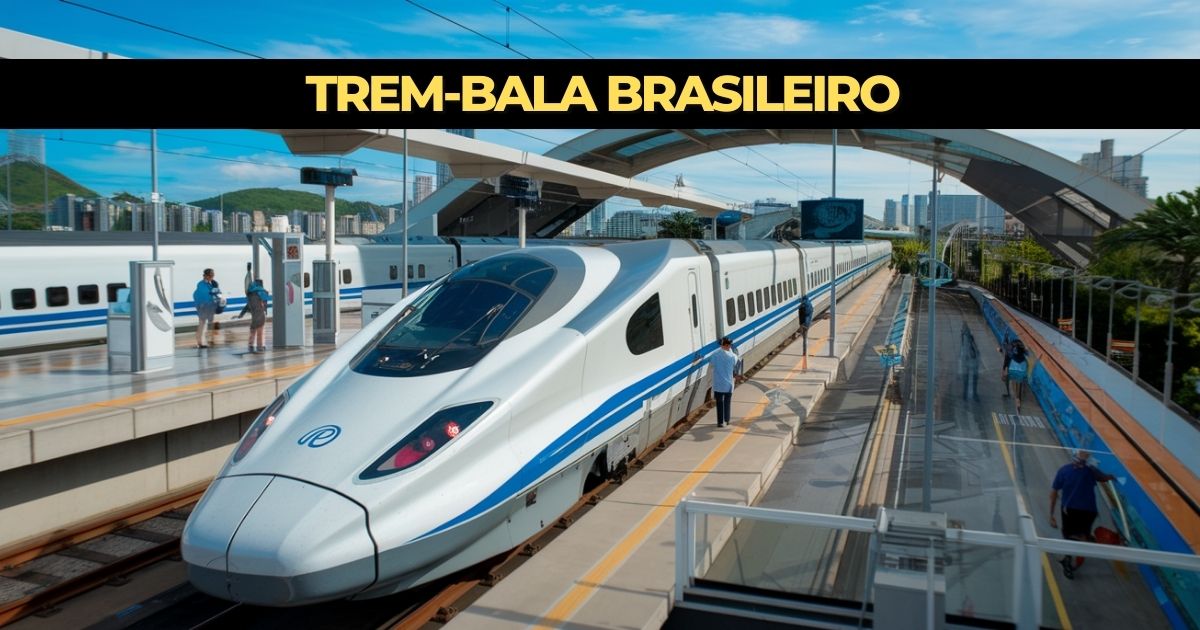


The Bullet Train Between Rio and São Paulo May Come to Fruition! With a Cost of R$ 50 Billion, the Project Promises to Reduce Travel Time to 1h45 and Generate 10 Thousand Jobs. Will It Be the Revolution That Transportation in Brazil So Needs or Another Unattainable Dream?
Brazil is on the verge of taking a historic step in infrastructure.
A high-speed project that promises to link the country’s largest metropolises, Rio de Janeiro and São Paulo, is reigniting hopes and doubts.
With astronomical costs and equally grand benefits, the long-awaited bullet train is closer to becoming a reality.
-
“No one will make us change the Pix,” says Lula after the US report.

-
Lula responds directly to Trump and says that Pix is from Brazil and will not change under pressure from anyone, after a report from the United States pointed out the Brazilian payment system as an American trade barrier.

-
Amazon has just announced a new fee on all deliveries, and your online purchases will become more expensive starting April 17, including for those buying from the United States here in Brazil.

-
He sold his share for R$ 4 thousand, saw the company become a giant worth R$ 19 trillion, and missed the opportunity of a lifetime.


The Ambition Behind the Bullet Train
Announced with the goal of reducing travel time between the capitals to just 1h45, the bullet train positions itself as a game-changer in national transportation.
The investment required to undertake this project is colossal: R$ 50 billion.
The expectation is that around 10 thousand direct and indirect jobs will be created during construction, a significant impact for the Brazilian economy.
Since February 2023, the project led by the company TAV Brasil has received federal authorization to move forward, and now obtaining environmental licenses is the main challenge.
If everything goes according to schedule, construction should begin in 2027, with completion expected by 2032.
Revised Route and Strategic Points
The original plan, conceived in 2010, has undergone some significant changes.
The route of 417 km will include stops in strategic cities such as São José dos Campos, Volta Redonda, as well as new points in the North Zone of São Paulo and the center of Rio.
This measure aims to increase accessibility and positive impact in more regions along the route.
The Complexity of the Route
Although most of the line is planned to be built on the surface, the project includes technical challenges, such as the need for three major tunnels in densely urbanized areas.
The largest of them, at 20 km, will be in São Paulo.
In Guarulhos and Arujá, the tunnels will be 8.5 km and 3.5 km long, respectively, minimizing the impacts in the residential areas of these regions.
Integration with the North Ring Road
According to Bernardo Figueiredo, CEO of TAV Brasil, the train could share part of the infrastructure with the North Ring Road in São Paulo.
The decision still depends on negotiations with the state government.
This integration aims to optimize the route, as well as reduce costs and urban impacts.
In Rio de Janeiro, the Barão de Mauá Station, better known as Leopoldina, is expected to be the final stop of the bullet train, connecting downtown Rio to the rest of the line.
Viability and Economic Challenges
Despite all the promises, the project faces significant skepticism.
The high implementation cost and technical complexity raise doubts about its viability.
Experts point out that execution could be even more expensive than estimated.
On the other hand, the potential benefits are hard to ignore.
With the bullet train, travel between Rio and São Paulo could be done in less than two hours, an unimaginable time for road trips, which currently take around six hours.
Additionally, the impact on tourism, business, and mobility could boost the economy of both cities and influence similar projects in other regions of Brazil.
The Future of Transportation in Brazil
If the bullet train is completed as planned, Brazil will join a select group of countries with high-speed lines.
In addition to putting the country in the global spotlight, the project could serve as a model for the modernization of national railway infrastructure.
But will we finally see this billion-dollar project come to fruition?
Between optimism and skepticism, the population eagerly awaits the realization of this dream that has lasted for decades.
Do you believe the bullet train will become a reality in Brazil or will it be another unfulfilled promise? Comment below!








PROJETO TREM BALA.
URUGUAIANA X FLORIPA VIA LITORAL.
Será que o trem da copa agora sai?
O governo federal deve instalar um trem ligando todas as capitais, do nordeste ao sul do pais, visto que a maior parte da população vive na faixa litorânea