





 Portuguese
  English
  Spanish
  7 min of reading
  0 comments


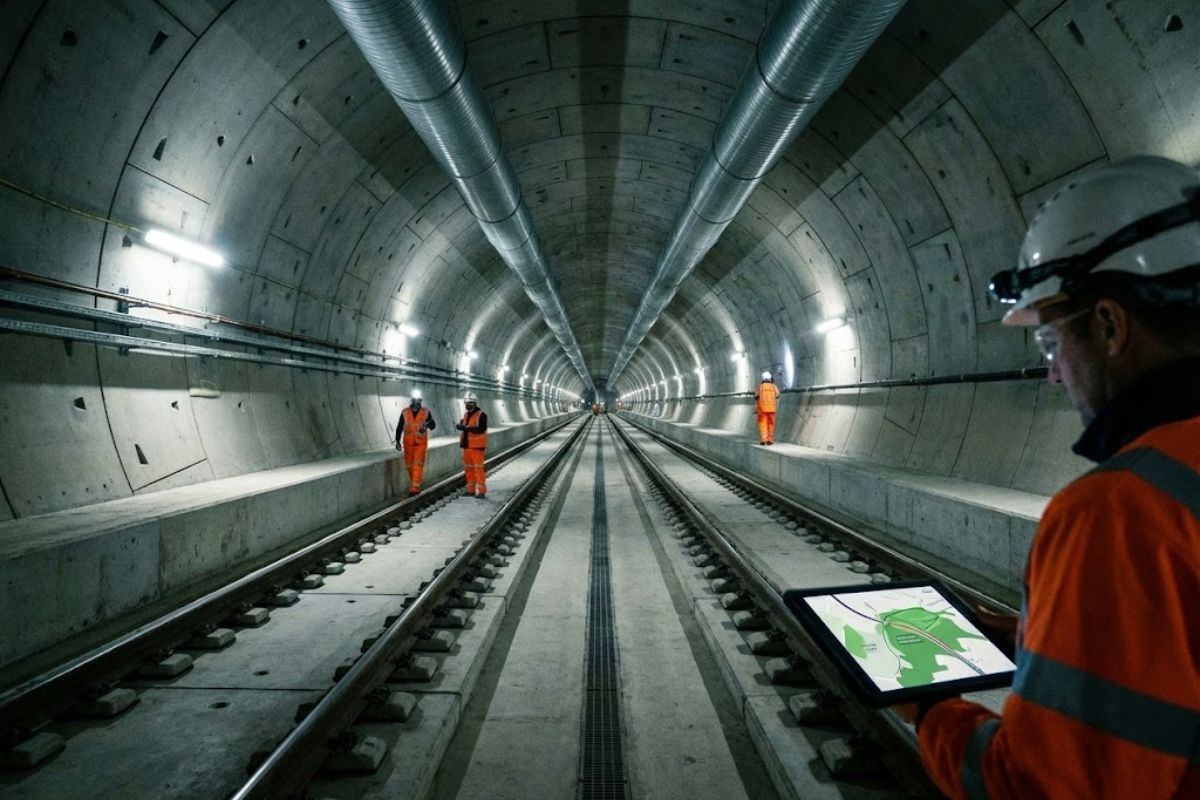
At 70 Meters Deep, Two Giant Tunnels Completed Under the Protected Area of the Chilterns Expose the Contrast of HS2: Praised Civil Works, Discreet Ventilation Shafts, Sonic Boom Portals, and Production of 112,000 Segments, While the Railway Remains Without Tracks, Revised Costs, and an Uncertain Schedule in 2026 Still.
The HS2 project, labeled by many as a billion-dollar failure in the UK, contains a section that deviates from the script of delays and improvisation: 16 km giant tunnels under the rural Chilterns, built to avoid an area of exceptional natural beauty and finished with a shiny concrete appearance.
The contradiction is straightforward: the giant tunnels are ready, but the railway that was supposed to cross them still needs to go through long stages of systems, tracks, electrical network and tests, in a program that continues to be reevaluated, with revised budgets and delivery far from the original plan.
What Is Ready Under the Chilterns and Why This Became a “Buried Treasure”

The completed underground works in the Chilterns consist of two giant tunnels, with 16 kilometers, situated about 70 meters deep, accessed by ventilation shafts that, on the surface, have been disguised in the rural landscape. The logic of the layout was to avoid direct impact on a protected area, reducing the disturbance that HS2 would cause above ground.
-
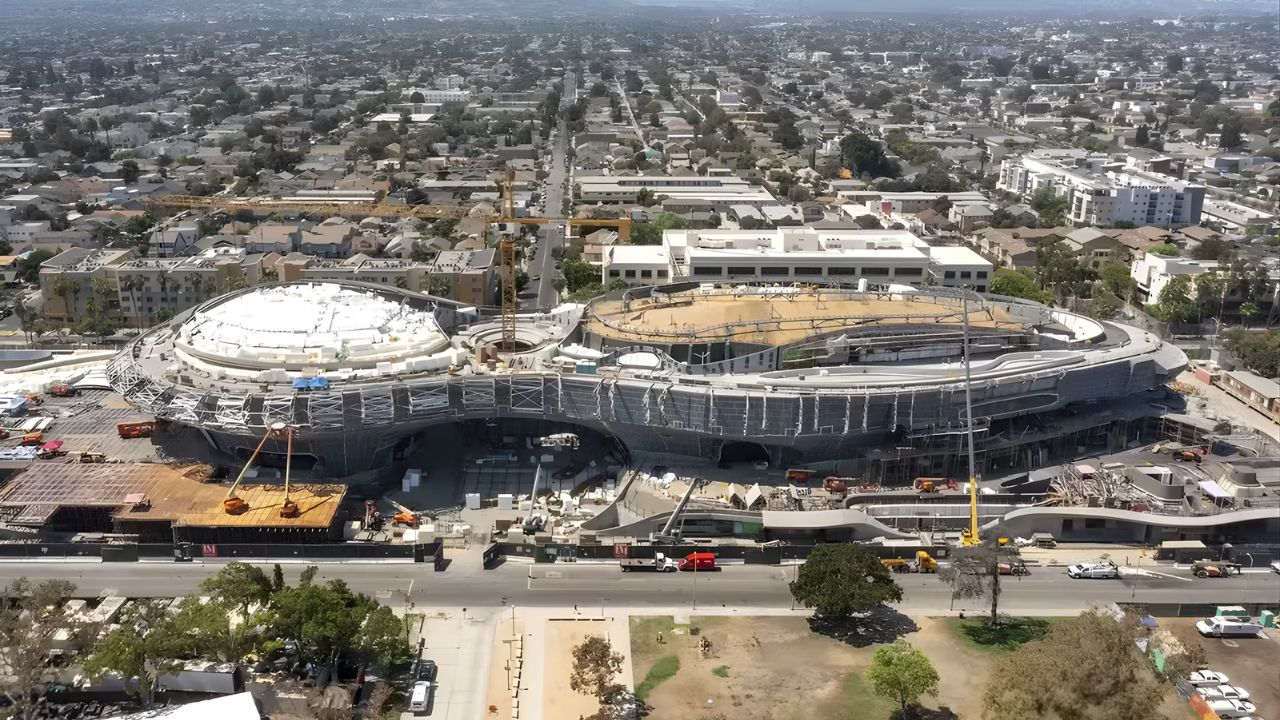
Created by George Lucas with over $1 billion, a futuristic museum in the shape of a spaceship with 1,500 curved panels is about to open in Los Angeles and will house one of the largest private collections of narrative art in the world.
-
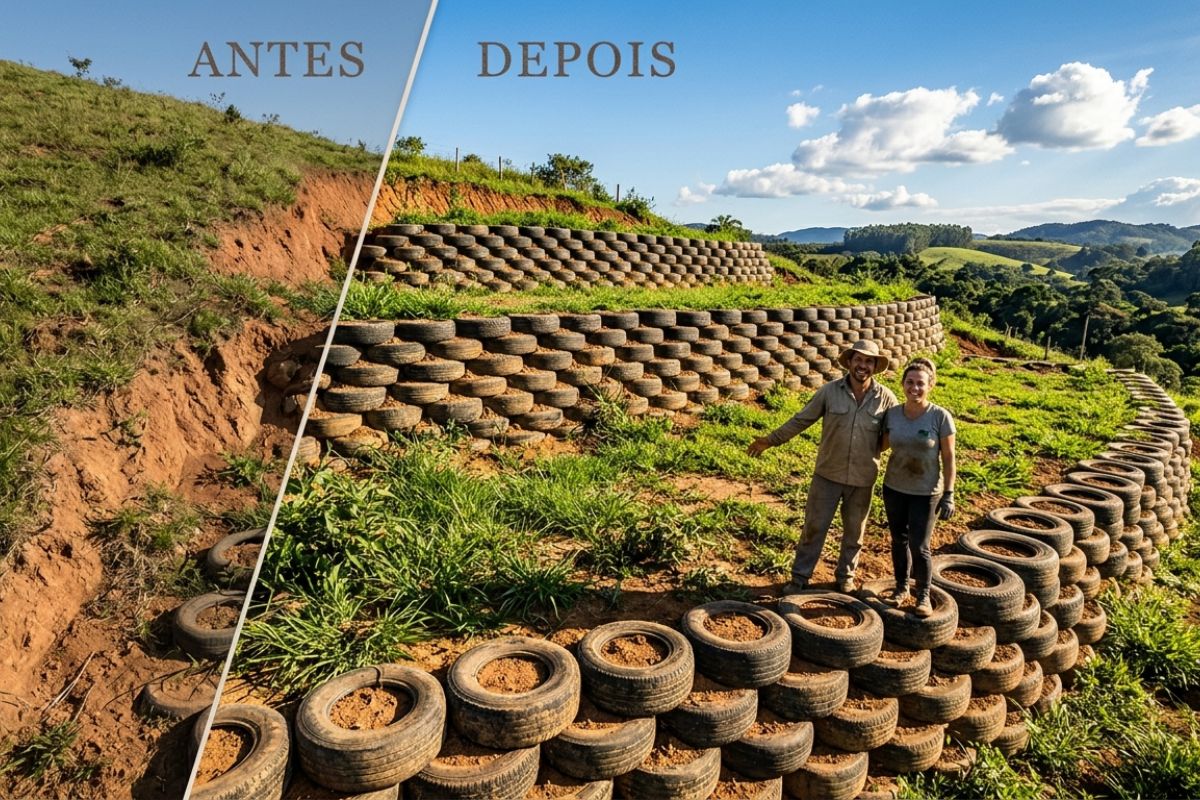
Couple shows how they built a retaining wall on their property using 400 old tires: sloped land turned into plateaus, tires are aligned, filled, and compacted with layers of soil, with grass helping in support and at almost zero cost.
-
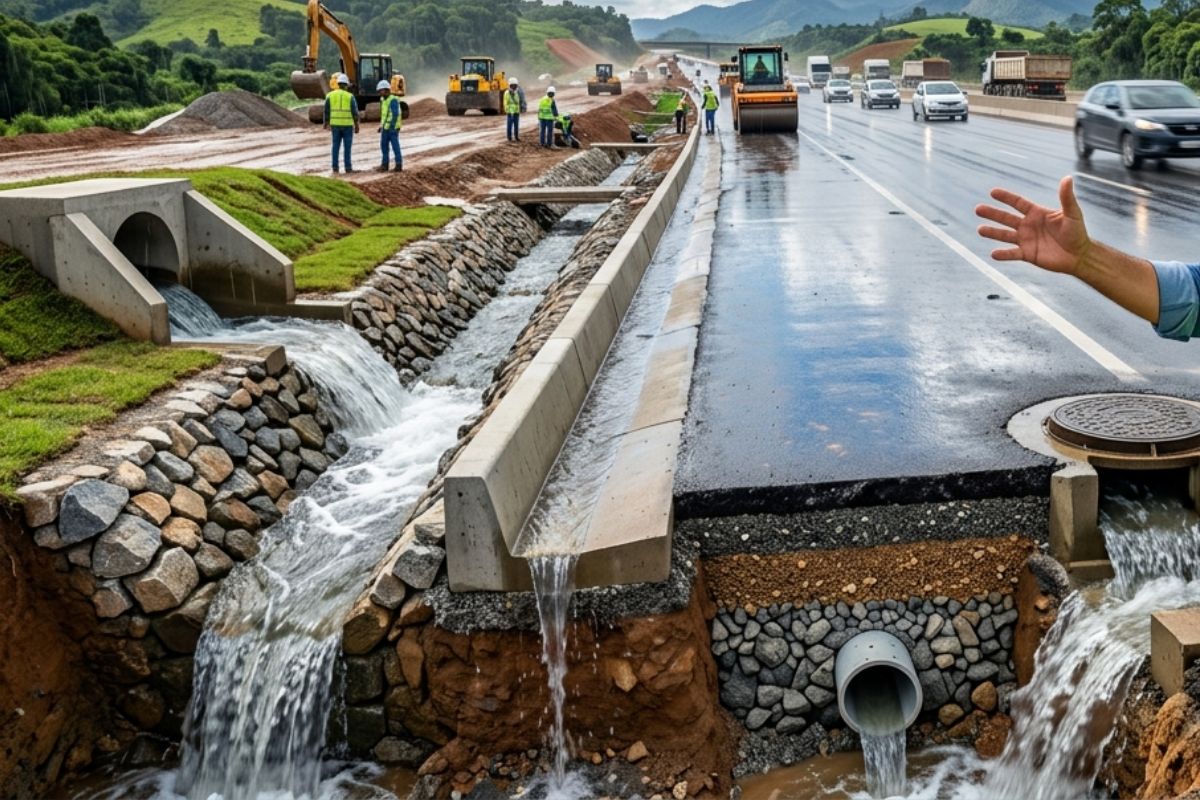
Engineer explains drainage during the rainy season: the difference between surface water and deep water, ditches, gutters, and water outlets on the road, as well as drains and drainage mattresses, to prevent erosion, aquaplaning, and flooding at the construction site today.
-
With 55 floors, 177 meters in height, a 15-meter walkway between the twin towers, ventilated facade, and 6,300 m² of leisure space, Ápice Towers already has one tower completed and another nearly at the top.


The practical result is a section described internally as what the entire HS2 “should be” at this point: impeccable, fully constructed, and waiting for the passage of tracks. This character of a “ready piece” gained relevance precisely because it contrasts with the public image of abandoned construction sites, urban scars, and deserted routes in other regions.
The central excavation phase began with accelerated pace at the beginning of the pandemic and involved a large industrial structure surrounding the section. The contractor responsible, Align JV, a joint venture formed by Bouygues, McAlpine, and VolkerFitzpatrick, gathered about 1,800 employees at its peak.
The underground operation was supported by two tunnel boring machines brought from Germany, working 24 hours a day, seven days a week, with teams on 12-hour shifts. The cited advance and excavation period for the main cycle was 33 months, counting from the beginning of excavations in 2021.
This rhythm did not mean merely digging. The project required massive manufacturing and installation of lining: a concrete factory was set up on site to first meet the viaduct of the Colne Valley and then for the production of the 112,000 tunnel segments necessary for the internal lining, an essential step for the “shiny” appearance and stability of the set.
The Colne Valley Viaduct and the Showcase of a “Well Executed” Section

The complex of works was not restricted to the giant tunnels. It also served as the basis for the construction of the Colne Valley Viaduct, a railway bridge of 3.5 kilometers that crosses an area of nearby reservoirs and has become another focal point for those looking to understand what has advanced in HS2.
This combination, extensive viaduct above ground and giant tunnels below, helps explain why the Chilterns section has been used as an example of technical capability, even when the larger program is criticized for costs, a succession of political decisions, and schedules that slip year after year.
Even in a technically well-rated section, the local impact was treated as a central problem, as the region is sensitive and politically contested. Among the measures listed in execution are the rerouting of construction traffic and the installation of a leachate treatment station in the worksite, associated with the millions of tons of excavated earth.
There was also repurposing of material: the chalk removed from the excavation was separated and reused to landscape the area, with the intention of creating more calcareous pastures, described as a rare and declining habitat, expanded by the intervention. The practical reading is that to build giant tunnels under a protected area, the works had to sell a narrative of mitigation that was visible to those living in the surrounding area.
“Invisible” Ventilation Shafts and Hidden Emergency Infrastructure

The ventilation shafts needed to fulfill critical functions: ventilation, emergency access, and maintenance. Therefore, they had to be large, but at the same time could not impose visually on the rural landscape. The adopted solution was architectural and operational.
At ground level, the machine houses near the village of Chalfont St Peter were designed to look like small agricultural buildings, while below they hide a space described as a cavernous basement, capable of housing giant fans and machinery that, in another design, could have emerged as tall structures above ground.
The logic was also logistical: the more you excavate, the more material is removed, and this translates into more trucks on the roads. Reducing the volume of the shafts was not just aesthetic; it was a strategy to reduce the construction site’s pressure on local roads and on the region’s political tolerance for the project.
One of the most specific technical details of the section is in the portals. The tunnel entrance received a funnel-shaped opening designed to block the sonic boom that high-speed trains could produce when entering the tunnel at 320 km/h.
The technical comparison made in HS2 engineering involves the Japanese bullet trains, which use a tapered nose of 18 meters to reduce this effect when exiting tunnels. In the UK, this solution was considered unfeasible for two objective reasons: collision with the old infrastructure of Network Rail and operational cost capacity, because a longer nose would consume space equivalent to about 40 seats.
The answer was experimental and laboratory-based: tests to understand micro pressure waves and, ultimately, the construction of concrete funnels perforated with a length of 200 meters, designed to deter the explosion associated with this air behavior when a train enters at high speed.
What Still Remains Before Any Train Crosses the Giant Tunnels
Even with the tunnel construction phase described as completed, the section is not yet “ready railway”. After the concrete and the shafts, come technical layers: mechanical, electrical, and hydraulic equipment. Only then do the rail systems come in, including tracks and the overhead electrical network to power the trains.
Subsequently, the plan foresees years of testing. And there is a calendar factor that weighs heavily: the projected journey of crossing the giant tunnels in about three minutes, from one portal to the other, may take another decade to begin, precisely because the deployment sequence has been scrambled by reviews and changes in the scope of HS2.
The underground showcase of the giant tunnels does not negate HS2’s macro problem: cost and overall execution. The original budget cited was £32.7 billion, a value that at that time included lines to Leeds and Manchester. The reevaluation is that this number should be revised to over £80 billion at current prices.
At the same time, the execution of the project has been crossed by political changes, route revisions, and cancellations. The Phase 2 in Manchester was canceled, and even the idea of a connection from Birmingham to Manchester appears as an “intention” for connection with the Northern Powerhouse Rail, but explicitly outside the formal scope of HS2.
This sequence explains why the giant tunnels, although technically celebrated, have also become part of the argument for waste: an extremely costly underground work ready, while the rest of the system does not keep pace in the same rhythm or clarity.
Who Is in Charge in 2026 and What Has Changed in Management
The executive leadership also entered an “institutional surgery” mode. CEO Mark Wild, in office since December 2024, declared that the overall execution had been unacceptable and led a broad review to try to halt the cycle of cost increases and delays.
Among the changes, the leadership team has been reconfigured and former London transport commissioner Mike Brown was hired as chairman. Meanwhile, hundreds of corporate positions were eliminated in favor of operational roles directly linked to project execution. Another ongoing front is the commercial renegotiation with the supply chain, seeking contracts that do not push excess costs back onto the taxpayer.
Still, the calendar remains sensitive. The initial assessment sent to the transport secretary in March indicated that the expectation of HS2 operating by 2033 was unattainable. Since then, the declared work is to decide what can be done, when, and at what cost, with an overall replanning that, in the political rhythm, also faces pressure.
In a project marked by criticism, the giant tunnels of the Chilterns serve as physical evidence that, with a clear mission, defined scope, and continuous execution, large works can be delivered with finishing and technical predictability. The irony is that this appears “out of sight”, buried beneath disguised ventilation and rural landscape, while public debate centers on the more visible parts of HS2.
The section alone does not resolve HS2, but changes the question: if part of the infrastructure is already ready and technically admirable, the risk shifts to the political and governance realm, with decisions on sequencing, budget, and final integration determining whether this engineering will remain a subterranean monument or as a living corridor of a high-speed railway.
Have you ever seen a public work become a symbol of waste even when part of it is technically flawless?








-

-

3 pessoas reagiram a isso.