





 Portuguese
  English
  Spanish
  4 min of reading
  0 comments


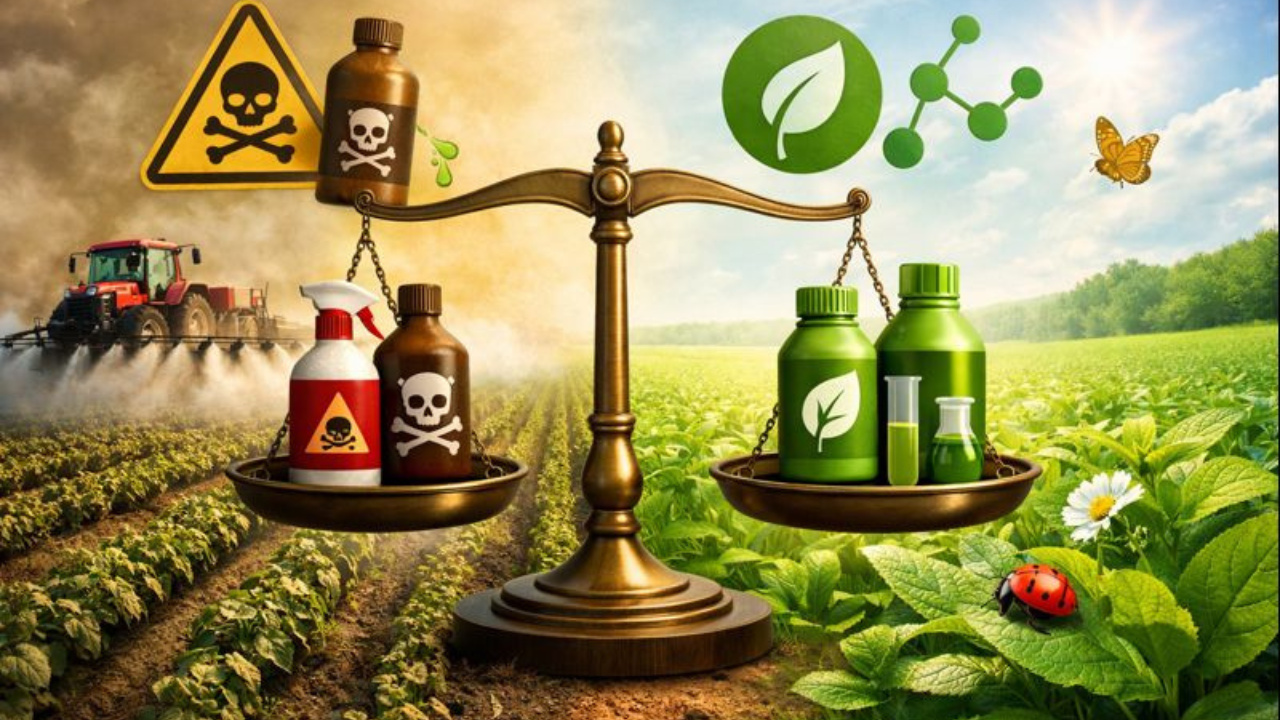
Pest Control Reduction Gains Momentum with Pronara, Which Aims to Withdraw Ultra-Hazardous Chemicals Even After a Record in 2025.
The reduction of pesticides has become the center of the national debate after the federal government confirmed it intends to remove ultra-hazardous chemicals from the market.
The proposal was presented in 2025 by Paulo Teixeira, Minister of Agrarian Development, in the context of the advancement of Pronara.
The initiative takes place in Brazil, involves different ministries, and seeks to replace highly toxic products with biological pesticides or less aggressive chemical alternatives, aiming to protect human health and the environment.
-
6 sources of free fertilizer that you are throwing away every day and can transform your garden without spending anything.
-
With a water crisis on the radar, Sabesp invests in reclaimed water for data centers and transforms sewage treatment into a solution that saves millions of liters and protects public supply.

-
Foresea achieves 100% offshore waste reuse in 2025, eliminates landfill disposal, and consolidates sustainable strategy with 1,500 tons recycled.
-
With earth, bamboo, straw, and lime mortar, a specialist builds a house for just over $460 and draws attention for its cost being much lower than traditional construction.

At the same time, the country faces a paradox. In 2025, the Ministry of Agriculture authorized the use of 912 new agricultural pesticides, both chemical and biological, a number that represents a historical record.
This contradiction exposes the challenge of environmental regulation in a sector pressured by production and sanitary demands.
Pronara Establishes Substitution Criteria for Pesticide Reduction
According to Paulo Teixeira, the agreement that underpins Pronara states that any pesticide that has a biological equivalent with the same effect must be prohibited.
The same logic applies to more toxic chemical products when there are less harmful alternatives.
“The basis of the agreement for the creation of Pronara was that any pesticide that has a similar biological counterpart with the same effect is prohibited.
Any pesticide that has a less harmful chemical counterpart is prohibited,” Teixeira stated.
This strategy, according to the government, seeks to accelerate the reduction of pesticides without compromising agricultural productivity.
Still, the Ministry of Agriculture has not officially commented on the agreement.
List of Agricultural Pesticides May Be Discontinued
The minister stated that there is already a preliminary list of agricultural pesticides that may be withdrawn from the market.
After this stage, the plan will be submitted for validation by President Luiz Inácio Lula da Silva.
According to Teixeira, the process will include a counterargument and extensive technical foundation to ensure legal security.
Industry Reacts to the Pesticide Reduction Proposal
Thus, the initiative faces strong resistance from the productive sector. Croplife Brazil, which represents the agrochemical industry, argues that prohibition by similarity may lead to adverse effects.
“Measures based solely on substitution or automatic exclusion without individual risk assessment, as prescribed by Pronara, have low effectiveness,” the entity stated.
According to the association, the mere existence of biological pesticides or alternative chemicals does not guarantee the same agronomic efficacy, economic viability, or real risk reduction in complex tropical systems.
Environmental Regulation and Public Health at the Center of Pronara
Thus, environmental regulation is one of the pillars of Pronara.
In a statement, the General Secretariat of the Presidency highlighted that the program aims to reduce the use of pesticides and expand sustainable alternatives, such as agroecology and organic production.
“The goal is to increase the production of healthy food, reduce costs for the Unified Health System (SUS), and protect biodiversity,” the agency reported.
Official data indicates that around 40% of products registered in 2025 have a low probability of causing acute harm to human health, according to Anvisa.
Still, Ibama classified seven new active ingredients as “very dangerous” to the environment.
Biological Pesticides Gain Ground in International Debate
Paulo Teixeira believes there is a “scientific window of opportunity” for investments in biological pesticides, also driven by the agreement between Mercosur and the European Union.
During negotiations, the European Commission made it clear that pesticides banned in the European bloc cannot return to the market through imported products, which pressures Brazil to accelerate the reduction of pesticides.
Next Steps of Pronara and Criticism from Civil Society
The General Coordinator of Pesticides at the Ministry of Agriculture, José Victor Torres, stated that the priority will be to integrate registration systems and expand the release of bioinputs.
For Alan Tygel, from the Permanent Campaign Against Pesticides, the political influence of the sector remains an obstacle.
He advocates that 2026 marks an effective turning point towards reducing pesticides and a healthier agriculture.
Contacted, Greenpeace, WWF Brazil, and the Socioenvironmental Institute did not comment on the topic.
See more at: Government Plan Aims to Withdraw ‘Ultra-Hazardous’ Pesticides from the Market










Seja o primeiro a reagir!