





 Portuguese
  English
  Spanish
  4 min of reading
  0 comments


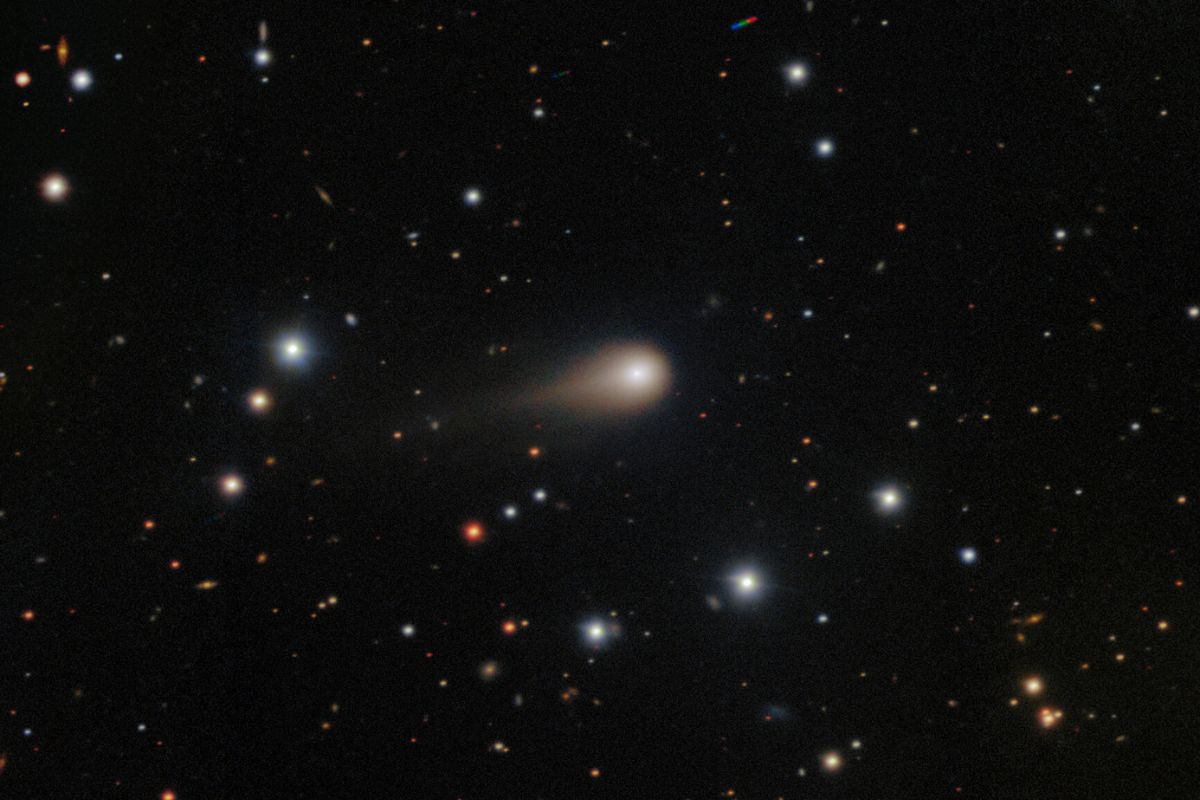
Rare Phenomenon Will Be Accompanied by Telescopes from Around the World; Comet 3I/ATLAS Approaches the Sun at Over 221,000 Km/h and Promises Unprecedented Images
NASA has confirmed that the passage of the comet 3I/ATLAS will be broadcast live through the Hubble and James Webb telescopes, in one of the most anticipated astronomical events of 2025. The broadcast will also feature collaboration from international observatories, allowing the public to follow, in real-time, the trajectory of the mysterious celestial body passing through the Solar System.
The interest in the phenomenon has increased after scientists detected that the comet was emitting an unusual substance and changing color, sparking hypotheses about its interstellar origin. Now, with the object reaching its closest point to the Sun, astronomers worldwide are mobilizing to observe every detail of this unprecedented approach.
The Trajectory and Mystery of Comet 3I/ATLAS
New images of interstellar Comet 3I/ATLAS! ☄️In these new images taken from @Geminiobs South in Chile, you can see the growing tail of the comet and the glowing coma.
https://t.co/BOWtHSSf3SARTICLE CONTINUES BELOWSee also
A promise made to their father led three men to unearth a forgotten house that had been swallowed by time for over 70 years, in a story of memory, abandonment, and reconstruction that seems straight out of a movie.

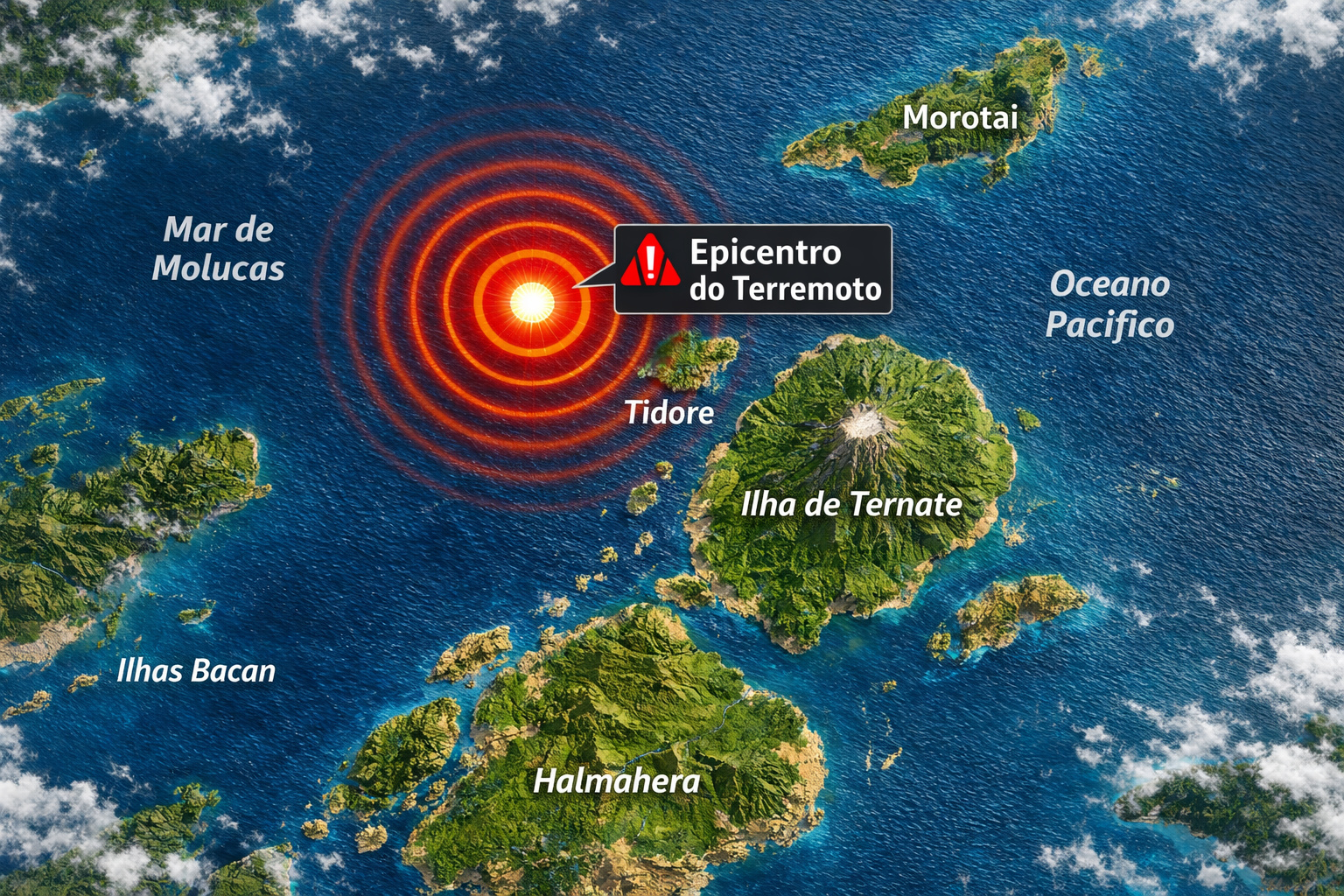
A strong earthquake in Indonesia affects houses and schools, causes panic, triggers a tsunami alert, and records a rise in sea level of up to 30 centimeters in some areas.

The Argentine government celebrates the lowest poverty rate in 7 years, but experts warn that the methodology has changed, real wages have fallen, unemployment has risen, and the number of people on the streets of Buenos Aires has increased by 57% since Milei took office.

7.8 magnitude earthquake in Indonesia frightens the population, triggers tsunami alert, and hits an island with over 200,000 inhabitants this Thursday.
Credit: International Gemini Observatory/NOIRLab/NSF/AURA/Shadow the Scientist pic.twitter.com/uroQnEWQuL
— NOIRLab (@NOIRLabAstro) September 4, 2025
Discovered in July by the ATLAS telescope in Chile, the comet 3I/ATLAS quickly stood out for its unusual characteristics.

It is only the third interstellar object ever recorded by humanity, after 1I/ʻOumuamua in 2017 and 2I/Borisov in 2019.
Since then, its passage has been closely monitored by scientific teams from various countries.
The celestial body is moving at about 221,000 kilometers per hour, coming from the direction of the constellation Sagittarius, which houses the center of the Milky Way.
NASA confirmed that the closest approach of the comet will occur around 11:33 UTC, when it may be observed under ideal conditions by telescopes equipped with apertures larger than 7.6 centimeters.
In other words, the closest point of comet 3I/ATLAS to the Sun will occur at 8:33 AM on October 30, 2025, in Brazil’s official time.
Theories and Real-Time Observations
Enthusiasm surrounding the comet 3I/ATLAS has also been fueled by statements from astrophysicist Avi Loeb from Harvard, who suggested the possibility of it being an artificial probe.
Although the hypothesis was dismissed by NASA, which identified the presence of a nucleus of ice and a coma, confirming its cometary nature, the speculation has drawn even more attention to the event.
To ensure detailed observation, the U.S. space agency will coordinate simultaneous broadcasts with the Virtual Telescope Project and the National Astronomical Observatory of San Pedro Mártir in Mexico.
The public will be able to follow live the evolution of the brightness and emissions of the comet as it approaches the Sun.
Where and How to Watch NASA’s Broadcast
Live broadcasts will be available on NASA’s official channels, as well as on partner scientific outreach platforms.
Coverage is expected to begin in the early hours of October 30, when the comet reaches its maximum brightness.
Observers in Colombia, Venezuela, and Mexico will have a privileged view, especially between 6:33 and 0:33 (local time).
Astronomers recommend using amateur telescopes with a minimum aperture of 7.6 centimeters to observe the comet directly.
Those who prefer to watch from home can attend the official broadcast, which will include technical commentary, real-time graphics, and analyses from the involved teams.
A Cosmic Spectacle for All Humanity
Even if the brightness of the comet 3I/ATLAS is not visible to the naked eye, the expectation is that the images captured by space telescopes will reveal unprecedented details about its composition and behavior.
The event is considered a unique opportunity for modern astronomy, as each interstellar passage offers new clues about the origin and evolution of celestial bodies that cross the galaxy.
The global broadcast by NASA symbolizes not only a scientific achievement but also a rare chance to connect millions of people to the direct observation of the cosmos, a powerful reminder that human curiosity continues to be the driving force of space exploration.
Will you watch the live broadcast of comet 3I/ATLAS? Do you believe that events like this help to spark more interest in science and space? Share your opinion in the comments.










-

-

-

-

-

14 pessoas reagiram a isso.