





 Portuguese
  English
  Spanish
  4 min of reading
  7 comments


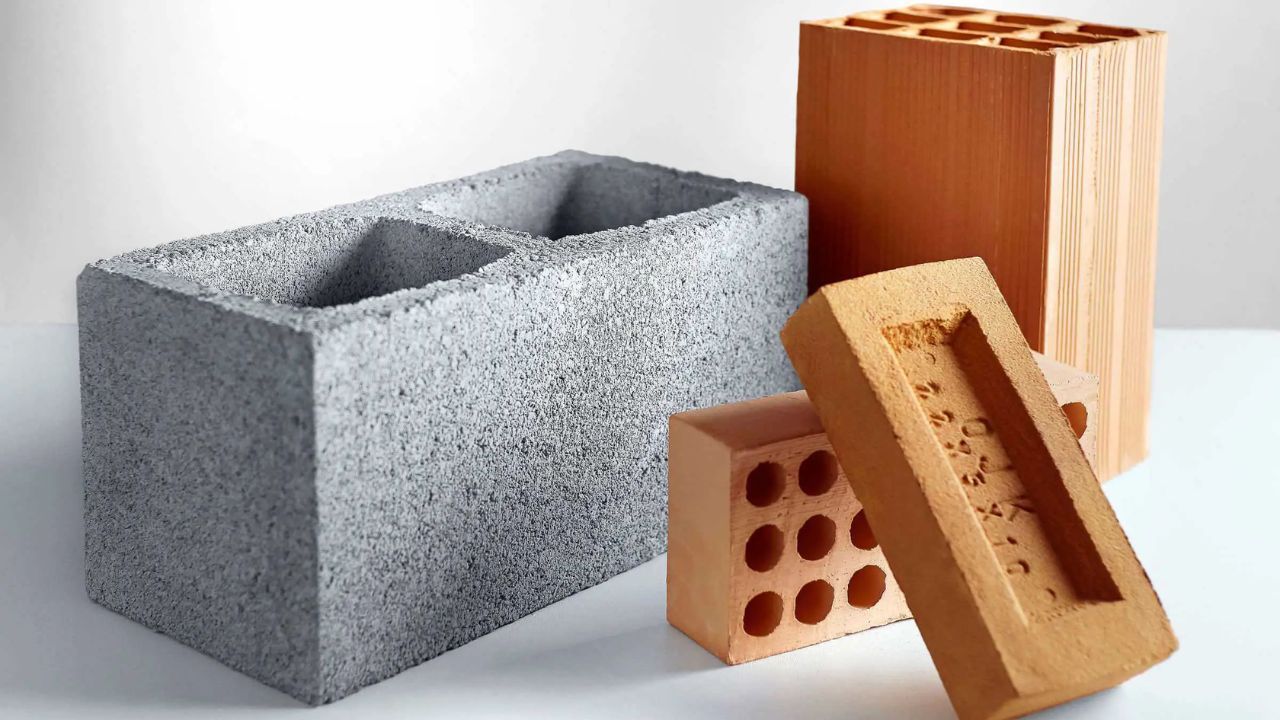


Technical Analysis Reveals That Unit Price Is Misleading: Discover Which Material Offers The Lowest Cost Per m² And Can Generate Savings Of Up To 59% In Mortar Consumption.
When it comes to raising walls, the question between Concrete Block or Clay Brick is a constant on Brazilian construction sites. At first glance, the decision seems obvious: at the materials counter, the structural concrete block (14x19x39) costs significantly more than a ceramic sealing block. However, technical data indicates that focusing solely on the unit price is the first budgeting mistake that obscures the true economy of a project.
According to Blok Source of Materials and Productivity Comparison, the correct metric for engineering is not the cost of the piece, but the Total Cost of Ownership (TCO) per square meter of finished wall. The analysis shows that the savings generated by the concrete block are systemic: they drastically influence the consumption of mortar, labor speed, and primarily eliminate costly stages when used in structural masonry.
The Modulation Factor: Fewer Pieces, Greater Yield
The significant economic difference begins with geometry. While the clay brick requires between 24 to 30 pieces to raise a single square meter of wall (depending on whether it is the 9-hole model or the baiano), the concrete block, due to its macro-dimensions (14x19x39 cm), needs only 12 to 12.5 pieces to cover the same area.
-
Congonhas receives the monorail promised for the 2014 World Cup after more than a decade of delays and becomes the first airport in Brazil with integrated subway.

-
Goodbye, concrete: a new trend in civil construction reduces the weight of the structure by up to 30%, accelerates projects by up to 40%, cuts costs on steel and labor, and improves thermal insulation with EPS.
-
Russian engineers create an innovative propeller blade for aircraft that could completely change the way airplanes and helicopters operate.

-
Couple finishes building PVC chalet on the beach on the last day, with air conditioning and curtains, but discovers the bathroom drain is inverted: water escapes from the drain, risking breaking the floor, and the rush continues before the trip.


This disparity reduces approximately 50% of the movements that the mason needs to make. In other words, the higher cost of the concrete piece is immediately offset by the drastic reduction in the volume of units purchased and handled. The cost center shifts: you stop paying for the unit and start paying for the efficiency of the executed square meter.
Moreover, the robustness of the material influences logistics. As it is cement-based, the concrete block has much lower breakage and loss rates during transport and handling. On the other hand, the ceramic brick, being more fragile, forces the estimator to include high surplus margins (often above 10%) to avoid work stoppages due to lack of material, a cost of “lost capital” that is often overlooked.
Dimensional Precision and Mortar Savings
One of the most impactful data raised by Blok Source of Materials and Productivity Comparison refers to the consumption of setting mortar. The concrete block is manufactured under rigorous technical standards (ABNT NBR 6136), with millimeter tolerances. This precision allows for much thinner and more uniform setting joints than those required by the historical irregularities of ceramic bricks.
The numbers prove the efficiency: while the ceramic brick demands about 0.022 m³/m² of mortar, the concrete block uses only 0.009 m³/m². This represents a reduction of approximately 59% in mortar volume. As the mass (cement, lime, and sand) has a high impact on direct costs, this input savings is the first pillar that justifies the price of the block.
This advantage extends to the finish. Walls with greater flatness and plumb require much thinner layers of plaster or rendering. In many cases, it is possible to eliminate traditional plaster and apply only gypsum or joint compound directly onto the block, cutting out an entire cost of material and labor that would be indispensable in conventional ceramic masonry.
Accelerated Productivity and Reduction of Indirect Costs
Time is money in the construction industry. Comparative studies classify the labor cost for the concrete block as “Low”, compared to a “Medium” cost for the ceramic brick. The combination of larger pieces with dimensional precision simplifies the process.
The use of modern tools, such as templates for applying mortar, enhances this difference. Practical tests showed that the time to set 5 meters of mortar decreased from 457 seconds (traditional method) to about 40 seconds with the use of templates on concrete blocks.
This agility not only affects the mason’s payment but also reduces the indirect costs of the construction. Less execution time means lower expenses with equipment rental, administration, energy, and surveillance. By shortening the schedule, the concrete block improves the profitability of the invested capital.
The “Secret Sauce”: Structural Masonry
It is in Structural Masonry that the concrete block becomes unbeatable financially. In this system, the block serves a dual function: sealing and structure. This eliminates the need for beams and Conventional Reinforced Concrete (CAC) pillars, almost entirely dispensing with the use of wooden forms, one of the most expensive and labor-intensive items in a project.
Feasibility analyses indicate that the global savings can reach 68.33% compared to the traditional method. The elimination of forms alone accounts for about 122% of the relative cost difference, while the reduction of steel contributes another 36%.
Although in small, low-standard projects (simple sealing), the ceramic brick might have a marginal cost advantage, in structured and rationalized projects, the concrete block offers systemic financial leverage, substituting the costs of wood and steel for the efficiency of load-bearing masonry.
Do you agree with this mindset shift or do you still prefer the traditional method? Have you calculated how much more you spent on mortar and plaster using ceramic brick? Share your experience in the comments; we want to hear from those who live the work in practice.







Bloco cerâmico é melhor isolante térmico e acústico, do que o cimenticio.
O tijolo de barro, melhor ainda, mas financeiramente inviável.
Matéria excelente,
Explicação descrita
com precisão máxima…
Parabéns!
Léo Castro
——————-
Cordialmente
Parque Uirapuru
Cumbica Guarulhos SP
Eu estou na fase do orçamento e tinha em mente justamente o bloco de cimento, pelo fato de ser bastante útil e apesar do preço unitário e certos tipos, como o bloco H e os blocos vazados pra enchimento de colunas estou definitivamente “pendendo” pra esse lado, outra vantagem que estou analisando é o gasto com tábuas de madeira, pregos e depois da construção não “terá” mais utilidade e sim ocupação de espaço.