





 Portuguese
  English
  Spanish
  5 min of reading
  3 comments


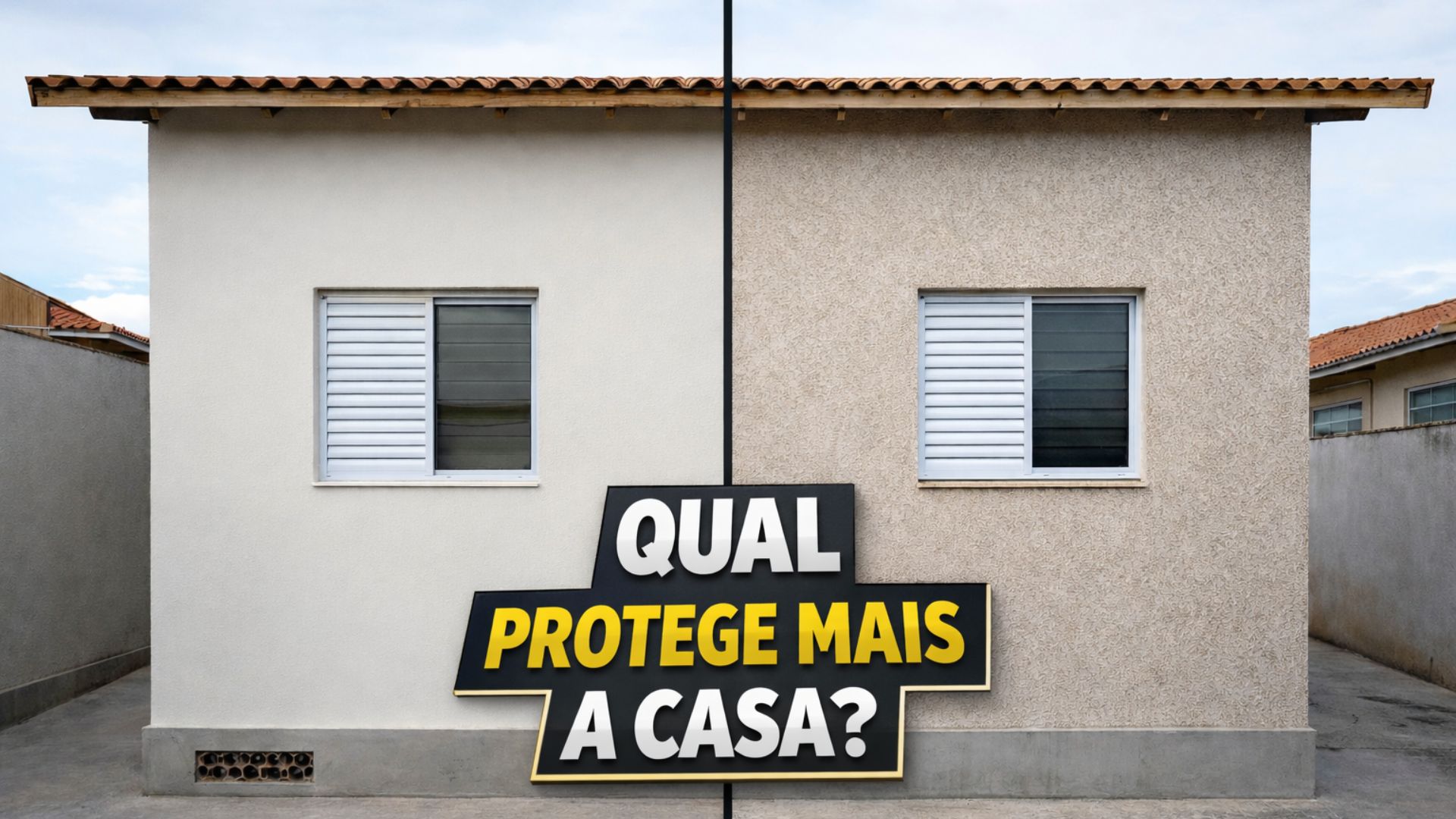


Comparison Between Common Acrylic Paint and Acrylic Texture Reveals Cost Differences Per Square Meter, Application Method, Maintenance, and Protection of Facades in Popular Houses, Based on Official Compositions, Public Spreadsheets, and Manufacturer Technical Datasheets.
Protecting the facade of a popular house with common acrylic paint or with acrylic texture usually changes the cost per square meter already in the material purchase stage and, mainly, in the service execution.
Reference compositions used in public budgets and in price databases linked to SINAPI show that the manual application of latex acrylic paint on external walls of houses, in two coats, appears as a specific service per square meter.
In the same line, SINAPI also has separate compositions for manual application of painting with acrylic textured paint and for manual application of acrylic texture on walls, in one coat, which allows comparing services that, in practice, compete as facade finishes in economic projects.
-
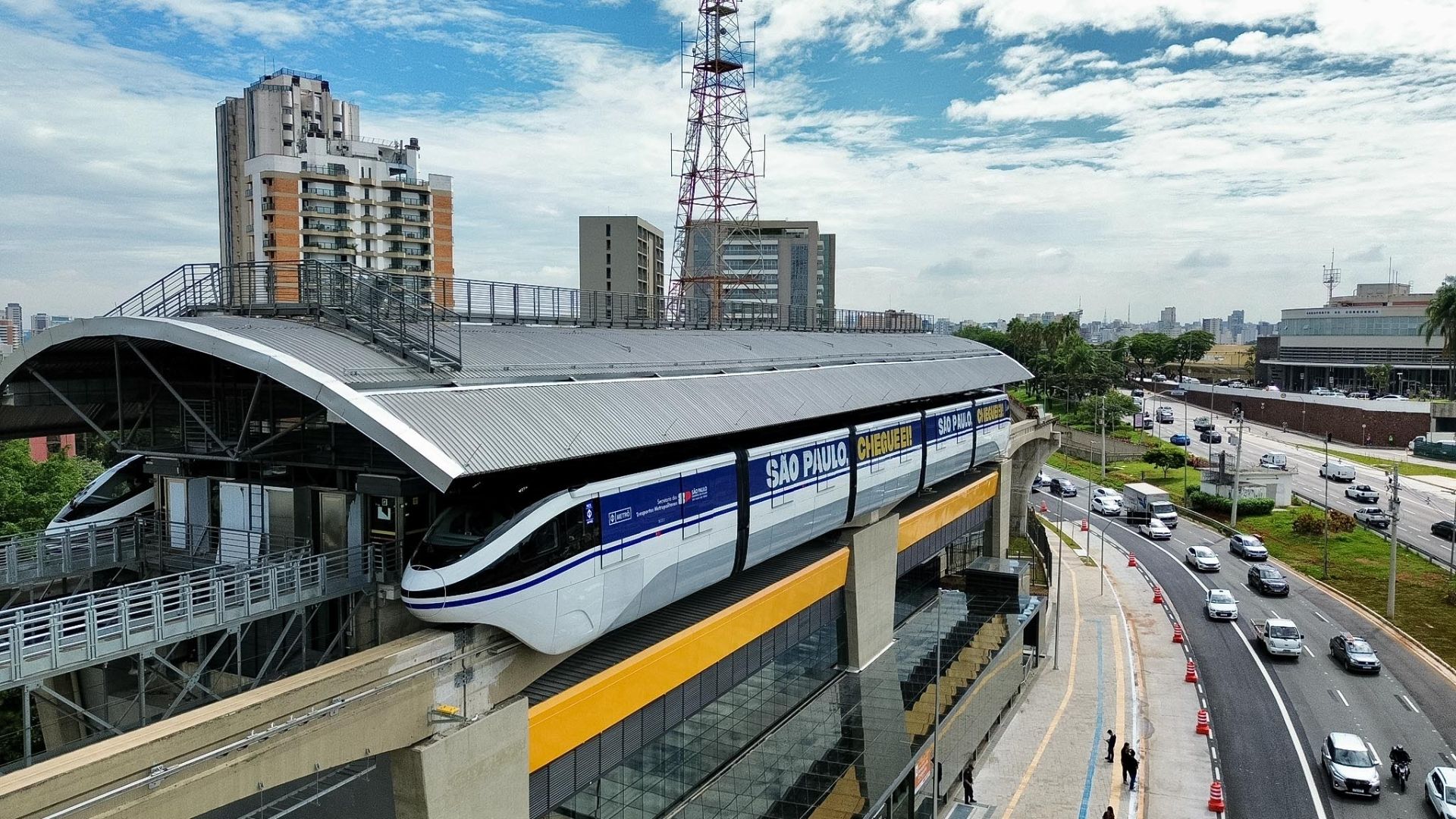
Congonhas receives the monorail promised for the 2014 World Cup after more than a decade of delays and becomes the first airport in Brazil with integrated subway.
-
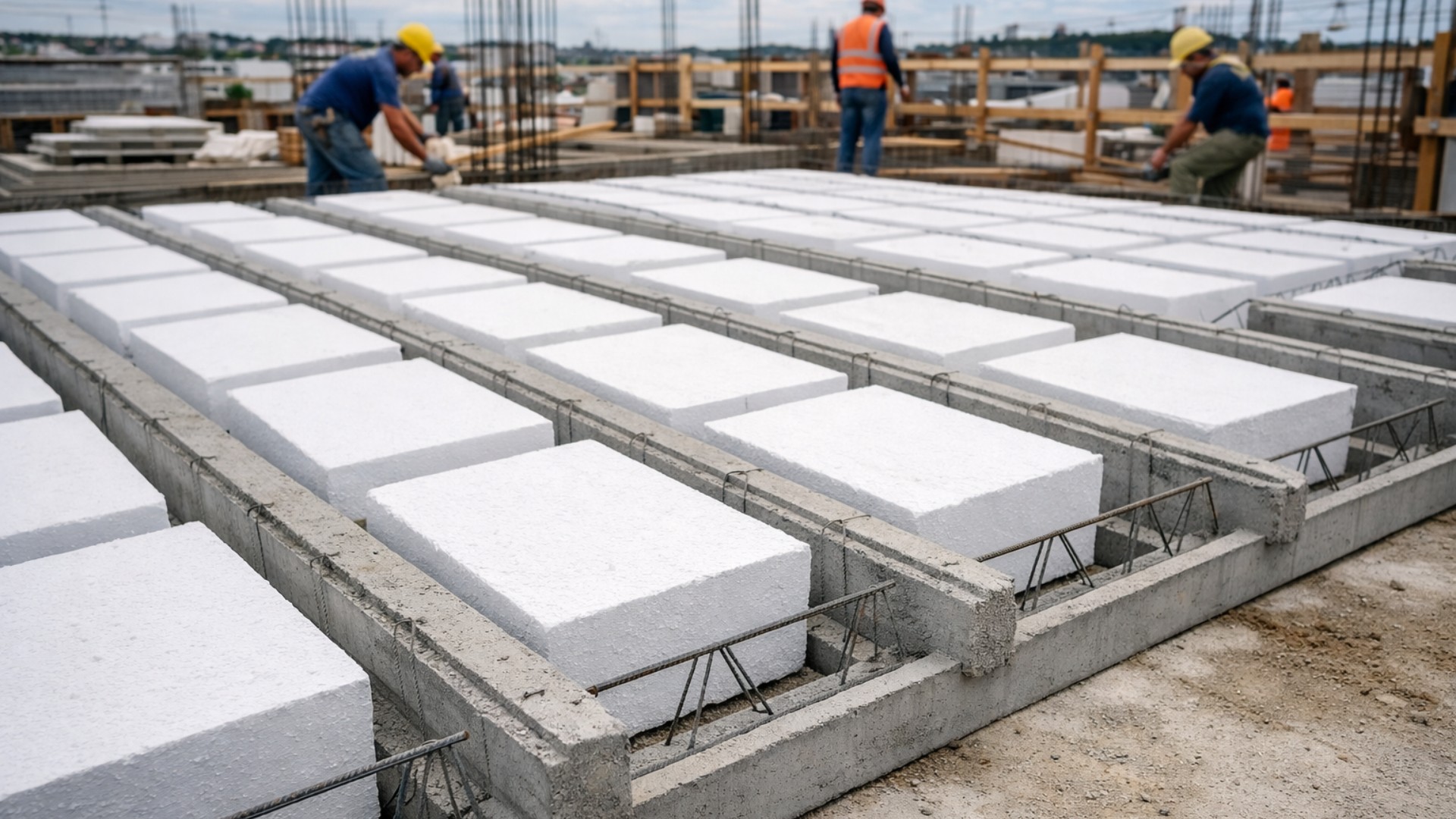
Goodbye, concrete: a new trend in civil construction reduces the weight of the structure by up to 30%, accelerates projects by up to 40%, cuts costs on steel and labor, and improves thermal insulation with EPS.
-
Russian engineers create an innovative propeller blade for aircraft that could completely change the way airplanes and helicopters operate.

-
Couple finishes building PVC chalet on the beach on the last day, with air conditioning and curtains, but discovers the bathroom drain is inverted: water escapes from the drain, risking breaking the floor, and the rush continues before the trip.

In bids and budget spreadsheets of public agencies, items of acrylic texture type grafiato applied on external walls and cornices appear, described as high-layer textured coating, executed with a trowel, in contrast to texture applied with a roller.
This separation helps explain why, in many budgets, painting and texturizing are listed as different items, with distinct inputs and productivity, even though the final goal is the same: to provide finishing and protect the masonry exposed to sun and rain.
Price Difference Per Square Meter
In terms of price per square meter, the comparison is not limited to the cost of the paint bucket or the texture bag.
The service of external painting with latex acrylic paint depends on stages such as surface preparation, possible correction of imperfections, and application of coats, and SINAPI itself describes specific compositions for manual application on external walls of houses with two coats.

On the other hand, textured coatings are categorized as higher-layer finishes, applied with a roller or trowel, depending on the desired effect, and they also appear in SINAPI compositions aimed at external walls of houses.
In practice, what changes the initial cost is the sum of material consumption per square meter, time required for application, and number of stages until the surface is ready to receive the final color.
Material Consumption and Yield of Acrylic Texture
In the case of acrylic texture, manufacturers publish yields that vary according to roughness, application technique, and substrate absorption.
A technical data sheet for exterior acrylic texture informs approximate yield of 0.57 to 0.85 square meter per kilo per coat on smooth surfaces with usual porosity, highlighting that the yield is variable depending on the method and preparation.
Technical bulletins from major manufacturers also present yields in square meters per package, with application guidance for one coat and the possibility of dilution depending on the intended texture.
This type of information is relevant because it transforms the price per package into estimable cost per square meter, an essential condition for direct comparison with common acrylic paint, traditionally budgeted by area.
State of Plaster and Facade Finish
In popular house constructions, the choice between acrylic paint and acrylic texture also connects to the state of the plaster and the level of imperfections in the facade.
Spreadsheets and technical descriptions used in public contracts differentiate texture applied with a roller and grafiato applied with a trowel as high-layer finishes, indicating a finishing function with greater thickness than smooth paint.

This aspect usually affects the budget because, in facades with irregularities, a solution that reduces the number of fine corrections can decrease rework, although the consulted databases do not present a single nationwide study that compares, in the same project, the number of labor hours involved in each alternative.
Maintenance and Service Life of External Finish
The difference in maintenance over time is another factor that clearly appears in technical documents, although not always with standardized timelines in years.
The ABNT NBR 15575 Performance Standard establishes that the project must specify the service life of the project’s systems, which includes sealing systems and their finishes, and this usually influences the choice of materials and anticipated maintenance procedures.
In the field of painting and textures, technical data sheets for external products guide application care, temperature and humidity conditions, and recommend avoiding application on damp or heated surfaces, precisely to reduce the risk of issues such as delamination, surface cracks, and loss of adhesion.
This set of technical recommendations serves as a public basis to state that the durability of both systems directly depends on correct execution and surface preparation, and that moisture, whether in the base or in the environment, is a decisive factor in the final result.
Moisture Resistance and Limits of the Coating
When the focus is on moisture resistance in facades, the discussion usually occurs on two distinct levels.
The first is that of external moisture, such as rain and splashes, where the finish needs to maintain superficial sealing and reduce absorption, within the limitations of the plaster and sealing system.
The second is that of moisture from the substrate, such as rising damp, waterproofing failures, cracks and fissures, situations in which painting or texture do not replace correcting the source, as indicated in application manuals requiring a dry, cured, and prepared base.
Labor Productivity and Execution
In the cost per square meter, a decisive point is that, in official budgets, both acrylic painting and textures are treated as complete services, with associated labor and materials, which exposes differences in productivity.
The comparison becomes more straightforward when observing that SINAPI describes external acrylic painting as application in two coats, while some textures appear as application in one coat, with higher material consumption and specific technique, which shifts the cost weight between material and labor differently in each alternative.
In terms of facade budgeting, this reflects in the way municipalities and public agencies detail services.
Renovation and maintenance spreadsheets include separate items for acrylic texture type grafiato on external walls and cornices, indicating recurrent usage as facade finish in contracts that require greater surface robustness, while external painting appears as a service associated with smooth finishing.








Artigo muito genérico e que não chega no objetivo. No final o leitor entende as variações e impactos causados pela condição da construção, mas não conclui qual a melhor opção e nem o custo de cada uma.
Causa uma frustração no leitor ao finalizar o artigo.
Tem que ter um final definitivo em qual e o melhor pintura ou textura e valor do metro quadrado.
“Quanto custa proteger a fachada de uma casa popular com pintura acrílica comum versus textura acrílica ”
NAO RESPONDEU A PRINCIPAL PERGUNTA. PODERIA MELHORAR O ARTIGO.